Tulip Karaage (Chicken Drumette Lollipops)
チューリップ唐揚げ · Chūrippu Karaage
 By Aoi, licensed nutritionist · From a Japanese preschool lunch menu
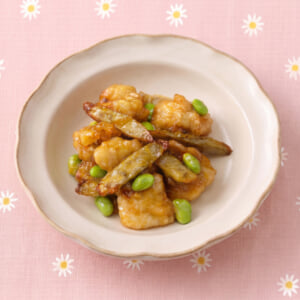
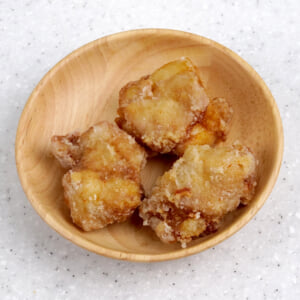
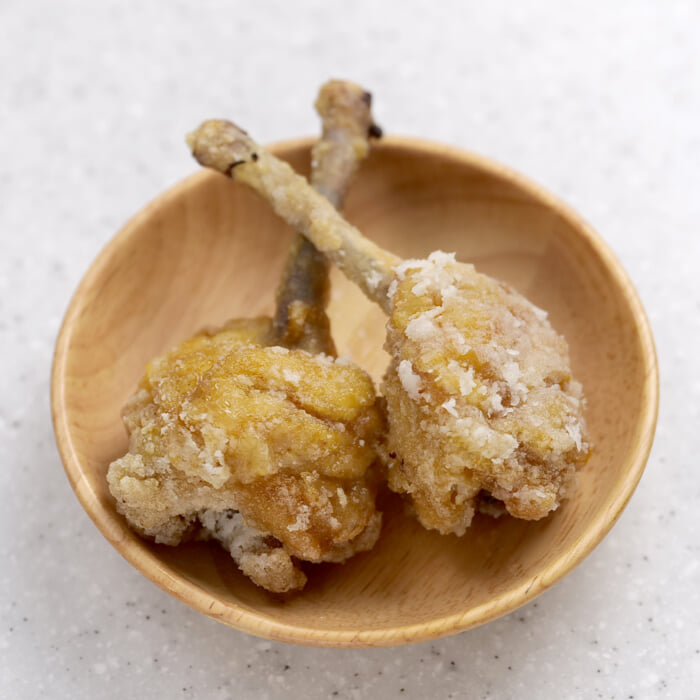
Tulip karaage are chicken drumettes with the meat pushed up toward the tip of the bone so they look like a tulip bud on a stem. The bone becomes a handy little handle, which makes them one of the easiest fried chicken dishes for small children to pick up and eat on their own, and they have long been a beloved sight in Japanese bento boxes and at party tables. The marinade is just soy sauce and a little curry powder, gentle enough for young taste buds but with enough fragrance to have kids reaching for another piece. Shaping the chicken takes a few extra minutes with kitchen scissors, but the delighted faces make it worth it.
Added. Open the recipe helper (bottom right) → ☰ Menu → 🛒 Shopping list to see the ingredients for your family size.
Printing uses the number of adults and children set under Ingredients, so set those first.
Ingredients
Amounts for 1 child (1 serving). An adult counts as 2 servings.
One serving here is 1.5× the portion served to a child in a Japanese preschool, sized for Western appetites. An adult counts as two servings. Tap an ingredient to check it off.
Ingredients
- 75 gboneless, skinless chicken thigh
Seasonings
- 2.6 gsoy sauce
- 0.2 gcurry powder
- 8.6 gpotato starchJapanese katakuriko, a fine potato starch used for thickening sauces and coating food before frying. Substitute: Cornstarch: start with the same amount and add a little more if it is still thin. It thickens a little less than potato starch and needs a couple of minutes at a gentle bubble to reach full thickness.
- 9 gvegetable oil
About the Japanese ingredients in this recipe
- potato starch (片栗粉)
- Japanese katakuriko, a fine potato starch used for thickening sauces and coating food before frying. Substitute: Cornstarch: start with the same amount and add a little more if it is still thin. It thickens a little less than potato starch and needs a couple of minutes at a gentle bubble to reach full thickness. Read the guide: Katakuriko (Japanese Potato Starch) and What to Use Instead → Guide: japanese-school-lunch.com/articles/katakuriko-potato-starch/
Directions
- 1
At the bottom of each drumette, on the side where the bone is exposed, insert the tip of a pair of kitchen scissors and cut so as to loosen the meat and tendons from the bone. Turning the drumette as you go, make about 4 cuts around the bone.
- 2
Working the scissors little by little along the bone, cut the meat and tendons free from the bone. Once about two-thirds of the meat is detached, hold the loosened meat in your hand and, turning the skin inside out, push the meat firmly up toward the tip of the bone. Use your hands to shape the meat into a neat round.
- 3
Combine the soy sauce and curry powder in a bowl, add the shaped chicken and gently rub the marinade in, taking care not to spoil the shape. Rest in the refrigerator for about 15 minutes.
- 4
Heat the frying oil to medium temperature (170°C / 340°F). Dust the marinated chicken with potato starch and lower it into the oil. Fry for about 5 minutes, turning the pieces over as they cook.
Nutrition
| Per | 1 serving | 1 adult serving | Your total |
|---|---|---|---|
| Energy | 195 kcal | 390 kcal | 195 kcal |
| Protein | 14.6 g | 29.1 g | 14.6 g |
| Fat | 12.9 g | 25.8 g | 12.9 g |
| Carbohydrates | 5.6 g | 11.1 g | 5.6 g |
| Salt equivalent | 0.8 g | 1.5 g | 0.8 g |
| Calcium | 6 mg | 12 mg | 6 mg |
| Iron | 0.8 mg | 1.5 mg | 0.8 mg |
| Energy | Protein | Fat | Carbs | Salt equiv. | Calcium | Iron | |
|---|---|---|---|---|---|---|---|
| 1 serving | 195 kcal | 14.6 g | 12.9 g | 5.6 g | 0.8 g | 6 mg | 0.8 mg |
| 1 adult serving | 390 kcal | 29.1 g | 25.8 g | 11.1 g | 1.5 g | 12 mg | 1.5 mg |
Values are per serving (1.5× the Japanese preschool portion); an adult serving is double. They were calculated by a licensed Japanese nutritionist using the Standard Tables of Food Composition in Japan. "Salt equivalent" is sodium × 2.54, the standard Japanese measure. Allergen flags cover egg, milk and wheat only and come from the nutritionist's records. Soy sauce and miso are made with wheat but are usually allowed on Japanese wheat-free school menus, so check with your doctor.