Katakuriko (Japanese Potato Starch) and What to Use Instead
片栗粉
 By Aoi, licensed nutritionist · September 26, 2026 · 4 min read
What katakuriko is, why I thicken the toddler version of my school lunch curry with it, and how to use cornstarch instead. Potato flour won't work.
Katakuriko (片栗粉) is Japanese potato starch, a fine white powder for thickening sauces and soups and for coating food before frying. In my school lunch curry video, I use it to thicken the milky toddler version so small children can eat it easily. Here is what it is, how I use it, and what to use if you can't find it.
What it is
The name comes from katakuri, a plant of the lily family whose bulbs were the original source of the starch. Katakuri gives only a little starch, and by the end of the Edo period so many plants had been gathered for it that they became scarce. From the Meiji era, starch from potatoes grown in Hokkaido, which behaves in much the same way, took its place, and the name stayed. Japan's official food composition tables list katakuriko as another name for potato starch, and note that almost everything sold as katakuriko is potato starch.
Potato starch thickens at a fairly low temperature, about 55 to 66°C (131 to 151°F). It thickens quickly and strongly and turns clear, so sauces look glossy and the colors of the food show through. Its weak point: if you keep heating and stirring it, it suddenly loses thickness.
Katakuriko is made from potatoes, not wheat, but if you avoid wheat, check the label on the bag you buy. The curry roux in my video does contain wheat, so this curry is not wheat-free.
How I use it in the video
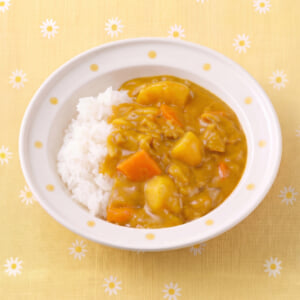
- 9:30 The pot now tastes like school lunch, but it is a little strong for toddlers. At 9:38 I move two heaping ladlefuls (200 g in my recipe) into a frying pan, and at 9:44 I explain that milk and water go in next. On their own they would make it runny, so I thicken it with potato starch (9:46).
- 9:51 Why thicken? The ingredients hold together better, and the food moves more slowly through the mouth and throat, so it is easier for little ones to eat.
- 9:59 I mix the water, milk and potato starch together first, then pour it into the pan. The toddler version in my recipe (for ages 1½ to 5) uses 120 g water, 50 g milk and 11 g potato starch for 200 g of curry.
- 10:03 I turn on the heat and cook it on low until it thickens, mixing gently because the potatoes break apart easily. The vegetables are already soft, so once it has thickened, it's done (10:12).
Tips
- Stop cooking once the curry has thickened, so the potato starch doesn't lose its thickness.
- Starch-thickened sauces change as they cool, especially in the fridge: they can stiffen and weep a little water. When I reheat leftover curry, I add a little water as needed.
If you can't find it
Look in Japanese or other Asian grocery stores, where the bag may say 片栗粉 or かたくり粉. Elsewhere, look for a bag labeled potato starch.
Cornstarch is the easiest substitute. Start with the same amount, but expect it to behave differently:
- It needs more heat. America's Test Kitchen found that potato starch thickened a sauce before it reached a full simmer, while cornstarch needed a couple of minutes of simmering to reach full thickness. So bring the curry to a gentle bubble and keep it there for a couple of minutes, stirring from the bottom. Once the roux is in, curry scorches easily (8:50).
- It thickens less. In the same test, potato starch made a thicker sauce than an equal amount of cornstarch; America's Test Kitchen's rule of thumb works out to about 1½ times as much cornstarch as potato starch. If the curry is still loose, add a little more cornstarch mixed with water and bring it back to a bubble.
- It looks and cools differently. Cornstarch turns cloudy rather than clear and sets more firmly when chilled, so loosen leftovers with water.
Don't use potato flour. Potato flour is made from whole peeled potatoes, cooked, dried and ground into a beige powder that tastes of potato. Potato starch is washed out of crushed potatoes and dried into a bright white, flavorless powder. Used to thicken the same amount of liquid, potato flour gives a heavy, gloopy result. Potato starch itself is sometimes called "potato flour," so go by the color and the ingredient list.
Related recipes
- Japanese Curry Rice with Store-Bought Roux (the recipe from my video, with the toddler version)
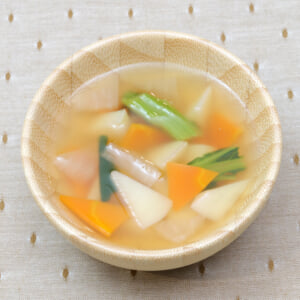
- Fu and Vegetables in Thick Dashi Sauce: thickened so the soft pieces hold together
- Yoshino-jiru (Thickened Clear Soup)
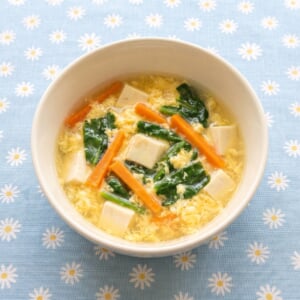
- Kakitama-jiru (Japanese Egg Drop Soup)
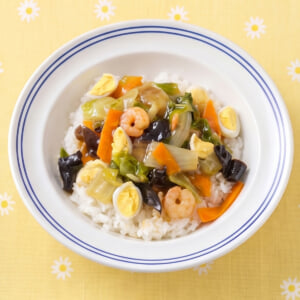
- Chukadon (Chinese-Style Stir-Fry Rice Bowl)
- Salmon Tatsuta-age: potato starch as a coating for frying
- All recipes with potato starch (katakuriko)
- Potato starch (katakuriko) in our glossary
Sources and further reading
- ALIC: Where katakuriko got its name, and its properties (Japanese)
- Ministry of Agriculture, Forestry and Fisheries: When did katakuriko switch to potato starch? (Japanese)
- MEXT Standard Tables of Food Composition in Japan: notes on potato starch (Japanese)
- ALIC: Choosing the right starch for each dish (Japanese)
- ALIC: Properties of starch pastes by type (Japanese)
- ALIC: Cornstarch, potato starch and sweet potato starch compared (Japanese)
- ALIC: Starch in cooking science, including chilled starch pastes (Japanese)
- America's Test Kitchen: Can potato starch be substituted for cornstarch?
- King Arthur Baking: Potato flour vs. potato starch
- CooksInfo: Potato starch
- Just One Cookbook: Potato starch (katakuriko)