Japanese Pantry
Naga-Negi: Japanese Long Onion and How to Swap It
長ねぎ
By the Aoi's Japanese School Lunch team · November 8, 2026 · 2 min read
What naga-negi (Japanese long onion) is, how the white and green parts differ, how to cook it for children, and what to use instead.
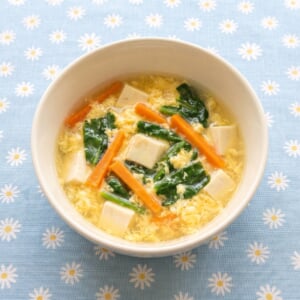
In the video "How to Make Authentic Japanese Egg Drop Soup (Kakitama Soup)," the first step is slicing a Japanese long onion into thin rounds. In Japanese it's called naga-negi. The video's English captions say "green onion," but it's a long, thick onion, not the slim scallion sold in most Western stores. More than 60 recipes on this site use it.
What is naga-negi?
- A long, thick green onion. Its flavor turns mild and sweet when cooked.
- Sharp when raw. Aoi says the raw onion has a strong bite and a crunchy texture.
- Two parts, two uses. The video notes that the white part counts as a light-colored vegetable and the green part as a green-yellow vegetable. Both parts are eaten.
You'll also see it called negi or Japanese leek. Look for it at Asian markets.
How it's used in the video
- 0:06 The onion is sliced into thin rounds.
- 0:52 The carrots and onion go into the pot and simmer on low heat for 10 to 15 minutes.
Cooking it for children
- Cook it until soft. In her Curry Udon video (in Japanese), Aoi says adults may add it raw on top. For children's portions, she simmers it until soft to cook off the sharpness.
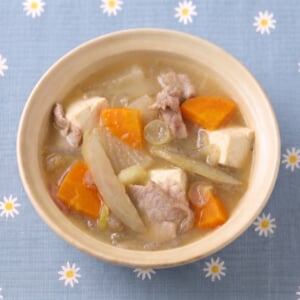
- Add it early. In her Tonjiru video (in Japanese), she adds all of it, green parts included, and simmers it. Adults often scatter it on at the end, but children find that sharp and hard to eat.
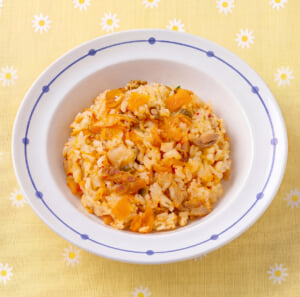
- Use the green part for color. In her Kimutaku Gohan video (in Japanese), the green part gives the finished rice a nice color.
Can't find it?
- Use a leek. The white and light green parts are the closest match for cooking.
- Use scallions. Thick ones are the closest.
See every recipe that uses it on the Japanese long onion ingredient page.