Nikujaga (Japanese Meat and Potato Stew)
肉じゃが · Nikujaga
 By Aoi, licensed nutritionist · From a Japanese preschool lunch menu
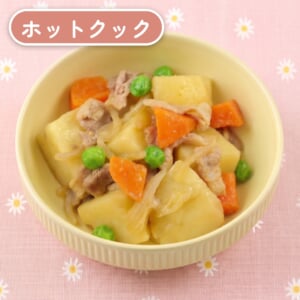
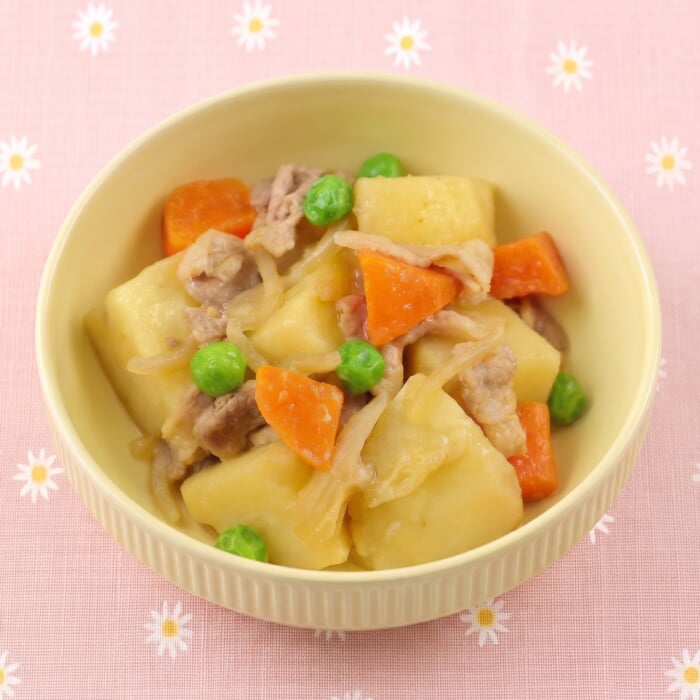
Nikujaga literally means "meat and potatoes," and it is one of the best-loved dishes in Japanese home cooking: potato, carrot and onion simmered with thin slices of meat in a gently sweet soy-and-dashi broth. Beef is the usual choice in western Japan, while pork is common in the east, and this preschool version uses pork. The sweetness comes mostly from the onions and a little sugar, so the seasoning stays light yet the potatoes still soak up plenty of flavor. Shirataki noodles are cut short so they are easy for little ones to manage, and a handful of green peas stirred in at the end adds color. This recipe is made without egg or dairy and uses no wheat flour.
Toddlers to adults. The whole family can eat this exactly as written.
Wheat-free, but uses soy sauce (made with wheat). Japanese school-lunch allergy menus usually allow it, so check with your doctor. How to read the labels
Added. Open the recipe helper (bottom right) → ☰ Menu → 🛒 Shopping list to see the ingredients for your family size.
Printing uses the number of adults and children set under Ingredients, so set those first.
Ingredients
Amounts for 1 child (1 serving). An adult counts as 2 servings.
One serving here is 1.5× the portion served to a child in a Japanese preschool, sized for Western appetites. An adult counts as two servings. Tap an ingredient to check it off.
- 90 gpotato
- 27 gcarrot
- 27 gonion
- 36 gthinly sliced pork (komagire)Small, thin offcuts of pork sold in Japan for quick stir-fries and simmered dishes. Substitute: Thinly sliced pork shoulder or loin cut into bite-size pieces.
- 18 gshirataki noodles (no-rinse type)Shirataki are translucent, chewy, nearly calorie-free noodles made from konjac yam; the no-rinse (aku-nuki fuyo) type is pre-treated so it does not need parboiling to remove its characteristic smell. Substitute: Use regular shirataki or konjac noodles (sold in water-filled pouches at Asian groceries and many supermarkets) and rinse or blanch them for about 1 minute before using; cooked glass noodles or thinly sliced konjac can also stand in.
- 4.5 gfrozen green peas
- 3 gvegetable oil
- 5.4 gsugar
- 90 mldashi stockJapanese soup stock, usually made from kombu (dried kelp) and/or bonito flakes; the base of most Japanese soups and simmered dishes. Substitute: Instant dashi granules dissolved in water, or a mild unsalted chicken or vegetable stock.
- 7.5 gsoy sauce
About the Japanese ingredients in this recipe
- thinly sliced pork (komagire) (豚こま切れ肉)
- Small, thin offcuts of pork sold in Japan for quick stir-fries and simmered dishes. Substitute: Thinly sliced pork shoulder or loin cut into bite-size pieces.
- shirataki noodles (no-rinse type) (しらたき(アク抜き不要タイプ))
- Shirataki are translucent, chewy, nearly calorie-free noodles made from konjac yam; the no-rinse (aku-nuki fuyo) type is pre-treated so it does not need parboiling to remove its characteristic smell. Substitute: Use regular shirataki or konjac noodles (sold in water-filled pouches at Asian groceries and many supermarkets) and rinse or blanch them for about 1 minute before using; cooked glass noodles or thinly sliced konjac can also stand in.
- dashi stock (だし汁)
- Japanese soup stock, usually made from kombu (dried kelp) and/or bonito flakes; the base of most Japanese soups and simmered dishes. Substitute: Instant dashi granules dissolved in water, or a mild unsalted chicken or vegetable stock.
Directions
Video is in Japanese — the steps below are synced to it, so tap ▶ on a step to jump to that moment.
- 1
Cut the potatoes into thick quarter-rounds (ichō-giri) and soak them in water for about 5 minutes.
- 2
Cut the carrot into small irregular chunks (rangiri) and the onion into wedges. Put them in a microwave-safe container and add 1 tbsp water (not included in the ingredient amounts). Cover loosely with plastic wrap and microwave at 1200W for about 2 minutes 30 seconds (5 minutes at 600W).
- 3
Cut the pork into 2 cm strips and the shirataki into 5 cm lengths. (For small children, cut the shirataki shorter.)
- 4
Put the frozen green peas in a microwave-safe container, add enough boiling water to just cover them, microwave at 1200W for about 1 minute (2 minutes at 600W), then drain.
- 5
Heat the oil in a pot and stir-fry the carrot and onion from step 2 over medium heat for about 2 minutes. Add the pork and potatoes and stir-fry until the pork changes color. (Stir-frying before simmering helps the potatoes keep their shape.)
- 6
Add the sugar, the shirataki and enough dashi stock that the ingredients just peek above the surface. Cover with a drop lid (otoshibuta) and simmer over low heat for about 15 minutes.
- 7
Add the soy sauce, replace the drop lid and simmer over low heat for about 10 minutes more. Turn off the heat, stir in the green peas and leave everything to cool in the pot so the flavors soak in.
The key is to simmer with the sugar first and add the soy sauce afterward. That way the flavor soaks right in, even with light seasoning.
To keep the green peas from losing their bright color, just stir them in at the very end. Snow peas or green beans work too.
For the potatoes, I recommend a waxy variety such as May Queen, which holds its shape during simmering.
Nutrition
| Per | 1 serving | 1 adult serving | Your total |
|---|---|---|---|
| Energy | 189 kcal | 378 kcal | 189 kcal |
| Protein | 10.2 g | 20.4 g | 10.2 g |
| Fat | 6.6 g | 13.2 g | 6.6 g |
| Carbohydrates | 28.1 g | 56.1 g | 28.1 g |
| Fiber | 10.2 g | 20.4 g | 10.2 g |
| Salt equivalent | 1.2 g | 2.4 g | 1.2 g |
| Calcium | 37.5 mg | 75 mg | 37.5 mg |
| Iron | 1 mg | 2.1 mg | 1 mg |
| Potassium | 717 mg | 1434 mg | 717 mg |
| Phosphorus | 159 mg | 318 mg | 159 mg |
| Energy | Protein | Fat | Carbs | Fiber | Salt equiv. | Calcium | Iron | Potassium | Phosphorus | |
|---|---|---|---|---|---|---|---|---|---|---|
| 1 serving | 189 kcal | 10.2 g | 6.6 g | 28.1 g | 10.2 g | 1.2 g | 37.5 mg | 1 mg | 717 mg | 159 mg |
| 1 adult serving | 378 kcal | 20.4 g | 13.2 g | 56.1 g | 20.4 g | 2.4 g | 75 mg | 2.1 mg | 1434 mg | 318 mg |
Values are per serving (1.5× the Japanese preschool portion); an adult serving is double. They were calculated by a licensed Japanese nutritionist using the Standard Tables of Food Composition in Japan. "Salt equivalent" is sodium × 2.54, the standard Japanese measure. Allergen flags cover egg, milk and wheat only and come from the nutritionist's records. Soy sauce and miso are made with wheat but are usually allowed on Japanese wheat-free school menus, so check with your doctor.