Hot Cook Nikujaga (Japanese Meat and Potato Stew)
肉じゃが【ホットクック】 · Nikujaga
 By Aoi, licensed nutritionist · From a Japanese preschool lunch menu
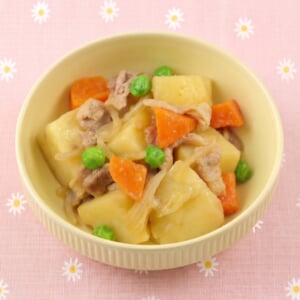
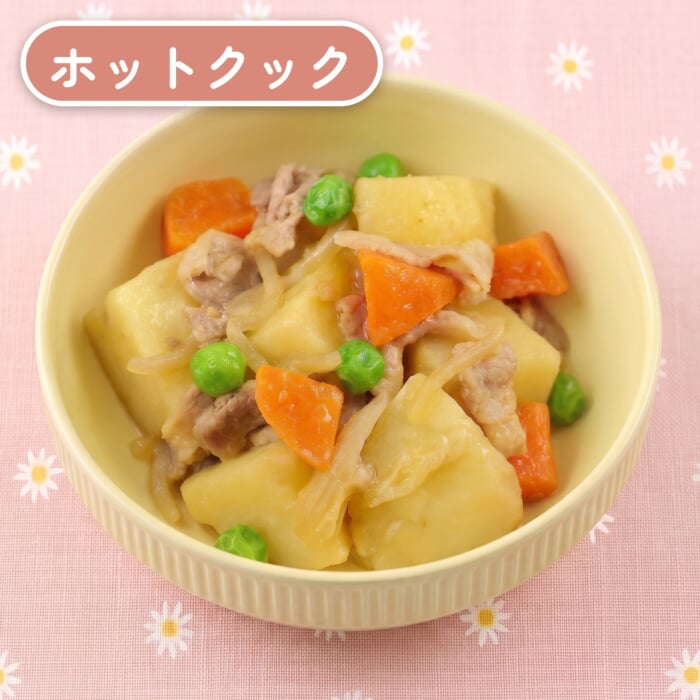
Nikujaga is one of Japan's best-loved home-style dishes: potatoes, carrots, onions and thinly sliced pork gently simmered in a lightly sweetened soy sauce and dashi broth until everything is soft and full of flavor. This version is made in a Hot Cook, Sharp's automatic cooking pot, so once the ingredients are in, the machine does the stirring and simmering for you. The tender, mildly sweet potatoes are just the kind of thing small children happily eat, and the seasoning stays gentle enough for preschool tastes. A couple of small cutting tips - larger potato pieces and larger pieces of pork - make all the difference to the finished texture.
Wheat-free, but uses soy sauce (made with wheat). Japanese school-lunch allergy menus usually allow it, so check with your doctor. How to read the labels
Added. Open the recipe helper (bottom right) → ☰ Menu → 🛒 Shopping list to see the ingredients for your family size.
Printing uses the number of adults and children set under Ingredients, so set those first.
Ingredients
Amounts for 1 child (1 serving). An adult counts as 2 servings.
One serving here is 1.5× the portion served to a child in a Japanese preschool, sized for Western appetites. An adult counts as two servings. Tap an ingredient to check it off.
Ingredients
- 67.5 gpotato
- 21 gcarrot
- 21 gonion
- 25.5 gthinly sliced pork (komagire)Small, thin offcuts of pork sold in Japan for quick stir-fries and simmered dishes. Substitute: Thinly sliced pork shoulder or loin cut into bite-size pieces.
- 3.3 gfrozen green peas
Seasonings
- 3.3 gvegetable oil
- 75 gdashi stockJapanese soup stock, usually made from kombu (dried kelp) and/or bonito flakes; the base of most Japanese soups and simmered dishes. Substitute: Instant dashi granules dissolved in water, or a mild unsalted chicken or vegetable stock.
- 3 gsugar
- 4.1 gsoy sauce
About the Japanese ingredients in this recipe
- thinly sliced pork (komagire) (豚こま切れ肉)
- Small, thin offcuts of pork sold in Japan for quick stir-fries and simmered dishes. Substitute: Thinly sliced pork shoulder or loin cut into bite-size pieces.
- dashi stock (だし汁)
- Japanese soup stock, usually made from kombu (dried kelp) and/or bonito flakes; the base of most Japanese soups and simmered dishes. Substitute: Instant dashi granules dissolved in water, or a mild unsalted chicken or vegetable stock.
Directions
- 1
Cut the carrot into rough, irregular chunks (rangiri). Halve the onion crosswise and slice it thinly. Put them in the inner pot and add the oil. Select [Manual → Sauté] and heat for 5 minutes.
- 2
Cut each potato into 4 pieces and cut the pork into 5 cm-wide pieces. (Cut the potatoes on the large side - small pieces will fall apart during cooking! Cutting the pork into larger pieces keeps it tender.)
- 3
Add the ingredients from step 2, the frozen green peas, the sugar and the soy sauce. Select [Menu → Search by category → Simmered dishes → Meat → Nikujaga] and start cooking. (If you like, adding shirataki noodles at this point also turns out delicious!)
Nutrition
| Per | 1 serving | 1 adult serving | Your total |
|---|---|---|---|
| Energy | 147 kcal | 294 kcal | 147 kcal |
| Protein | 7.5 g | 15 g | 7.5 g |
| Fat | 5.9 g | 11.7 g | 5.9 g |
| Carbohydrates | 19.7 g | 39.3 g | 19.7 g |
| Fiber | 7.2 g | 14.4 g | 7.2 g |
| Salt equivalent | 0.8 g | 1.5 g | 0.8 g |
| Calcium | 19.5 mg | 39 mg | 19.5 mg |
| Iron | 0.5 mg | 0.9 mg | 0.5 mg |
| Potassium | 534 mg | 1068 mg | 534 mg |
| Energy | Protein | Fat | Carbs | Fiber | Salt equiv. | Calcium | Iron | Potassium | |
|---|---|---|---|---|---|---|---|---|---|
| 1 serving | 147 kcal | 7.5 g | 5.9 g | 19.7 g | 7.2 g | 0.8 g | 19.5 mg | 0.5 mg | 534 mg |
| 1 adult serving | 294 kcal | 15 g | 11.7 g | 39.3 g | 14.4 g | 1.5 g | 39 mg | 0.9 mg | 1068 mg |
Values are per serving (1.5× the Japanese preschool portion); an adult serving is double. They were calculated by a licensed Japanese nutritionist using the Standard Tables of Food Composition in Japan. "Salt equivalent" is sodium × 2.54, the standard Japanese measure. Allergen flags cover egg, milk and wheat only and come from the nutritionist's records. Soy sauce and miso are made with wheat but are usually allowed on Japanese wheat-free school menus, so check with your doctor.