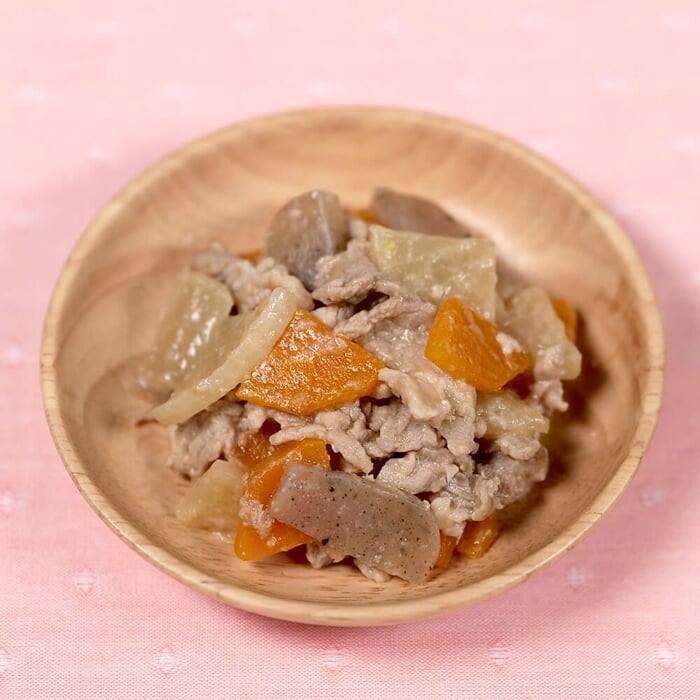
Buta Daikon (Simmered Pork and Daikon) (Wheat-Free)
豚だいこん(小麦なし) · Buta Daikon
 By Aoi, licensed nutritionist · From a Japanese preschool lunch menu
Buta daikon is a homey Japanese simmered dish of pork, daikon radish, and carrot cooked in dashi and seasoned gently with miso, mirin, and soy sauce. The vegetables are cut into small quarter-rounds so they cook quickly and fit easily on a child's spoon. The daikon soaks up the sweet-savory broth as it softens, which is exactly why children take to it so readily. Dusting the pork in joshinko (rice flour) rather than wheat flour keeps the meat tender and lightly thickens the sauce so it clings to every piece. This version is made with no wheat flour and without egg or milk. Shirataki noodles, cut into 1 cm lengths, add a fun, slippery texture that kids enjoy.
Wheat-free, but uses soy sauce and miso (made with wheat). Japanese school-lunch allergy menus usually allow them, so check with your doctor. How to read the labels
Added. Open the recipe helper (bottom right) → ☰ Menu → 🛒 Shopping list to see the ingredients for your family size.
Printing uses the number of adults and children set under Ingredients, so set those first.
Ingredients
Amounts for 1 child (1 serving). An adult counts as 2 servings.
One serving here is 1.5× the portion served to a child in a Japanese preschool, sized for Western appetites. An adult counts as two servings. Tap an ingredient to check it off.
Ingredients
- 45 gthinly sliced pork (komagire)Small, thin offcuts of pork sold in Japan for quick stir-fries and simmered dishes. Substitute: Thinly sliced pork shoulder or loin cut into bite-size pieces.
- 34.5 gdaikon radish
- 18 gcarrot
- 9 gshirataki (konjac noodles)Translucent, chewy, very low-calorie noodles made from konjac yam, sold in water-filled packs. Substitute: Glass noodles, or omit.
Seasonings
- 2.4 gjoshinko (Japanese non-glutinous rice flour)Fine flour milled from regular short-grain rice, used for chewy Japanese sweets like dango. Substitute: Plain rice flour (not glutinous/sweet rice flour).
- 1.5 gvegetable oil
- 70.5 gdashi stockJapanese soup stock, usually made from kombu (dried kelp) and/or bonito flakes; the base of most Japanese soups and simmered dishes. Substitute: Instant dashi granules dissolved in water, or a mild unsalted chicken or vegetable stock.
- 1 gsugar
- 0.8 gmirinMirin is a sweet Japanese rice seasoning that adds gentle sweetness and a glossy finish. Hon-mirin (true mirin) contains about 14% alcohol; "mirin-style seasoning" has little or no alcohol. Some alcohol can remain after short cooking. If you prefer no alcohol for children, use the substitute. Substitute: For each tablespoon of mirin, use 1 tablespoon water plus 1 to 2 teaspoons sugar.
- 3.9 gmisoFermented soybean paste. Salty and savory, it is Japan's everyday seasoning for miso soup and many simmered dishes. Substitute: Any light (white or awase) miso. Misos differ in saltiness, so start with a little less and taste. Some misos are made with barley or wheat, so check the label if you avoid them.
- 1 gsoy sauce
About the Japanese ingredients in this recipe
- thinly sliced pork (komagire) (豚こま切れ肉)
- Small, thin offcuts of pork sold in Japan for quick stir-fries and simmered dishes. Substitute: Thinly sliced pork shoulder or loin cut into bite-size pieces.
- joshinko (Japanese non-glutinous rice flour) (上新粉)
- Fine flour milled from regular short-grain rice, used for chewy Japanese sweets like dango. Substitute: Plain rice flour (not glutinous/sweet rice flour).
- shirataki (konjac noodles) (糸こんにゃく)
- Translucent, chewy, very low-calorie noodles made from konjac yam, sold in water-filled packs. Substitute: Glass noodles, or omit.
- dashi stock (だし汁)
- Japanese soup stock, usually made from kombu (dried kelp) and/or bonito flakes; the base of most Japanese soups and simmered dishes. Substitute: Instant dashi granules dissolved in water, or a mild unsalted chicken or vegetable stock.
- mirin (みりん)
- Mirin is a sweet Japanese rice seasoning that adds gentle sweetness and a glossy finish. Hon-mirin (true mirin) contains about 14% alcohol; "mirin-style seasoning" has little or no alcohol. Some alcohol can remain after short cooking. If you prefer no alcohol for children, use the substitute. Substitute: For each tablespoon of mirin, use 1 tablespoon water plus 1 to 2 teaspoons sugar.
- miso (みそ)
- Fermented soybean paste. Salty and savory, it is Japan's everyday seasoning for miso soup and many simmered dishes. Substitute: Any light (white or awase) miso. Misos differ in saltiness, so start with a little less and taste. Some misos are made with barley or wheat, so check the label if you avoid them.
Directions
- 1
Cut the pork into 1 to 2 cm wide pieces and toss with the joshinko rice flour to coat.
- 2
Cut the daikon and carrot into small quarter-rounds (ichogiri). Cut the shirataki into 1 cm lengths and boil in hot water for 1 minute to remove any odor.
- 3
Heat the oil in a pot, add the daikon and carrot, and saute well. Add the pork and saute.
- 4
Add the dashi stock and bring to a boil, then add the shirataki, sugar, and mirin and simmer until the vegetables are tender. Add the miso and soy sauce and simmer.
Nutrition
| Per | 1 serving | 1 adult serving | Your total |
|---|---|---|---|
| Energy | 124.5 kcal | 249 kcal | 124.5 kcal |
| Protein | 10.5 g | 21 g | 10.5 g |
| Fat | 6.5 g | 12.9 g | 6.5 g |
| Carbohydrates | 7.8 g | 15.6 g | 7.8 g |
| Fiber | 1.2 g | 2.4 g | 1.2 g |
| Salt equivalent | 0.6 g | 1.2 g | 0.6 g |
| Calcium | 25.5 mg | 51 mg | 25.5 mg |
| Iron | 0.5 mg | 0.9 mg | 0.5 mg |
| Potassium | 360 mg | 720 mg | 360 mg |
| Energy | Protein | Fat | Carbs | Fiber | Salt equiv. | Calcium | Iron | Potassium | |
|---|---|---|---|---|---|---|---|---|---|
| 1 serving | 124.5 kcal | 10.5 g | 6.5 g | 7.8 g | 1.2 g | 0.6 g | 25.5 mg | 0.5 mg | 360 mg |
| 1 adult serving | 249 kcal | 21 g | 12.9 g | 15.6 g | 2.4 g | 1.2 g | 51 mg | 0.9 mg | 720 mg |
Values are per serving (1.5× the Japanese preschool portion); an adult serving is double. They were calculated by a licensed Japanese nutritionist using the Standard Tables of Food Composition in Japan. "Salt equivalent" is sodium × 2.54, the standard Japanese measure. Allergen flags cover egg, milk and wheat only and come from the nutritionist's records. Soy sauce and miso are made with wheat but are usually allowed on Japanese wheat-free school menus, so check with your doctor.
Ingredients in this recipe
You might also like
All recipes →
Nikujaga (Japanese Meat and Potato Stew)
Hot Cook Nikujaga (Japanese Meat and Potato Stew)
Eggplant and Pork Miso Stir-Fry
Miso-Stir-Fried Eggplant and Pork (Wheat-Free)
Miso Stir-Fried Pork (Wheat-Free)