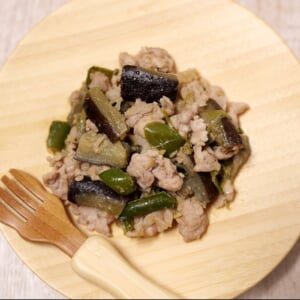
Eggplant and Pork Miso Stir-Fry
なすと豚肉の味噌炒め(ねぎ・小麦なし) · Nasu to Butaniku no Miso Itame
 By Aoi, licensed nutritionist · From a Japanese preschool lunch menu
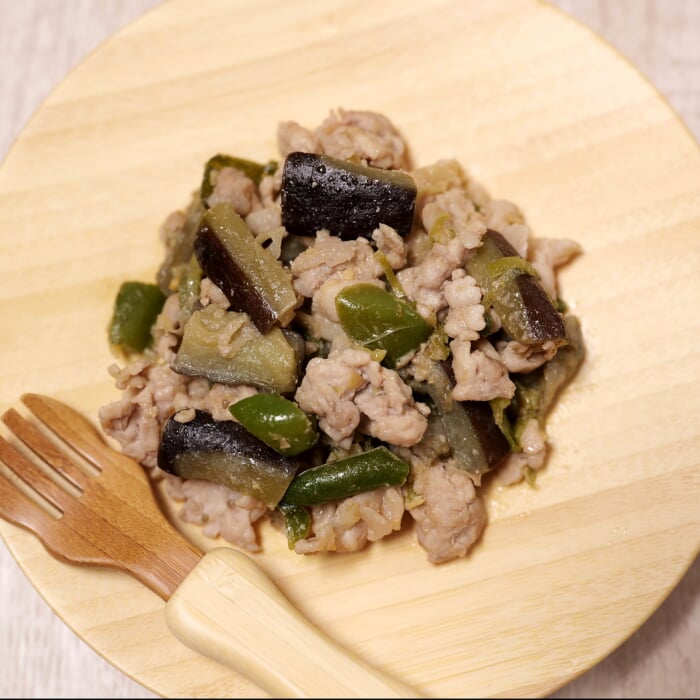
Eggplant and pork stir-fried in a sweet miso sauce is a summer favorite in Japanese home kitchens, and this is the gentle version we serve at preschool. The eggplant turns soft and soaks up the miso, so even children who are wary of it tend to eat it happily alongside the pork. A little joshinko rice flour rubbed into the pork stands in for wheat flour, helping the sauce cling to everything and making each bite easy for little mouths to manage.
Wheat-free, but uses soy sauce and miso (made with wheat). Japanese school-lunch allergy menus usually allow them, so check with your doctor. How to read the labels
Added. Open the recipe helper (bottom right) → ☰ Menu → 🛒 Shopping list to see the ingredients for your family size.
Printing uses the number of adults and children set under Ingredients, so set those first.
Ingredients
Amounts for 1 child (1 serving). An adult counts as 2 servings.
One serving here is 1.5× the portion served to a child in a Japanese preschool, sized for Western appetites. An adult counts as two servings. Tap an ingredient to check it off.
Ingredients
- 52.5 gthinly sliced pork (komagire)Small, thin offcuts of pork sold in Japan for quick stir-fries and simmered dishes. Substitute: Thinly sliced pork shoulder or loin cut into bite-size pieces.
- 45 geggplant
- 12 ggreen bell pepper
- 21 ggreen onion (naga negi)Japanese long onion, thicker and milder than Western scallions. Substitute: Scallions or the white part of a leek.
Seasonings
- 3 gjoshinko (Japanese non-glutinous rice flour)Fine flour milled from regular short-grain rice, used for chewy Japanese sweets like dango. Substitute: Plain rice flour (not glutinous/sweet rice flour).
- 1.5 gvegetable oil
- 1 gsugar
- 3.6 gmisoFermented soybean paste. Salty and savory, it is Japan's everyday seasoning for miso soup and many simmered dishes. Substitute: Any light (white or awase) miso. Misos differ in saltiness, so start with a little less and taste. Some misos are made with barley or wheat, so check the label if you avoid them.
- 0.6 gsoy sauce
About the Japanese ingredients in this recipe
- thinly sliced pork (komagire) (豚こま切れ肉)
- Small, thin offcuts of pork sold in Japan for quick stir-fries and simmered dishes. Substitute: Thinly sliced pork shoulder or loin cut into bite-size pieces.
- joshinko (Japanese non-glutinous rice flour) (上新粉)
- Fine flour milled from regular short-grain rice, used for chewy Japanese sweets like dango. Substitute: Plain rice flour (not glutinous/sweet rice flour).
- green onion (naga negi) (ねぎ)
- Japanese long onion, thicker and milder than Western scallions. Substitute: Scallions or the white part of a leek.
- miso (みそ)
- Fermented soybean paste. Salty and savory, it is Japan's everyday seasoning for miso soup and many simmered dishes. Substitute: Any light (white or awase) miso. Misos differ in saltiness, so start with a little less and taste. Some misos are made with barley or wheat, so check the label if you avoid them.
Directions
- 1
Cut the pork into 1 to 2 cm wide pieces and rub the joshinko into it.
- 2
Peel the eggplant in alternating stripes and cut it into short lengthwise strips. Cut the green bell pepper into 1.5 cm squares and thinly slice the green onion crosswise.
- 3
Heat the oil in a frying pan and stir-fry the eggplant, green bell pepper and green onion. Once they start to soften, add the pork and stir-fry.
- 4
When the pork has changed color, add the combined seasonings (sugar, miso and soy sauce) and stir to coat everything evenly.
Rubbing joshinko into the pork helps the sauce cling to the ingredients, and it also makes the food hold together in the mouth so it is easier for young children to chew and swallow.
Nutrition
| Per | 1 serving | 1 adult serving | Your total |
|---|---|---|---|
| Energy | 142.5 kcal | 285 kcal | 142.5 kcal |
| Protein | 12.3 g | 24.6 g | 12.3 g |
| Fat | 7.1 g | 14.1 g | 7.1 g |
| Carbohydrates | 9 g | 18 g | 9 g |
| Fiber | 2.1 g | 4.2 g | 2.1 g |
| Salt equivalent | 0.6 g | 1.2 g | 0.6 g |
| Calcium | 21 mg | 42 mg | 21 mg |
| Iron | 0.6 mg | 1.2 mg | 0.6 mg |
| Potassium | 367.5 mg | 735 mg | 367.5 mg |
| Energy | Protein | Fat | Carbs | Fiber | Salt equiv. | Calcium | Iron | Potassium | |
|---|---|---|---|---|---|---|---|---|---|
| 1 serving | 142.5 kcal | 12.3 g | 7.1 g | 9 g | 2.1 g | 0.6 g | 21 mg | 0.6 mg | 367.5 mg |
| 1 adult serving | 285 kcal | 24.6 g | 14.1 g | 18 g | 4.2 g | 1.2 g | 42 mg | 1.2 mg | 735 mg |
Values are per serving (1.5× the Japanese preschool portion); an adult serving is double. They were calculated by a licensed Japanese nutritionist using the Standard Tables of Food Composition in Japan. "Salt equivalent" is sodium × 2.54, the standard Japanese measure. Allergen flags cover egg, milk and wheat only and come from the nutritionist's records. Soy sauce and miso are made with wheat but are usually allowed on Japanese wheat-free school menus, so check with your doctor.