Pork Chap (Pork in Ketchup Sauce)
ポークチャップ(小麦なし) · Pōku Chappu
 By Aoi, licensed nutritionist · From a Japanese preschool lunch menu
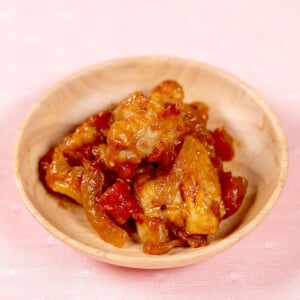
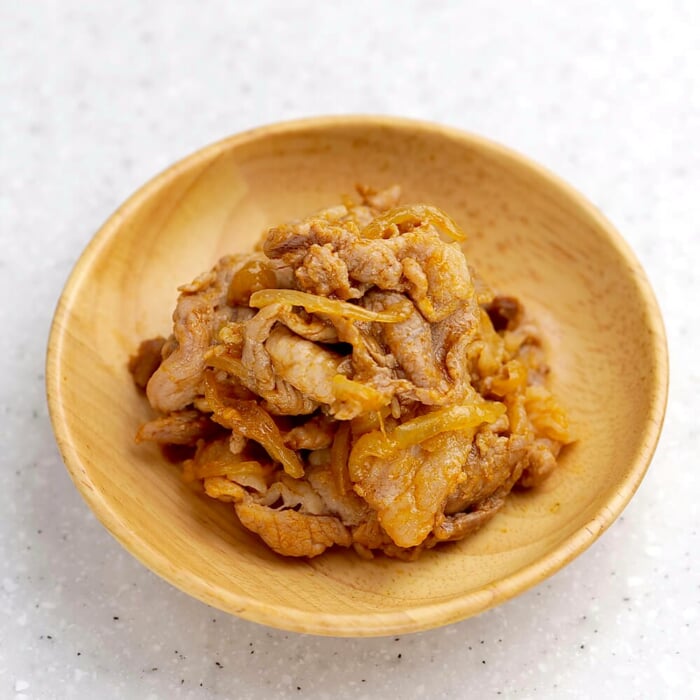
Pork Chap is a Japanese yoshoku (Western-style) classic: thin slices of pork and soft sautéed onion simmered in a sauce built on ketchup, chuno sauce, a little vinegar and sugar. The ketchup-based sauce is sweet and gently tangy, which is exactly the kind of flavor young children take to, and the sauce soaks into rice beautifully. The pork is rubbed with joshinko rice flour before cooking so the sauce clings to every piece and the meat stays tender. It is made without egg or milk.
Added. Open the recipe helper (bottom right) → ☰ Menu → 🛒 Shopping list to see the ingredients for your family size.
Printing uses the number of adults and children set under Ingredients, so set those first.
Ingredients
Amounts for 1 child (1 serving). An adult counts as 2 servings.
One serving here is 1.5× the portion served to a child in a Japanese preschool, sized for Western appetites. An adult counts as two servings. Tap an ingredient to check it off.
Ingredients
- 60 gthinly sliced pork (komagire)Small, thin offcuts of pork sold in Japan for quick stir-fries and simmered dishes. Substitute: Thinly sliced pork shoulder or loin cut into bite-size pieces.
- 30 gonion
Seasonings
- 3 gjoshinko (Japanese non-glutinous rice flour)Fine flour milled from regular short-grain rice, used for chewy Japanese sweets like dango. Substitute: Plain rice flour (not glutinous/sweet rice flour).
- 1.5 gvegetable oil
- 4.1 gketchup
- 1.5 gchuno sauce (Japanese medium-thick brown sauce)A sweet, tangy, fruit-and-vegetable-based brown sauce that sits between thin Worcestershire and thick tonkatsu sauce. Substitute: Tonkatsu sauce, or Worcestershire sauce mixed with a little ketchup.
- 0.3 gconsommé bouillon (allergen-free)Japanese-style consommé stock granules or cubes, used as a Western-style soup base. This kind is made without egg and milk, but most recipes on this site that use it list wheat in their allergens, so check the label if you avoid wheat. Substitute: A chicken or vegetable bouillon powder or cube made without egg, milk or wheat (check the label).
- 0.3 gsugar
- 0.5 gvinegar
- 0.3 gsoy sauce (wheat-free)Soy sauce brewed without wheat; regular Japanese soy sauce is made with roasted wheat. Substitute: Tamari, which is usually brewed without wheat; check the label.
- 0.3 ggarlic paste (tube)Grated garlic sold ready to use in a squeeze tube, a staple in Japanese kitchens. Japanese school lunch kitchens grate fresh garlic for its aroma, but for cooking at home Aoi says the tube works just fine. Tube pastes often contain added salt, oil and other ingredients, so check the label. Substitute: Use freshly grated garlic in the same amount. 1 teaspoon of paste is about 5 g.
- 0 gsalt
About the Japanese ingredients in this recipe
- thinly sliced pork (komagire) (豚こま切れ肉)
- Small, thin offcuts of pork sold in Japan for quick stir-fries and simmered dishes. Substitute: Thinly sliced pork shoulder or loin cut into bite-size pieces.
- joshinko (Japanese non-glutinous rice flour) (上新粉)
- Fine flour milled from regular short-grain rice, used for chewy Japanese sweets like dango. Substitute: Plain rice flour (not glutinous/sweet rice flour).
- chuno sauce (Japanese medium-thick brown sauce) (中濃ソース)
- A sweet, tangy, fruit-and-vegetable-based brown sauce that sits between thin Worcestershire and thick tonkatsu sauce. Substitute: Tonkatsu sauce, or Worcestershire sauce mixed with a little ketchup.
- consommé bouillon (allergen-free) (コンソメ(アレルゲン不使用))
- Japanese-style consommé stock granules or cubes, used as a Western-style soup base. This kind is made without egg and milk, but most recipes on this site that use it list wheat in their allergens, so check the label if you avoid wheat. Substitute: A chicken or vegetable bouillon powder or cube made without egg, milk or wheat (check the label).
- soy sauce (wheat-free) (しょうゆ(小麦不使用))
- Soy sauce brewed without wheat; regular Japanese soy sauce is made with roasted wheat. Substitute: Tamari, which is usually brewed without wheat; check the label.
- garlic paste (tube) (にんにくチューブ)
- Grated garlic sold ready to use in a squeeze tube, a staple in Japanese kitchens. Japanese school lunch kitchens grate fresh garlic for its aroma, but for cooking at home Aoi says the tube works just fine. Tube pastes often contain added salt, oil and other ingredients, so check the label. Substitute: Use freshly grated garlic in the same amount. 1 teaspoon of paste is about 5 g.
Directions
- 1
Cut the pork into 1 to 2 cm wide pieces and rub the joshinko into it. Thinly slice the onion into half-length slices.
- 2
Heat the oil in a frying pan, add the onion and sauté well.
- 3
Add the pork and stir-fry, then add all the seasonings and adjust the seasoning to taste.
Nutrition
| Per | 1 serving | 1 adult serving | Your total |
|---|---|---|---|
| Energy | 144 kcal | 288 kcal | 144 kcal |
| Protein | 12.8 g | 25.5 g | 12.8 g |
| Fat | 7.7 g | 15.3 g | 7.7 g |
| Carbohydrates | 7.2 g | 14.4 g | 7.2 g |
| Fiber | 0.5 g | 0.9 g | 0.5 g |
| Salt equivalent | 0.5 g | 0.9 g | 0.5 g |
| Calcium | 9 mg | 18 mg | 9 mg |
| Iron | 0.6 mg | 1.2 mg | 0.6 mg |
| Potassium | 279 mg | 558 mg | 279 mg |
| Energy | Protein | Fat | Carbs | Fiber | Salt equiv. | Calcium | Iron | Potassium | |
|---|---|---|---|---|---|---|---|---|---|
| 1 serving | 144 kcal | 12.8 g | 7.7 g | 7.2 g | 0.5 g | 0.5 g | 9 mg | 0.6 mg | 279 mg |
| 1 adult serving | 288 kcal | 25.5 g | 15.3 g | 14.4 g | 0.9 g | 0.9 g | 18 mg | 1.2 mg | 558 mg |
Values are per serving (1.5× the Japanese preschool portion); an adult serving is double. They were calculated by a licensed Japanese nutritionist using the Standard Tables of Food Composition in Japan. "Salt equivalent" is sodium × 2.54, the standard Japanese measure. Allergen flags cover egg, milk and wheat only and come from the nutritionist's records. Soy sauce and miso are made with wheat but are usually allowed on Japanese wheat-free school menus, so check with your doctor.