Curry Rice (Milk-Free)
カレーライス(乳小麦なし) · Kare Raisu
 By Aoi, licensed nutritionist · From a Japanese preschool lunch menu
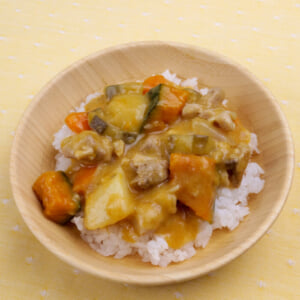
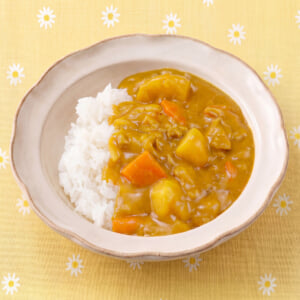
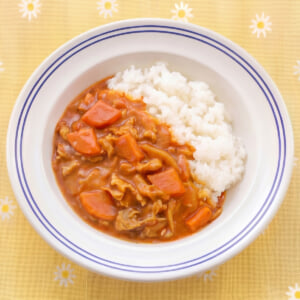
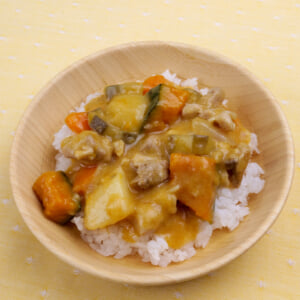
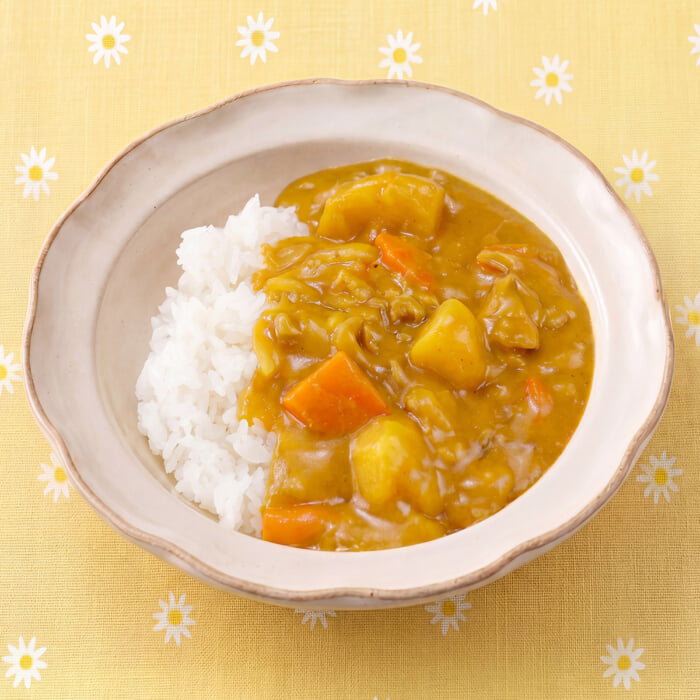
Curry rice is one of the best-loved dishes on Japanese school lunch menus, and this is the mild, from-scratch version we make in the preschool kitchen. Instead of a store-bought roux block, the sauce is built from curry powder, ketchup and chuno sauce, then thickened with joshinko rice flour and soy milk rather than butter and flour, so it is dairy-free and egg-free. The pork and vegetables are simmered until soft enough for little mouths, and the gentle sweetness from the onion, ketchup and soy milk keeps the spice level right for young children.
Added. Open the recipe helper (bottom right) → ☰ Menu → 🛒 Shopping list to see the ingredients for your family size.
Printing uses the number of adults and children set under Ingredients, so set those first.
Ingredients
Amounts for 1 child (1 serving). An adult counts as 2 servings.
One serving here is 1.5× the portion served to a child in a Japanese preschool, sized for Western appetites. An adult counts as two servings. Tap an ingredient to check it off.
Ingredients
- 82.5 griceJapanese short-grain white rice (japonica), which cooks up soft and slightly sticky. The amount listed is for uncooked rice. Substitute: Sushi rice, or another short-grain or medium-grain rice such as Calrose.
- 30 gthinly sliced pork (komagire)Small, thin offcuts of pork sold in Japan for quick stir-fries and simmered dishes. Substitute: Thinly sliced pork shoulder or loin cut into bite-size pieces.
- 15 gcarrot
- 30 gonion
- 45 gpotato
Seasonings
- 3.8 gvegetable oil
- 150 gwater
- 0.4 gconsommé bouillon (allergen-free)Japanese-style consommé stock granules or cubes, used as a Western-style soup base. This kind is made without egg and milk, but most recipes on this site that use it list wheat in their allergens, so check the label if you avoid wheat. Substitute: A chicken or vegetable bouillon powder or cube made without egg, milk or wheat (check the label).
- 2.7 gketchup
- 3.8 gchuno sauce (Japanese medium-thick brown sauce)A sweet, tangy, fruit-and-vegetable-based brown sauce that sits between thin Worcestershire and thick tonkatsu sauce. Substitute: Tonkatsu sauce, or Worcestershire sauce mixed with a little ketchup.
- 0.6 gsalt
- 0.2 gcurry powder
- 12 gjoshinko (Japanese non-glutinous rice flour)Fine flour milled from regular short-grain rice, used for chewy Japanese sweets like dango. Substitute: Plain rice flour (not glutinous/sweet rice flour).
- 15 gsweetened soy milk (Japanese chosei tonyu)Japanese 'prepared' soy milk that is lightly sweetened and flavored to taste milder than plain soy milk. Substitute: Regular (original, lightly sweetened) soy milk from the supermarket.
About the Japanese ingredients in this recipe
- rice (米)
- Japanese short-grain white rice (japonica), which cooks up soft and slightly sticky. The amount listed is for uncooked rice. Substitute: Sushi rice, or another short-grain or medium-grain rice such as Calrose.
- thinly sliced pork (komagire) (豚こま切れ肉)
- Small, thin offcuts of pork sold in Japan for quick stir-fries and simmered dishes. Substitute: Thinly sliced pork shoulder or loin cut into bite-size pieces.
- consommé bouillon (allergen-free) (コンソメ(アレルゲン不使用))
- Japanese-style consommé stock granules or cubes, used as a Western-style soup base. This kind is made without egg and milk, but most recipes on this site that use it list wheat in their allergens, so check the label if you avoid wheat. Substitute: A chicken or vegetable bouillon powder or cube made without egg, milk or wheat (check the label).
- chuno sauce (Japanese medium-thick brown sauce) (中濃ソース)
- A sweet, tangy, fruit-and-vegetable-based brown sauce that sits between thin Worcestershire and thick tonkatsu sauce. Substitute: Tonkatsu sauce, or Worcestershire sauce mixed with a little ketchup.
- joshinko (Japanese non-glutinous rice flour) (上新粉)
- Fine flour milled from regular short-grain rice, used for chewy Japanese sweets like dango. Substitute: Plain rice flour (not glutinous/sweet rice flour).
- sweetened soy milk (Japanese chosei tonyu) (調製豆乳)
- Japanese 'prepared' soy milk that is lightly sweetened and flavored to taste milder than plain soy milk. Substitute: Regular (original, lightly sweetened) soy milk from the supermarket.
Directions
- 1
Cut the pork into 1-2 cm wide pieces. Cut the carrot and potato into thick quarter-rounds (icho-giri), and thinly slice the onion, cutting the slices in half so they are half the length.
- 2
Heat the oil in a pot and sauté the carrot, onion, pork and potato, adding them in that order. Add the water and simmer thoroughly, skimming off any scum as it rises. Once the vegetables are soft, add the consommé, ketchup, chuno sauce, salt and curry powder and simmer a little longer.
- 3
To finish, stir in the joshinko dissolved in water and the soy milk, and mix well until the sauce thickens.
- 4
Spoon the curry over cooked rice.
Nutrition
| Per | 1 serving | 1 adult serving | Your total |
|---|---|---|---|
| Energy | 469.5 kcal | 939 kcal | 469.5 kcal |
| Protein | 13.7 g | 27.3 g | 13.7 g |
| Fat | 8.3 g | 16.5 g | 8.3 g |
| Carbohydrates | 88.2 g | 176.4 g | 88.2 g |
| Fiber | 5.7 g | 11.4 g | 5.7 g |
| Salt equivalent | 1 g | 2.1 g | 1 g |
| Calcium | 25.5 mg | 51 mg | 25.5 mg |
| Iron | 1.4 mg | 2.7 mg | 1.4 mg |
| Potassium | 513 mg | 1026 mg | 513 mg |
| Energy | Protein | Fat | Carbs | Fiber | Salt equiv. | Calcium | Iron | Potassium | |
|---|---|---|---|---|---|---|---|---|---|
| 1 serving | 469.5 kcal | 13.7 g | 8.3 g | 88.2 g | 5.7 g | 1 g | 25.5 mg | 1.4 mg | 513 mg |
| 1 adult serving | 939 kcal | 27.3 g | 16.5 g | 176.4 g | 11.4 g | 2.1 g | 51 mg | 2.7 mg | 1026 mg |
Values are per serving (1.5× the Japanese preschool portion); an adult serving is double. They were calculated by a licensed Japanese nutritionist using the Standard Tables of Food Composition in Japan. "Salt equivalent" is sodium × 2.54, the standard Japanese measure. Allergen flags cover egg, milk and wheat only and come from the nutritionist's records. Soy sauce and miso are made with wheat but are usually allowed on Japanese wheat-free school menus, so check with your doctor.