Meat Doria (Rice with Meat Sauce)
ミートドリア · Mīto Doria
 By Aoi, licensed nutritionist · From a Japanese preschool lunch menu
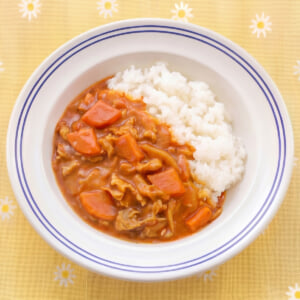
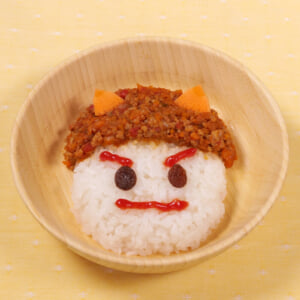
Doria is a Japanese yoshoku (Western-style) classic, created at the Hotel New Grand in Yokohama and usually made as a baked rice gratin under a blanket of white sauce. This preschool version keeps things simpler: a gentle, ketchup-based meat sauce with finely minced carrot and onion is spooned over hot rice, no oven required. Simmering the sauce cooks off the sharp edge of the ketchup and chuno sauce, so the flavor is sweet and mellow, and thickening it with joshinko rice flour instead of a flour roux gives a glossy sauce that clings to every grain of rice. Kids love the familiar ketchup taste, and the vegetables are chopped so small they disappear right into the sauce.
Added. Open the recipe helper (bottom right) → ☰ Menu → 🛒 Shopping list to see the ingredients for your family size.
Printing uses the number of adults and children set under Ingredients, so set those first.
Ingredients
Amounts for 1 child (1 serving). An adult counts as 2 servings.
One serving here is 1.5× the portion served to a child in a Japanese preschool, sized for Western appetites. An adult counts as two servings. Tap an ingredient to check it off.
Ingredients
- 75 griceJapanese short-grain white rice (japonica), which cooks up soft and slightly sticky. The amount listed is for uncooked rice. Substitute: Sushi rice, or another short-grain or medium-grain rice such as Calrose.
- 36 gground pork
- 18 gcarrot
- 36 gonion
Seasonings
- 2.3 gvegetable oil
- 54 gwater
- 30 gketchup
- 4.5 gchuno sauce (Japanese medium-thick brown sauce)A sweet, tangy, fruit-and-vegetable-based brown sauce that sits between thin Worcestershire and thick tonkatsu sauce. Substitute: Tonkatsu sauce, or Worcestershire sauce mixed with a little ketchup.
- 0.3 gsalt
- to tastepepper
- 3.6 gjoshinko (Japanese non-glutinous rice flour)Fine flour milled from regular short-grain rice, used for chewy Japanese sweets like dango. Substitute: Plain rice flour (not glutinous/sweet rice flour).
About the Japanese ingredients in this recipe
- rice (米)
- Japanese short-grain white rice (japonica), which cooks up soft and slightly sticky. The amount listed is for uncooked rice. Substitute: Sushi rice, or another short-grain or medium-grain rice such as Calrose.
- chuno sauce (Japanese medium-thick brown sauce) (中濃ソース)
- A sweet, tangy, fruit-and-vegetable-based brown sauce that sits between thin Worcestershire and thick tonkatsu sauce. Substitute: Tonkatsu sauce, or Worcestershire sauce mixed with a little ketchup.
- joshinko (Japanese non-glutinous rice flour) (上新粉)
- Fine flour milled from regular short-grain rice, used for chewy Japanese sweets like dango. Substitute: Plain rice flour (not glutinous/sweet rice flour).
Directions
- 1
Finely mince the carrot and onion. Heat the oil in a frying pan and sauté the carrot and onion well; once they are soft, add the ground pork and cook, stirring, until browned.
- 2
Add the water and the seasonings and simmer to cook off the acidity of the ketchup and sauce. To finish, stir in the joshinko dissolved in a little water to thicken the sauce.
- 3
Spoon the cooked rice into bowls and ladle the meat sauce over the top.
Nutrition
| Per | 1 serving | 1 adult serving | Your total |
|---|---|---|---|
| Energy | 418.5 kcal | 837 kcal | 418.5 kcal |
| Protein | 12 g | 24 g | 12 g |
| Fat | 9.1 g | 18.3 g | 9.1 g |
| Carbohydrates | 75.3 g | 150.6 g | 75.3 g |
| Fiber | 2 g | 3.9 g | 2 g |
| Salt equivalent | 1.5 g | 3 g | 1.5 g |
| Calcium | 24 mg | 48 mg | 24 mg |
| Iron | 1.4 mg | 2.7 mg | 1.4 mg |
| Potassium | 406.5 mg | 813 mg | 406.5 mg |
| Energy | Protein | Fat | Carbs | Fiber | Salt equiv. | Calcium | Iron | Potassium | |
|---|---|---|---|---|---|---|---|---|---|
| 1 serving | 418.5 kcal | 12 g | 9.1 g | 75.3 g | 2 g | 1.5 g | 24 mg | 1.4 mg | 406.5 mg |
| 1 adult serving | 837 kcal | 24 g | 18.3 g | 150.6 g | 3.9 g | 3 g | 48 mg | 2.7 mg | 813 mg |
Values are per serving (1.5× the Japanese preschool portion); an adult serving is double. They were calculated by a licensed Japanese nutritionist using the Standard Tables of Food Composition in Japan. "Salt equivalent" is sodium × 2.54, the standard Japanese measure. Allergen flags cover egg, milk and wheat only and come from the nutritionist's records. Soy sauce and miso are made with wheat but are usually allowed on Japanese wheat-free school menus, so check with your doctor.