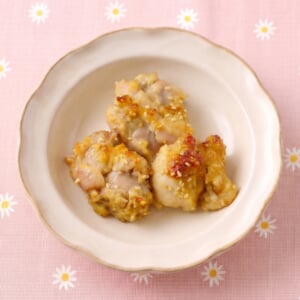
Gohei Mochi (Grilled Rice Cakes with Miso Glaze)
五平餅 · Gohei Mochi
 By Aoi, licensed nutritionist · From a Japanese preschool lunch menu
Gohei mochi is a rustic snack from the mountains of central Japan, especially the Kiso Valley area of Nagano and Gifu, where cooked rice is mashed, pressed into flat cakes, grilled and brushed with a sweet, savory sauce. It is not true mochi made from pounded glutinous rice, so the texture stays soft and easy for small children to chew. In this preschool version the cakes are shaped into little ovals and baked on a sheet instead of on skewers, which is safer for kids and lets you make a whole batch at once. The glaze of light miso, soy sauce, sugar and mirin, finished with ground sesame, gives that toasty sweet-and-salty flavor children love at afternoon snack time.
Added. Open the recipe helper (bottom right) → ☰ Menu → 🛒 Shopping list to see the ingredients for your family size.
Printing uses the number of adults and children set under Ingredients, so set those first.
Ingredients
Amounts for 1 child (1 serving). An adult counts as 2 servings.
One serving here is 1.5× the portion served to a child in a Japanese preschool, sized for Western appetites. An adult counts as two servings. Tap an ingredient to check it off.
Ingredients
- 60 griceJapanese short-grain white rice (japonica), which cooks up soft and slightly sticky. The amount listed is for uncooked rice. Substitute: Sushi rice, or another short-grain or medium-grain rice such as Calrose.
- 1.8 gground white sesame seeds
Seasonings
- 4.5 glight rice misoA pale, salty rice miso, the standard everyday miso in Japan. Substitute: Any light, white, or awase (blended) miso.
- 3 gsoy sauce
- 3 gsugar
- 1.8 gmirinMirin is a sweet Japanese rice seasoning that adds gentle sweetness and a glossy finish. Hon-mirin (true mirin) contains about 14% alcohol; "mirin-style seasoning" has little or no alcohol. Some alcohol can remain after short cooking. If you prefer no alcohol for children, use the substitute. Substitute: For each tablespoon of mirin, use 1 tablespoon water plus 1 to 2 teaspoons sugar.
- 0.9 gpotato starchJapanese katakuriko, a fine potato starch used for thickening sauces and coating food before frying. Substitute: Cornstarch: start with the same amount and add a little more if it is still thin. It thickens a little less than potato starch and needs a couple of minutes at a gentle bubble to reach full thickness.
- 4.5 gwater
About the Japanese ingredients in this recipe
- rice (米)
- Japanese short-grain white rice (japonica), which cooks up soft and slightly sticky. The amount listed is for uncooked rice. Substitute: Sushi rice, or another short-grain or medium-grain rice such as Calrose.
- light rice miso (米みそ(淡色辛みそ))
- A pale, salty rice miso, the standard everyday miso in Japan. Substitute: Any light, white, or awase (blended) miso.
- mirin (みりん)
- Mirin is a sweet Japanese rice seasoning that adds gentle sweetness and a glossy finish. Hon-mirin (true mirin) contains about 14% alcohol; "mirin-style seasoning" has little or no alcohol. Some alcohol can remain after short cooking. If you prefer no alcohol for children, use the substitute. Substitute: For each tablespoon of mirin, use 1 tablespoon water plus 1 to 2 teaspoons sugar.
- potato starch (片栗粉)
- Japanese katakuriko, a fine potato starch used for thickening sauces and coating food before frying. Substitute: Cornstarch: start with the same amount and add a little more if it is still thin. It thickens a little less than potato starch and needs a couple of minutes at a gentle bubble to reach full thickness. Read the guide: Katakuriko (Japanese Potato Starch) and What to Use Instead → Guide: japanese-school-lunch.com/articles/katakuriko-potato-starch/
Directions
- 1
Cook the rice as usual, then mash it coarsely with a potato masher. Shape it into small flat oval cakes.
- 2
Arrange the cakes from step 1 on a baking sheet and bake them in the oven.
- 3
Put the miso, soy sauce, sugar and mirin in a saucepan over the heat and stir well. Once the mixture turns glossy, stir in the potato starch dissolved in water to thicken it. Add the ground white sesame seeds to finish the sauce.
- 4
When the cakes from step 2 are starting to brown, brush them with the sauce from step 3 and bake once more.
Nutrition
| Per | 1 serving | 1 adult serving | Your total |
|---|---|---|---|
| Energy | 244.5 kcal | 489 kcal | 244.5 kcal |
| Protein | 4.9 g | 9.9 g | 4.9 g |
| Fat | 1.8 g | 3.6 g | 1.8 g |
| Carbohydrates | 57.3 g | 114.6 g | 57.3 g |
| Salt equivalent | 1 g | 2.1 g | 1 g |
| Calcium | 30 mg | 60 mg | 30 mg |
| Iron | 0.9 mg | 1.8 mg | 0.9 mg |
| Energy | Protein | Fat | Carbs | Salt equiv. | Calcium | Iron | |
|---|---|---|---|---|---|---|---|
| 1 serving | 244.5 kcal | 4.9 g | 1.8 g | 57.3 g | 1 g | 30 mg | 0.9 mg |
| 1 adult serving | 489 kcal | 9.9 g | 3.6 g | 114.6 g | 2.1 g | 60 mg | 1.8 mg |
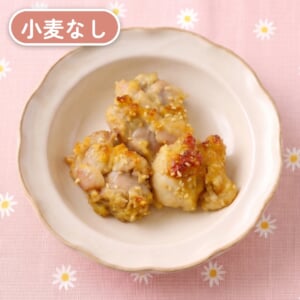
Values are per serving (1.5× the Japanese preschool portion); an adult serving is double. They were calculated by a licensed Japanese nutritionist using the Standard Tables of Food Composition in Japan. "Salt equivalent" is sodium × 2.54, the standard Japanese measure. Allergen flags cover egg, milk and wheat only and come from the nutritionist's records. Soy sauce and miso are made with wheat but are usually allowed on Japanese wheat-free school menus, so check with your doctor.