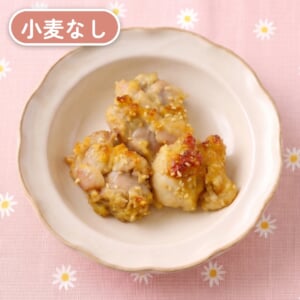
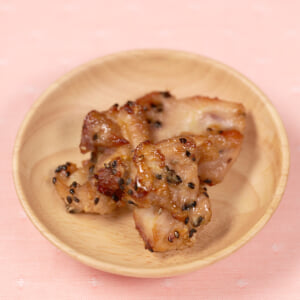
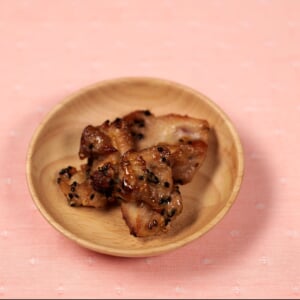
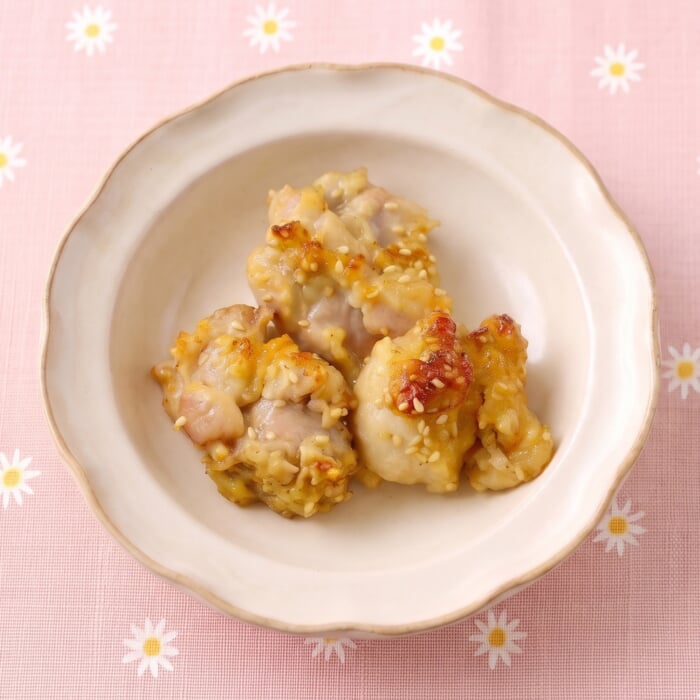
Sesame Miso Baked Chicken
鶏肉の胡麻味噌焼き · Tori no Goma Miso Yaki
 By Aoi, licensed nutritionist · From a Japanese preschool lunch menu
Goma miso yaki is chicken thigh rubbed with a sweet-savory miso marinade, tossed with flour and toasted white sesame seeds, and baked in the oven. The miso tenderizes the meat while the sesame toasts into a nutty, fragrant crust, and the mild sweetness from sugar and mirin makes it a reliable favorite with small children. It is made without egg or milk, and because it bakes on a single tray it is just as easy for a weeknight dinner or a bento box as it is for a preschool lunchroom.
Toddlers to adults. Portion out the children's share before the final seasoning, then season the rest for adults.
Added. Open the recipe helper (bottom right) → ☰ Menu → 🛒 Shopping list to see the ingredients for your family size.
Printing uses the number of adults and children set under Ingredients, so set those first.
Ingredients
Amounts for 1 child (1 serving). An adult counts as 2 servings.
One serving here is 1.5× the portion served to a child in a Japanese preschool, sized for Western appetites. An adult counts as two servings. Tap an ingredient to check it off.
Ingredients
- 75 gchicken thigh
- 4.2 gflour
- 3.8 gtoasted white sesame seeds
Sauce Mixture (A)
- 3 gmisoFermented soybean paste. Salty and savory, it is Japan's everyday seasoning for miso soup and many simmered dishes. Substitute: Any light (white or awase) miso. Misos differ in saltiness, so start with a little less and taste. Some misos are made with barley or wheat, so check the label if you avoid them.
- 2 gsugar
- 2.1 gmirinMirin is a sweet Japanese rice seasoning that adds gentle sweetness and a glossy finish. Hon-mirin (true mirin) contains about 14% alcohol; "mirin-style seasoning" has little or no alcohol. Some alcohol can remain after short cooking. If you prefer no alcohol for children, use the substitute. Substitute: For each tablespoon of mirin, use 1 tablespoon water plus 1 to 2 teaspoons sugar.
- 1.4 gsoy sauce
About the Japanese ingredients in this recipe
- miso (みそ)
- Fermented soybean paste. Salty and savory, it is Japan's everyday seasoning for miso soup and many simmered dishes. Substitute: Any light (white or awase) miso. Misos differ in saltiness, so start with a little less and taste. Some misos are made with barley or wheat, so check the label if you avoid them.
- mirin (みりん)
- Mirin is a sweet Japanese rice seasoning that adds gentle sweetness and a glossy finish. Hon-mirin (true mirin) contains about 14% alcohol; "mirin-style seasoning" has little or no alcohol. Some alcohol can remain after short cooking. If you prefer no alcohol for children, use the substitute. Substitute: For each tablespoon of mirin, use 1 tablespoon water plus 1 to 2 teaspoons sugar.
Directions
Video is in Japanese — the steps below are synced to it, so tap ▶ on a step to jump to that moment.
- 1
Preheat the oven to 200°C (400°F). Cut the chicken into pieces about half the size of karaage pieces. (For 1- to 2-year-olds, the skin can be hard to bite through, so feel free to remove it.)
- 2
Mix the (A) ingredients in a bowl, add the chicken and rub the marinade into the meat. (If you are also making a toddler portion, use a separate bowl with about 70% of the (A) amounts and rub it in the same way.) (Marinating in the refrigerator from the day before makes the chicken even more tender. If you want to freeze it before baking, freeze it at this stage.)
- 3
Add the flour and white sesame seeds and rub them in until no dry flour remains. (Working the flour into the meat keeps it tender, and the white sesame seeds add a lot of toasty aroma.)
- 4
Line a baking sheet with parchment paper, lay the chicken on it and press it flat with your hands to spread it out. Bake in the 200°C (400°F) oven for about 20 minutes. (If you are also making a toddler portion, place it separately on the tray. Spreading the chicken out thinly helps it cook evenly without patchy browning.)
The miso tenderizes the meat. Baking in the oven keeps the surface from over-browning, so the chicken comes out soft and juicy.
This is also a great side for bento boxes. For children around age 1, snipping it into small pieces with kitchen scissors makes it easier to eat.
Nutrition
| Per | 1 serving | 1 adult serving | Your total |
|---|---|---|---|
| Energy | 199.5 kcal | 399 kcal | 199.5 kcal |
| Protein | 14.1 g | 28.2 g | 14.1 g |
| Fat | 12.9 g | 25.8 g | 12.9 g |
| Carbohydrates | 7.5 g | 15 g | 7.5 g |
| Fiber | 0.8 g | 1.5 g | 0.8 g |
| Salt equivalent | 0.8 g | 1.5 g | 0.8 g |
| Calcium | 52.5 mg | 105 mg | 52.5 mg |
| Iron | 1 mg | 2.1 mg | 1 mg |
| Potassium | 255 mg | 510 mg | 255 mg |
| Phosphorus | 159 mg | 318 mg | 159 mg |
| Energy | Protein | Fat | Carbs | Fiber | Salt equiv. | Calcium | Iron | Potassium | Phosphorus | |
|---|---|---|---|---|---|---|---|---|---|---|
| 1 serving | 199.5 kcal | 14.1 g | 12.9 g | 7.5 g | 0.8 g | 0.8 g | 52.5 mg | 1 mg | 255 mg | 159 mg |
| 1 adult serving | 399 kcal | 28.2 g | 25.8 g | 15 g | 1.5 g | 1.5 g | 105 mg | 2.1 mg | 510 mg | 318 mg |
Values are per serving (1.5× the Japanese preschool portion); an adult serving is double. They were calculated by a licensed Japanese nutritionist using the Standard Tables of Food Composition in Japan. "Salt equivalent" is sodium × 2.54, the standard Japanese measure. Allergen flags cover egg, milk and wheat only and come from the nutritionist's records. Soy sauce and miso are made with wheat but are usually allowed on Japanese wheat-free school menus, so check with your doctor.