Bulgogi Rice Bowl (Wheat-Free)
プルコギ丼(小麦なし)
 By Aoi, licensed nutritionist · From a Japanese preschool lunch menu
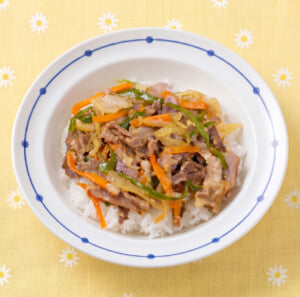
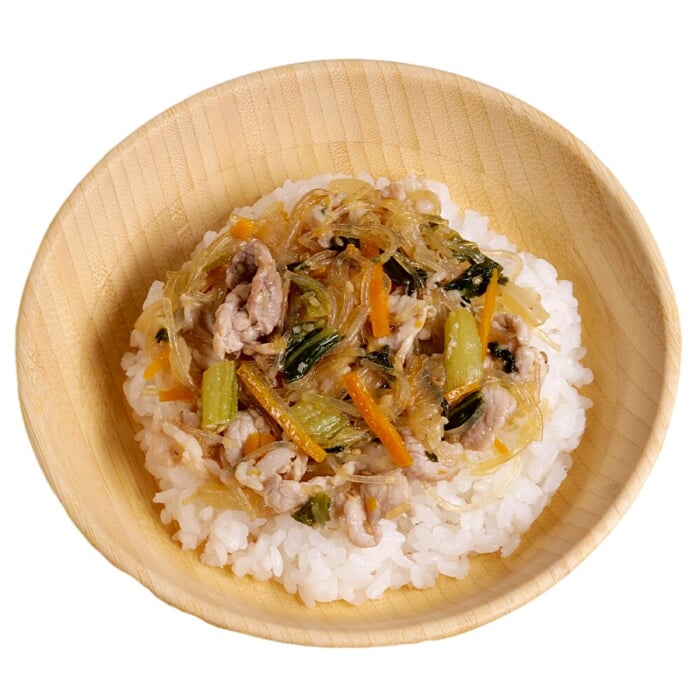
Bulgogi is a Korean dish of thinly sliced meat cooked in a sweet, garlicky soy-based sauce, and this school-lunch version turns it into a rice bowl that little ones can eat with a spoon. We use thinly sliced pork, glass noodles, onion, carrot and bok choy, so plenty of vegetables slip in alongside the meat and soak up the sauce. The pork gets a light coating of joshinko (rice flour) rather than wheat flour, which keeps it tender and helps the sauce cling, and the seasoning is kept gentle enough for toddlers while still being savory enough that kids clean their bowls.
Wheat-free, but uses soy sauce (made with wheat). Japanese school-lunch allergy menus usually allow it, so check with your doctor. How to read the labels
Added. Open the recipe helper (bottom right) → ☰ Menu → 🛒 Shopping list to see the ingredients for your family size.
Printing uses the number of adults and children set under Ingredients, so set those first.
Ingredients
Amounts for 1 child (1 serving). An adult counts as 2 servings.
One serving here is 1.5× the portion served to a child in a Japanese preschool, sized for Western appetites. An adult counts as two servings. Tap an ingredient to check it off.
Ingredients
- 75 griceJapanese short-grain white rice (japonica), which cooks up soft and slightly sticky. The amount listed is for uncooked rice. Substitute: Sushi rice, or another short-grain or medium-grain rice such as Calrose.
- 30 gthinly sliced pork (komagire)Small, thin offcuts of pork sold in Japan for quick stir-fries and simmered dishes. Substitute: Thinly sliced pork shoulder or loin cut into bite-size pieces.
- 3 gharusame (glass noodles)Thin, translucent noodles made from potato or mung bean starch that soften quickly in hot water. Substitute: Mung bean glass noodles or thin rice vermicelli.
- 15 gonion
- 5.3 gcarrot
- 15 gbok choy
Seasonings
- 1.5 gjoshinko (Japanese non-glutinous rice flour)Fine flour milled from regular short-grain rice, used for chewy Japanese sweets like dango. Substitute: Plain rice flour (not glutinous/sweet rice flour).
- 3 gsesame oil
- 45 gwater
- 3 gsoy sauce
- 0.8 gmirinMirin is a sweet Japanese rice seasoning that adds gentle sweetness and a glossy finish. Hon-mirin (true mirin) contains about 14% alcohol; "mirin-style seasoning" has little or no alcohol. Some alcohol can remain after short cooking. If you prefer no alcohol for children, use the substitute. Substitute: For each tablespoon of mirin, use 1 tablespoon water plus 1 to 2 teaspoons sugar.
- 0.5 gsugar
- 0.5 ggarlic paste (tube)Grated garlic sold ready to use in a squeeze tube, a staple in Japanese kitchens. Japanese school lunch kitchens grate fresh garlic for its aroma, but for cooking at home Aoi says the tube works just fine. Tube pastes often contain added salt, oil and other ingredients, so check the label. Substitute: Use freshly grated garlic in the same amount. 1 teaspoon of paste is about 5 g.
- 0.8 gwhite sesame seeds
About the Japanese ingredients in this recipe
- rice (米)
- Japanese short-grain white rice (japonica), which cooks up soft and slightly sticky. The amount listed is for uncooked rice. Substitute: Sushi rice, or another short-grain or medium-grain rice such as Calrose.
- thinly sliced pork (komagire) (豚こま切れ肉)
- Small, thin offcuts of pork sold in Japan for quick stir-fries and simmered dishes. Substitute: Thinly sliced pork shoulder or loin cut into bite-size pieces.
- joshinko (Japanese non-glutinous rice flour) (上新粉)
- Fine flour milled from regular short-grain rice, used for chewy Japanese sweets like dango. Substitute: Plain rice flour (not glutinous/sweet rice flour).
- harusame (glass noodles) (春雨)
- Thin, translucent noodles made from potato or mung bean starch that soften quickly in hot water. Substitute: Mung bean glass noodles or thin rice vermicelli.
- mirin (みりん)
- Mirin is a sweet Japanese rice seasoning that adds gentle sweetness and a glossy finish. Hon-mirin (true mirin) contains about 14% alcohol; "mirin-style seasoning" has little or no alcohol. Some alcohol can remain after short cooking. If you prefer no alcohol for children, use the substitute. Substitute: For each tablespoon of mirin, use 1 tablespoon water plus 1 to 2 teaspoons sugar.
- garlic paste (tube) (にんにくチューブ)
- Grated garlic sold ready to use in a squeeze tube, a staple in Japanese kitchens. Japanese school lunch kitchens grate fresh garlic for its aroma, but for cooking at home Aoi says the tube works just fine. Tube pastes often contain added salt, oil and other ingredients, so check the label. Substitute: Use freshly grated garlic in the same amount. 1 teaspoon of paste is about 5 g.
Directions
- 1
Cut the pork into 1-2 cm wide strips and rub the joshinko into it.
- 2
Soak the harusame in lukewarm (or boiling) water until softened, then cut into 3 cm lengths.
- 3
Cut the onion into thin slices, halving them so they are half the usual length. Cut the carrot into short matchsticks and the bok choy into 2 cm wide pieces.
- 4
Heat the sesame oil in a frying pan, add the onion and carrot and stir-fry well. Add the bok choy and stir-fry. Add the water and harusame and simmer until everything is soft.
- 5
Once the liquid has cooked off completely, add the pork and stir-fry, then add the seasonings, garlic paste and white sesame seeds and give everything a quick stir-fry.
- 6
Serve over cooked rice.
Nutrition
| Per | 1 serving | 1 adult serving | Your total |
|---|---|---|---|
| Energy | 369 kcal | 738 kcal | 369 kcal |
| Protein | 11.7 g | 23.4 g | 11.7 g |
| Fat | 7.2 g | 14.4 g | 7.2 g |
| Carbohydrates | 65.4 g | 130.8 g | 65.4 g |
| Fiber | 1.4 g | 2.7 g | 1.4 g |
| Salt equivalent | 0.5 g | 0.9 g | 0.5 g |
| Calcium | 36 mg | 72 mg | 36 mg |
| Iron | 0.9 mg | 1.8 mg | 0.9 mg |
| Potassium | 268.5 mg | 537 mg | 268.5 mg |
| Energy | Protein | Fat | Carbs | Fiber | Salt equiv. | Calcium | Iron | Potassium | |
|---|---|---|---|---|---|---|---|---|---|
| 1 serving | 369 kcal | 11.7 g | 7.2 g | 65.4 g | 1.4 g | 0.5 g | 36 mg | 0.9 mg | 268.5 mg |
| 1 adult serving | 738 kcal | 23.4 g | 14.4 g | 130.8 g | 2.7 g | 0.9 g | 72 mg | 1.8 mg | 537 mg |
Values are per serving (1.5× the Japanese preschool portion); an adult serving is double. They were calculated by a licensed Japanese nutritionist using the Standard Tables of Food Composition in Japan. "Salt equivalent" is sodium × 2.54, the standard Japanese measure. Allergen flags cover egg, milk and wheat only and come from the nutritionist's records. Soy sauce and miso are made with wheat but are usually allowed on Japanese wheat-free school menus, so check with your doctor.