May Queen Potato (Mēkuin): Why I Use It for Japanese Curry
メークイン
 By Aoi, licensed nutritionist · September 26, 2026 · 4 min read
May Queen (mēkuin) is a long, slightly waxy potato sold across Japan that holds its shape in curry. What it is, how I use it, and substitutes.
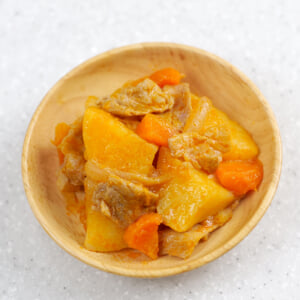
May Queen (メークイン, mēkuin) is a long, smooth-skinned potato sold all over Japan, and it stays in one piece through a long simmer. It is the potato I recommend for Japanese curry, and the one I use for school lunch curry.
What it is
Two potatoes are well known throughout Japan: round, floury Danshaku (男爵) and long, slightly waxy May Queen.
May Queen is an elongated oval, a little plump and curved at one end, with very shallow eyes, so it is easy to peel. The flesh is a pale creamy yellow, smooth and slightly waxy. It has less starch than Danshaku, and even after long cooking it breaks down very little. A Japanese variety reference recommends it for stews, curry rice, oden and salads, and says it is not suited to croquettes, which need a starchier potato.
The variety itself is English. It was introduced in 1900 by Sutton and Sons, and its name comes from the queen chosen at the old May Day village festival. It reached Japan in the early 1910s, although the exact route is not certain. After the war it became popular first in Kansai, where simmered dishes are common, and then nationwide. Hokkaido grows a large share of Japan's May Queen.
How I use it in the video
- 0:30 At the supermarket, I explain that I recommend May Queen, a slightly long variety that doesn't fall apart easily.
- 0:35 It has a mild, mellow flavor that goes well with curry.
- 0:38 I use May Queen for school lunch curry, too.
- 0:41 But May Queen isn't sold where I shop in Okinawa, so I used Danshaku, which means the video also shows how to handle a floury potato.
- 4:07 I cut the potato into thick quarter-rounds. At 4:11 I explain that with Danshaku, which is starchy and crumbles easily, it helps to cut the pieces a little larger. At 4:20 I soak them in water for about 5 minutes.
- 5:57 I stir-fry the potato with the pork so the surface is coated in oil. This keeps water out and helps stop the pieces falling apart.
- 9:06 After the roux goes in, the Danshaku is at its most fragile, so I stir very gently.
With May Queen, you can follow the same steps with a little less worry about the potatoes falling apart.
Tips
- Store it in a cool, dark place. A Japanese variety reference notes that May Queen turns green easily in light and is among the table varieties highest in glycoalkaloids (natural toxins that can make potatoes taste bitter or acrid, and that boiling does not break down). The same reference notes that it is the variety most often involved in poisonings from potatoes grown in kindergarten and school gardens in Japan, so if you grow potatoes with children, choose a different variety and keep the tubers covered with soil and out of the light. Japan's Ministry of Agriculture advises storing potatoes somewhere dark, cool and well ventilated (there is no need to refrigerate them), removing sprouts together with the area around them, and peeling thickly around any green patches.
- Choose firm potatoes with no green skin and no sprouts.
- For toddlers, cut the cooked pieces smaller. At 10:44 I suggest using kitchen scissors on the toddler portion.
If you can't find it
What you want is a potato that stays firm when simmered, not necessarily the waxiest one in the shop.
- United States: red potatoes. Potatoes USA describes them as waxy and staying firm while they cook, and suggests them for soups and stews. Russets are sold as the potato for fluffy mash and baking, so I would treat them like Danshaku.
- United Kingdom: salad (waxy) potatoes such as Charlotte or Maris Peer.
- Germany: look at the cooking type on the bag. Festkochend (firm, green code) holds its shape best. Vorwiegend festkochend (mostly firm, red code) is an all-rounder that is also used in stews.
- Australia: waxy varieties such as Nadine or Nicola.
- Only floury potatoes available? Do what I did in the video: cut them larger, coat them in oil, and stir gently at the end.
Related recipes
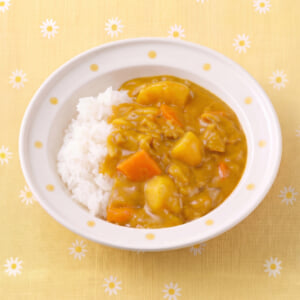
- Japanese Curry Rice with Store-Bought Roux (the recipe from my video)
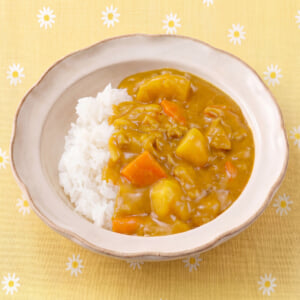
- Japanese Curry Rice
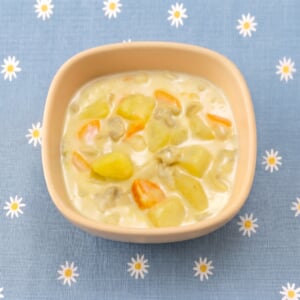
- Curry Stew
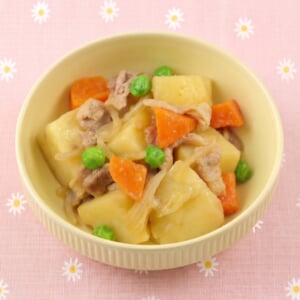
- Nikujaga (Japanese Meat and Potato Stew)
- Country-Style Potato Stew
- All recipes with potato
- Glossary of Japanese school lunch terms