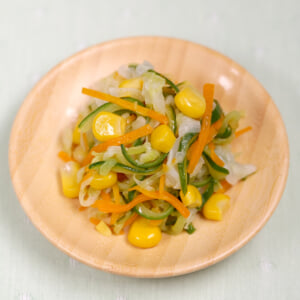
Yukari-ae (Elementary School Portion)
【小学校】ゆかり和え · Yukari-ae
 By Aoi, licensed nutritionist · From a Japanese elementary school lunch menu
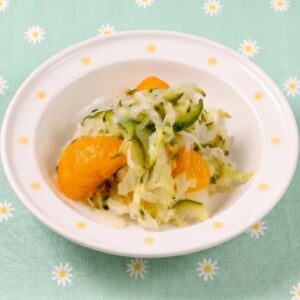
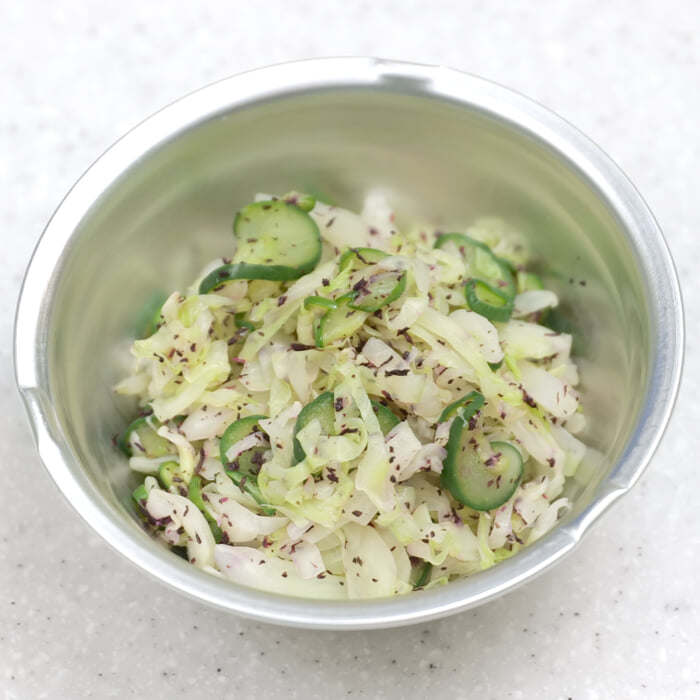
Yukari-ae is a quick Japanese side dish of blanched cabbage and cucumber tossed with yukari, a salty-sour seasoning made from dried red shiso leaves (the same leaves that color umeboshi pickled plums). The gentle tang and pretty purple flecks make plain vegetables far more appealing to children, and briefly blanching the vegetables softens them so they are easy to chew. It is a school lunch standby that comes together in just a few minutes and pairs well with almost any main dish.
Added. Open the recipe helper (bottom right) → ☰ Menu → 🛒 Shopping list to see the ingredients for your family size.
Printing uses the number of adults and children set under Ingredients, so set those first.
Ingredients
Amounts for 1 child (1 serving). An adult counts as 2 servings.
One serving here is 1.5× the portion served to a child in a Japanese elementary school, sized for Western appetites. An adult counts as two servings. Tap an ingredient to check it off.
Ingredients
- 58.8 gcabbage
- 29.9 gcucumber
Seasonings
- 0.9 gyukari (dried red shiso seasoning)A tangy, salty purple sprinkle made from dried red shiso (perilla) leaves, usually shaken over rice. Substitute: Shiso furikake, or a pinch of salt plus a few drops of umeboshi (pickled plum) vinegar.
About the Japanese ingredients in this recipe
- yukari (dried red shiso seasoning) (ゆかり)
- A tangy, salty purple sprinkle made from dried red shiso (perilla) leaves, usually shaken over rice. Substitute: Shiso furikake, or a pinch of salt plus a few drops of umeboshi (pickled plum) vinegar.
Directions
- 1
Cut the cabbage into thin shreds. Slice the cucumber into thin rounds.
- 2
Bring a pot of water to a boil, add the cabbage and cucumber, and once the water returns to a boil, cook for about 1 minute. Rinse under cold running water to cool, then squeeze out the excess water.
- 3
Toss with the yukari.
The yukari flavor fades as it sits, so if there will be a wait before eating, toss the vegetables with the yukari just before serving. Adjust the boiling time to your liking: about 1 minute if you want to keep some crunch, or about 2 minutes for children who are not keen on vegetables. You can swap the cucumber for bean sprouts, too - the method is the same.
Nutrition
| Per | 1 serving | 1 adult serving | Your total |
|---|---|---|---|
| Energy | 19.5 kcal | 39 kcal | 19.5 kcal |
| Protein | 1 g | 2.1 g | 1 g |
| Fat | 0 g | 0 g | 0 g |
| Carbohydrates | 4.2 g | 8.4 g | 4.2 g |
| Fiber | 1.4 g | 2.7 g | 1.4 g |
| Salt equivalent | 0.3 g | 0.6 g | 0.3 g |
| Calcium | 34.5 mg | 69 mg | 34.5 mg |
| Iron | 0.3 mg | 0.6 mg | 0.3 mg |
| Potassium | 174 mg | 348 mg | 174 mg |
| Energy | Protein | Fat | Carbs | Fiber | Salt equiv. | Calcium | Iron | Potassium | |
|---|---|---|---|---|---|---|---|---|---|
| 1 serving | 19.5 kcal | 1 g | 0 g | 4.2 g | 1.4 g | 0.3 g | 34.5 mg | 0.3 mg | 174 mg |
| 1 adult serving | 39 kcal | 2.1 g | 0 g | 8.4 g | 2.7 g | 0.6 g | 69 mg | 0.6 mg | 348 mg |
Values are per serving (1.5× the Japanese elementary-school portion); an adult serving is double. They were calculated by a licensed Japanese nutritionist using the Standard Tables of Food Composition in Japan. "Salt equivalent" is sodium × 2.54, the standard Japanese measure. Allergen flags cover egg, milk and wheat only and come from the nutritionist's records. Soy sauce and miso are made with wheat but are usually allowed on Japanese wheat-free school menus, so check with your doctor.
This is the elementary-school portion of Yukari-ae (Cabbage and Cucumber with Red Shiso) (larger quantities, same method).