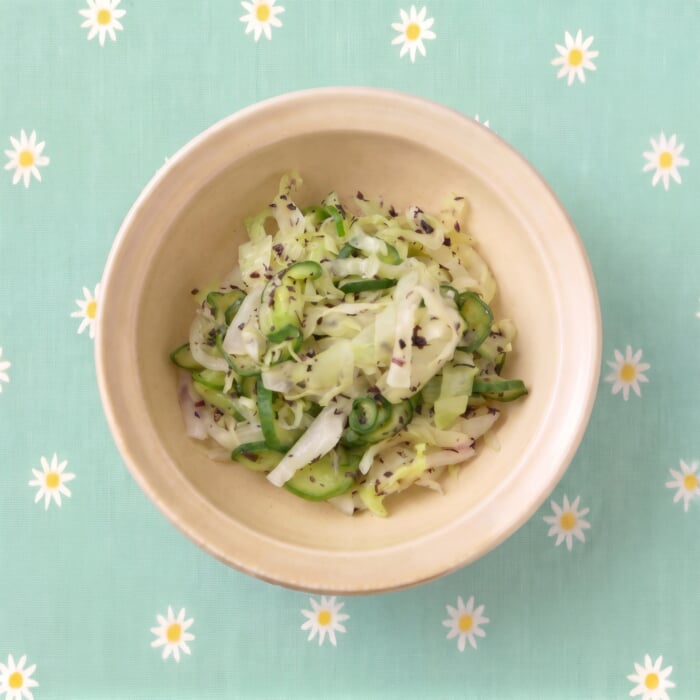
Yukari-ae (Cabbage and Cucumber with Red Shiso)
ゆかり和え · Yukari-ae
 By Aoi, licensed nutritionist · From a Japanese preschool lunch menu
Yukari-ae is one of the simplest side dishes on the preschool lunch menu: quickly blanched cabbage and cucumber tossed with yukari, a Japanese sprinkle made from dried, salted red shiso leaves. Yukari gives the vegetables a pretty purple tint and a gentle, slightly tangy saltiness, so no other seasoning is needed. Its refreshing flavor is a nice counterpoint to fried mains like karaage, and a quick boil makes the vegetables soft enough that even children who are wary of raw salad will give it a try. It is made without egg, milk, or wheat.
Toddlers to adults. The whole family can eat this exactly as written.
Added. Open the recipe helper (bottom right) → ☰ Menu → 🛒 Shopping list to see the ingredients for your family size.
Printing uses the number of adults and children set under Ingredients, so set those first.
Ingredients
Amounts for 1 child (1 serving). An adult counts as 2 servings.
One serving here is 1.5× the portion served to a child in a Japanese preschool, sized for Western appetites. An adult counts as two servings. Tap an ingredient to check it off.
- 60 gcabbage
- 30 gcucumber
- 1 gyukari (dried red shiso seasoning)A tangy, salty purple sprinkle made from dried red shiso (perilla) leaves, usually shaken over rice. Substitute: Shiso furikake, or a pinch of salt plus a few drops of umeboshi (pickled plum) vinegar.
About the Japanese ingredients in this recipe
- yukari (dried red shiso seasoning) (ゆかり)
- A tangy, salty purple sprinkle made from dried red shiso (perilla) leaves, usually shaken over rice. Substitute: Shiso furikake, or a pinch of salt plus a few drops of umeboshi (pickled plum) vinegar.
Directions
Video is in Japanese — the steps below are synced to it, so tap ▶ on a step to jump to that moment.
- 1
Cut the cabbage into thin shreds. Cut the cucumber into thin rounds.
- 2
Bring a pot of water to a boil, add the cabbage and cucumber, and once the water returns to a boil, cook for about 1 minute. Rinse under running water to cool, then squeeze out the water well. (For children who aren't keen on vegetables, boiling for about 2 minutes makes them softer and easier to eat.)
- 3
Give the bag of yukari a gentle shake first so the salt is evenly distributed, then add it to the vegetables from step 2 and toss to combine. (Yukari's flavor fades as it sits, so if there will be a wait before eating, toss it in just before serving.)
Tips for Making It Well
- Yukari is the only seasoning. Its refreshing flavor keeps this light and easy to eat, and it goes especially well as a side dish on a menu with fried foods such as karaage.
- Boiling for 1 minute keeps the vegetables nice and crisp. You can also swap the cucumber for bean sprouts and make it exactly the same way.
Freezing and Storage
This doesn't freeze well, so keep it in the refrigerator and eat it by the next day.
Nutrition
| Per | 1 serving | 1 adult serving | Your total |
|---|---|---|---|
| Energy | 19.5 kcal | 39 kcal | 19.5 kcal |
| Protein | 1 g | 2.1 g | 1 g |
| Fat | 0.2 g | 0.3 g | 0.2 g |
| Carbohydrates | 4.4 g | 8.7 g | 4.4 g |
| Fiber | 1.5 g | 3 g | 1.5 g |
| Salt equivalent | 0.5 g | 0.9 g | 0.5 g |
| Calcium | 36 mg | 72 mg | 36 mg |
| Iron | 0.3 mg | 0.6 mg | 0.3 mg |
| Potassium | 186 mg | 372 mg | 186 mg |
| Phosphorus | 27 mg | 54 mg | 27 mg |
| Energy | Protein | Fat | Carbs | Fiber | Salt equiv. | Calcium | Iron | Potassium | Phosphorus | |
|---|---|---|---|---|---|---|---|---|---|---|
| 1 serving | 19.5 kcal | 1 g | 0.2 g | 4.4 g | 1.5 g | 0.5 g | 36 mg | 0.3 mg | 186 mg | 27 mg |
| 1 adult serving | 39 kcal | 2.1 g | 0.3 g | 8.7 g | 3 g | 0.9 g | 72 mg | 0.6 mg | 372 mg | 54 mg |
Values are per serving (1.5× the Japanese preschool portion); an adult serving is double. They were calculated by a licensed Japanese nutritionist using the Standard Tables of Food Composition in Japan. "Salt equivalent" is sodium × 2.54, the standard Japanese measure. Allergen flags cover egg, milk and wheat only and come from the nutritionist's records. Soy sauce and miso are made with wheat but are usually allowed on Japanese wheat-free school menus, so check with your doctor.
Cooking for bigger kids? See the elementary-school portion of this recipe.