Chicken Salad
チキンサラダ
 By Aoi, licensed nutritionist · From a Japanese preschool lunch menu
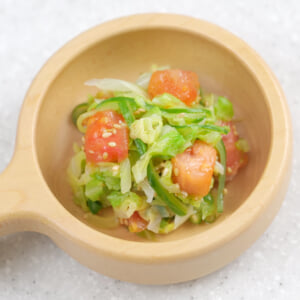
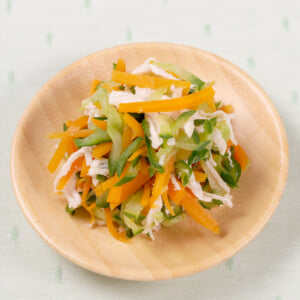
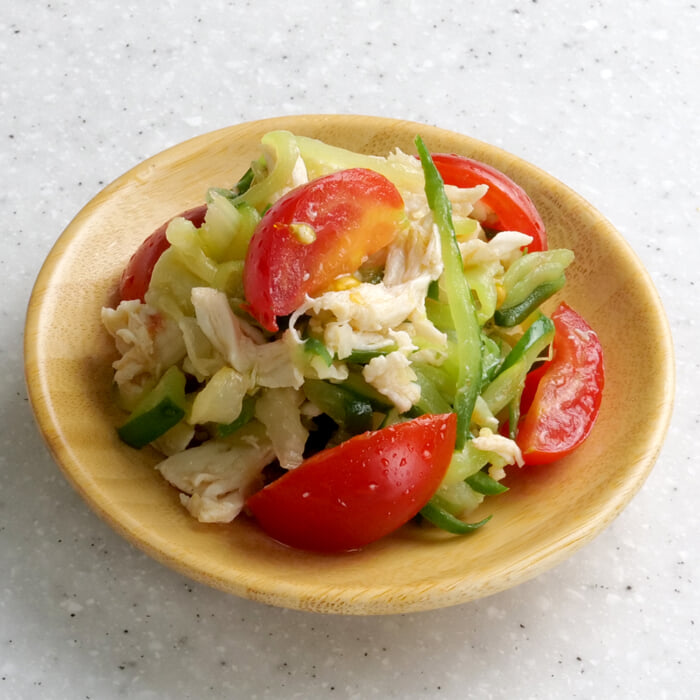
This simple salad pairs finely shredded chicken tenderloin with cabbage, cucumber, and diced tomato in a mild oil-and-vinegar dressing. Everything is cut small and the vegetables are briefly boiled, so the salad is soft enough for little mouths, and warming the dressing first cooks off the sharp edge of the vinegar that children often dislike. Draining the tomato and squeezing the boiled vegetables keeps the salad from turning watery, so the flavor stays bright right up to the last bite.
Added. Open the recipe helper (bottom right) → ☰ Menu → 🛒 Shopping list to see the ingredients for your family size.
Printing uses the number of adults and children set under Ingredients, so set those first.
Ingredients
Amounts for 1 child (1 serving). An adult counts as 2 servings.
One serving here is 1.5× the portion served to a child in a Japanese preschool, sized for Western appetites. An adult counts as two servings. Tap an ingredient to check it off.
Ingredients
- 21.8 gchicken tenderloin
- 18 gcabbage
- 21 gcucumber
- 21 gtomato
Seasonings
- 3.5 gvegetable oil
- 2.1 gvinegar
- 0.3 gsalt
- to tastepepper
Directions
Video is in Japanese and may show a different version of this dish (other ingredients or steps). Follow the ingredients and steps on this page, especially when cooking for allergies.
- 1
Boil the chicken tenderloin, let it cool, and shred it finely.
- 2
Cut the cabbage and cucumber into short, thin strips and boil each separately.
- 3
Blanch the tomato in hot water to peel it, cut it into 1 cm dice, and leave it in a colander so it does not release water.
- 4
Combine the dressing ingredients and heat them to cook off the sharpness of the vinegar. Squeeze the vegetables from step 2 to remove excess water, then toss them with the chicken from step 1, the tomato from step 3, and the dressing.
Nutrition
| Per | 1 serving | 1 adult serving | Your total |
|---|---|---|---|
| Energy | 63 kcal | 126 kcal | 63 kcal |
| Protein | 5.7 g | 11.4 g | 5.7 g |
| Fat | 3.6 g | 7.2 g | 3.6 g |
| Carbohydrates | 2.6 g | 5.1 g | 2.6 g |
| Fiber | 0.8 g | 1.5 g | 0.8 g |
| Salt equivalent | 0.3 g | 0.6 g | 0.3 g |
| Calcium | 16.5 mg | 33 mg | 16.5 mg |
| Iron | 0 mg | 0 mg | 0 mg |
| Potassium | 208.5 mg | 417 mg | 208.5 mg |
| Energy | Protein | Fat | Carbs | Fiber | Salt equiv. | Calcium | Iron | Potassium | |
|---|---|---|---|---|---|---|---|---|---|
| 1 serving | 63 kcal | 5.7 g | 3.6 g | 2.6 g | 0.8 g | 0.3 g | 16.5 mg | 0 mg | 208.5 mg |
| 1 adult serving | 126 kcal | 11.4 g | 7.2 g | 5.1 g | 1.5 g | 0.6 g | 33 mg | 0 mg | 417 mg |
Values are per serving (1.5× the Japanese preschool portion); an adult serving is double. They were calculated by a licensed Japanese nutritionist using the Standard Tables of Food Composition in Japan. "Salt equivalent" is sodium × 2.54, the standard Japanese measure. Allergen flags cover egg, milk and wheat only and come from the nutritionist's records. Soy sauce and miso are made with wheat but are usually allowed on Japanese wheat-free school menus, so check with your doctor.