Spaghetti Salad
スパゲティサラダ
 By Aoi, licensed nutritionist · From a Japanese preschool lunch menu
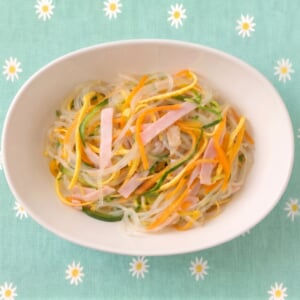
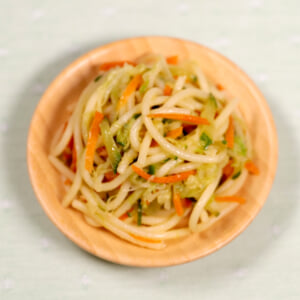
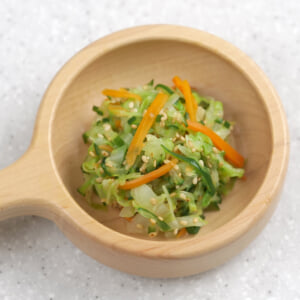
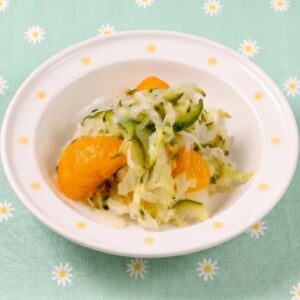
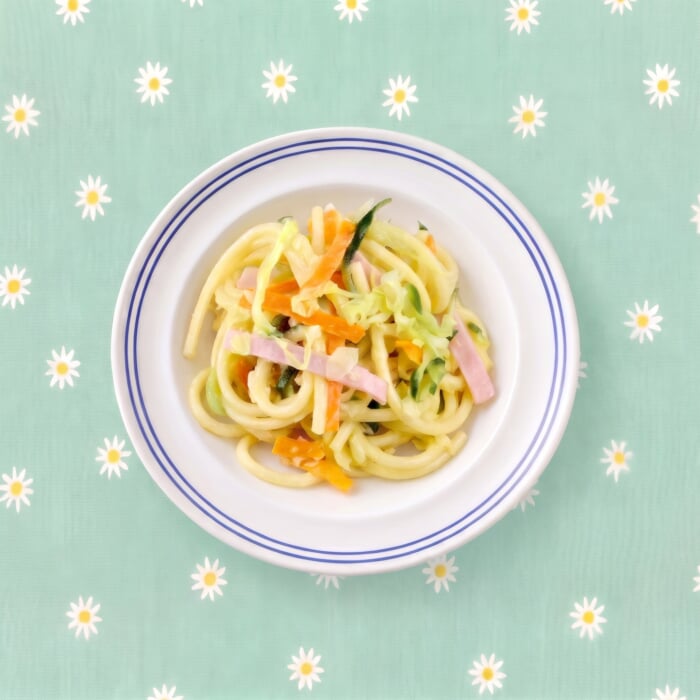
Spaghetti salad is a familiar side dish on Japanese school lunch trays: cooled spaghetti tossed with shredded vegetables and ham in a lightly sweet-and-sour mayonnaise dressing. The vegetables are cut into thin strips to match the spaghetti, so children can scoop everything up together with a fork, and they end up eating plenty of vegetables without noticing. Boiling the pasta without salt keeps the flavor gentle, just the way we serve it in the preschool kitchen.
Toddlers to adults. The whole family can eat this exactly as written.
Added. Open the recipe helper (bottom right) → ☰ Menu → 🛒 Shopping list to see the ingredients for your family size.
Printing uses the number of adults and children set under Ingredients, so set those first.
Ingredients
Amounts for 1 child (1 serving). An adult counts as 2 servings.
One serving here is 1.5× the portion served to a child in a Japanese preschool, sized for Western appetites. An adult counts as two servings. Tap an ingredient to check it off.
Ingredients
- 12 gspaghetti
- 24 gcabbage
- 12 gcarrot
- 15 gcucumber
- 10.5 gham
Sauce Mixture (A)
- 15.6 gmayonnaise
- 0.9 gvinegar
- 0.5 gsugar
- 0.2 gsalt
Directions
Video is in Japanese — the steps below are synced to it, so tap ▶ on a step to jump to that moment.
- 1
Break the spaghetti into thirds by hand and boil it, without adding salt to the water, for 3 minutes longer than the package directions. Rinse under running water to cool, then drain well. (Boiling without salt gives a mild flavor that suits children.)
- 2
Cut the carrot, cucumber, and cabbage into 4 cm long matchsticks. Cut the ham in half to shorten it, then slice it into thin strips. (Cutting the cabbage across the grain makes it crisper and easier for children to chew.)
- 3
Put the carrot in a pot of cold water, bring to a boil, and cook for about 3 minutes after it starts boiling. Boil the cabbage in the hot water for about 4 minutes (about 3 minutes for spring cabbage), and the cucumber and ham for about 1 minute. Rinse everything together under running water to cool. (If you add each ingredient to the same pot at staggered times, you can boil them all in one go.)
- 4
Squeeze the vegetables from step 3 well to remove the water, then toss with the spaghetti from step 1 and (A). If the spaghetti is still wet, pat it dry with paper towels before combining. Chill in the refrigerator to let the flavors meld.
Tips for Best Results
- Squeeze the boiled vegetables firmly to wring out as much water as possible. Even with the mild seasoning we use for children, the flavor stays bright instead of turning watery.
- Cutting the vegetables into long, thin strips to match the spaghetti makes everything easier to eat with a fork. It's a salad that gets plenty of vegetables into kids.
Freezing and Storage
This salad does not freeze well. Keep it in the refrigerator and eat it by the next day.
Nutrition
| Per | 1 serving | 1 adult serving | Your total |
|---|---|---|---|
| Energy | 180 kcal | 360 kcal | 180 kcal |
| Protein | 4.2 g | 8.4 g | 4.2 g |
| Fat | 13.5 g | 27 g | 13.5 g |
| Carbohydrates | 12.8 g | 25.5 g | 12.8 g |
| Fiber | 1.5 g | 3 g | 1.5 g |
| Salt equivalent | 0.8 g | 1.5 g | 0.8 g |
| Calcium | 21 mg | 42 mg | 21 mg |
| Iron | 0.5 mg | 0.9 mg | 0.5 mg |
| Potassium | 166.5 mg | 333 mg | 166.5 mg |
| Phosphorus | 63 mg | 126 mg | 63 mg |
| Energy | Protein | Fat | Carbs | Fiber | Salt equiv. | Calcium | Iron | Potassium | Phosphorus | |
|---|---|---|---|---|---|---|---|---|---|---|
| 1 serving | 180 kcal | 4.2 g | 13.5 g | 12.8 g | 1.5 g | 0.8 g | 21 mg | 0.5 mg | 166.5 mg | 63 mg |
| 1 adult serving | 360 kcal | 8.4 g | 27 g | 25.5 g | 3 g | 1.5 g | 42 mg | 0.9 mg | 333 mg | 126 mg |
Values are per serving (1.5× the Japanese preschool portion); an adult serving is double. They were calculated by a licensed Japanese nutritionist using the Standard Tables of Food Composition in Japan. "Salt equivalent" is sodium × 2.54, the standard Japanese measure. Allergen flags cover egg, milk and wheat only and come from the nutritionist's records. Soy sauce and miso are made with wheat but are usually allowed on Japanese wheat-free school menus, so check with your doctor.