Japanese-Style Spaghetti Salad (Egg & Milk-Free)
和風スパゲティサラダ(卵乳なし) · Wafu Spaghetti Salad
 By Aoi, licensed nutritionist · From a Japanese preschool lunch menu
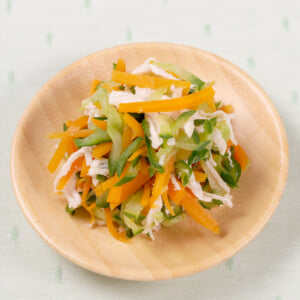
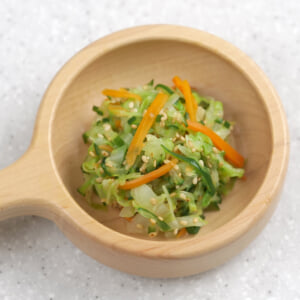
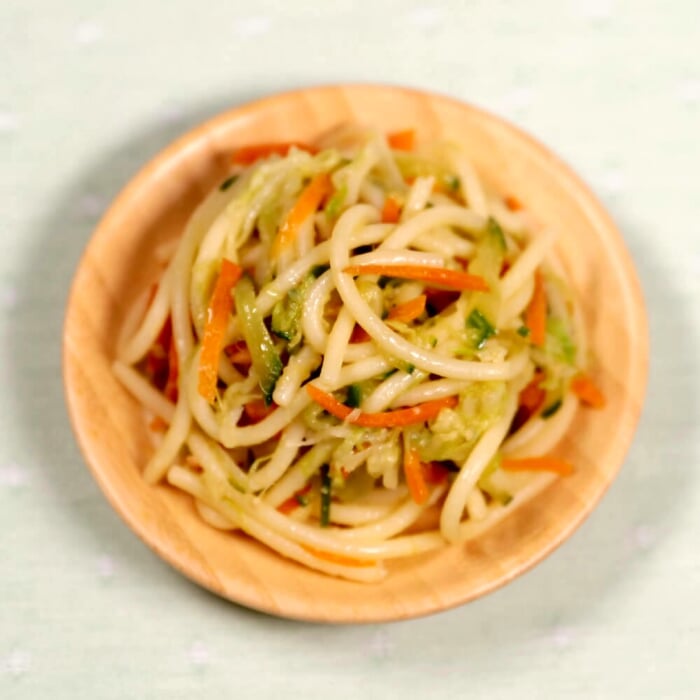
Spaghetti salad is a familiar side dish on Japanese school lunch trays, and this is the version we serve without mayonnaise, so it is free of egg and dairy. Short pieces of spaghetti and finely shredded cabbage, carrot and cucumber are tossed in a light dressing of vinegar, sugar, miso and a little sesame oil. The pasta is broken into thirds before boiling so it is easy for small children to pick up with a spoon or fork, and the vegetables are briefly boiled to soften them, which also makes them safer and easier for little ones to chew. The gentle sweet-and-tangy miso flavor goes down well even with children who are wary of vegetables.
Added. Open the recipe helper (bottom right) → ☰ Menu → 🛒 Shopping list to see the ingredients for your family size.
Printing uses the number of adults and children set under Ingredients, so set those first.
Ingredients
Amounts for 1 child (1 serving). An adult counts as 2 servings.
One serving here is 1.5× the portion served to a child in a Japanese preschool, sized for Western appetites. An adult counts as two servings. Tap an ingredient to check it off.
Ingredients
- 10.5 gspaghetti
- 22.5 gcabbage
- 9 gcarrot
- 13.5 gcucumber
Seasonings
- 0.9 gvinegar
- 0.9 gsugar
- 2.7 gmisoFermented soybean paste. Salty and savory, it is Japan's everyday seasoning for miso soup and many simmered dishes. Substitute: Any light (white or awase) miso. Misos differ in saltiness, so start with a little less and taste. Some misos are made with barley or wheat, so check the label if you avoid them.
- 0.8 gsesame oil
About the Japanese ingredients in this recipe
- miso (みそ)
- Fermented soybean paste. Salty and savory, it is Japan's everyday seasoning for miso soup and many simmered dishes. Substitute: Any light (white or awase) miso. Misos differ in saltiness, so start with a little less and taste. Some misos are made with barley or wheat, so check the label if you avoid them.
Directions
- 1
Break the spaghetti into thirds, boil it, rinse under running water and drain well.
- 2
Cut the cabbage, carrot and cucumber into short, fine strips and boil each separately. Rinse under running water to cool.
- 3
Squeeze the vegetables from step 2 to remove excess water, then toss them with the spaghetti from step 1 and the seasonings.
Nutrition
| Per | 1 serving | 1 adult serving | Your total |
|---|---|---|---|
| Energy | 58.5 kcal | 117 kcal | 58.5 kcal |
| Protein | 2.1 g | 4.2 g | 2.1 g |
| Fat | 1 g | 2.1 g | 1 g |
| Carbohydrates | 11.7 g | 23.4 g | 11.7 g |
| Fiber | 1.7 g | 3.3 g | 1.7 g |
| Salt equivalent | 0.3 g | 0.6 g | 0.3 g |
| Calcium | 19.5 mg | 39 mg | 19.5 mg |
| Iron | 0.3 mg | 0.6 mg | 0.3 mg |
| Potassium | 129 mg | 258 mg | 129 mg |
| Energy | Protein | Fat | Carbs | Fiber | Salt equiv. | Calcium | Iron | Potassium | |
|---|---|---|---|---|---|---|---|---|---|
| 1 serving | 58.5 kcal | 2.1 g | 1 g | 11.7 g | 1.7 g | 0.3 g | 19.5 mg | 0.3 mg | 129 mg |
| 1 adult serving | 117 kcal | 4.2 g | 2.1 g | 23.4 g | 3.3 g | 0.6 g | 39 mg | 0.6 mg | 258 mg |
Values are per serving (1.5× the Japanese preschool portion); an adult serving is double. They were calculated by a licensed Japanese nutritionist using the Standard Tables of Food Composition in Japan. "Salt equivalent" is sodium × 2.54, the standard Japanese measure. Allergen flags cover egg, milk and wheat only and come from the nutritionist's records. Soy sauce and miso are made with wheat but are usually allowed on Japanese wheat-free school menus, so check with your doctor.