Sauerkraut
サワークラウト
 By Aoi, licensed nutritionist · From a Japanese preschool lunch menu
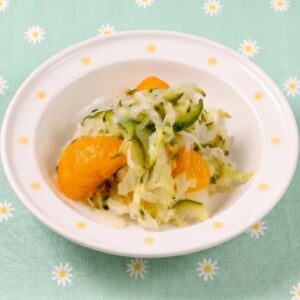
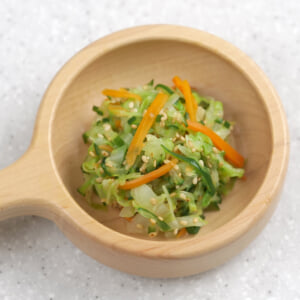
In Japanese school kitchens, "sauerkraut" is not the long-fermented German original but a quick side dish: boiled cabbage tossed in a lightly sweetened vinegar dressing. It comes together in minutes and is a natural partner for sausages, hamburg steak, or anything else rich and savory on the tray. The trick for little ones is to heat the vinegar mixture first so its sharp edge cooks off, leaving a soft, pleasantly tangy cabbage that even children who shy away from sour flavors will eat.
Added. Open the recipe helper (bottom right) → ☰ Menu → 🛒 Shopping list to see the ingredients for your family size.
Printing uses the number of adults and children set under Ingredients, so set those first.

Ingredients
Amounts for 1 child (1 serving). An adult counts as 2 servings.
One serving here is 1.5× the portion served to a child in a Japanese preschool, sized for Western appetites. An adult counts as two servings. Tap an ingredient to check it off.
Ingredients
- 79.5 gcabbage
Seasonings
- 1.4 gsugar
- 2 gvinegar
- 0.3 gsalt
Directions
- 1
Cut the cabbage into short, thin strips and boil until tender. Rinse under cold running water to cool.
- 2
Combine the sugar, vinegar, and salt in a small pan and heat, letting the sharpness of the vinegar cook off.
- 3
Squeeze the cabbage from step 1 firmly to remove excess water, then toss it with the dressing from step 2.
Nutrition
| Per | 1 serving | 1 adult serving | Your total |
|---|---|---|---|
| Energy | 22.5 kcal | 45 kcal | 22.5 kcal |
| Protein | 1 g | 2.1 g | 1 g |
| Fat | 0.2 g | 0.3 g | 0.2 g |
| Carbohydrates | 4.7 g | 9.3 g | 4.7 g |
| Salt equivalent | 0.3 g | 0.6 g | 0.3 g |
| Calcium | 34.5 mg | 69 mg | 34.5 mg |
| Iron | 0.2 mg | 0.3 mg | 0.2 mg |
| Energy | Protein | Fat | Carbs | Salt equiv. | Calcium | Iron | |
|---|---|---|---|---|---|---|---|
| 1 serving | 22.5 kcal | 1 g | 0.2 g | 4.7 g | 0.3 g | 34.5 mg | 0.2 mg |
| 1 adult serving | 45 kcal | 2.1 g | 0.3 g | 9.3 g | 0.6 g | 69 mg | 0.3 mg |
Values are per serving (1.5× the Japanese preschool portion); an adult serving is double. They were calculated by a licensed Japanese nutritionist using the Standard Tables of Food Composition in Japan. "Salt equivalent" is sodium × 2.54, the standard Japanese measure. Allergen flags cover egg, milk and wheat only and come from the nutritionist's records. Soy sauce and miso are made with wheat but are usually allowed on Japanese wheat-free school menus, so check with your doctor.