Wakame and Tuna Sunomono (Vinegared Salad)
わかめとツナの酢の物 · Wakame to Tsuna no Sunomono
 By Aoi, licensed nutritionist · From a Japanese preschool lunch menu
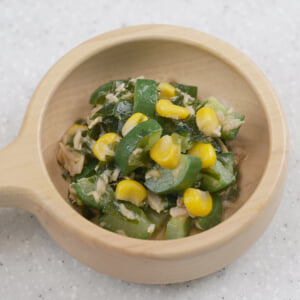
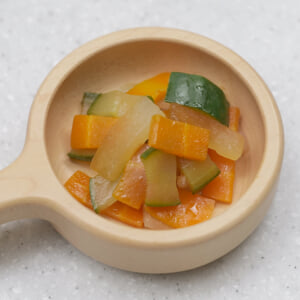
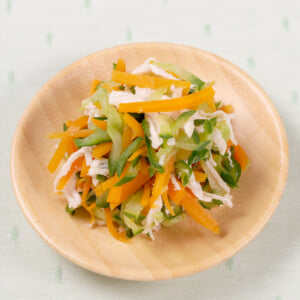
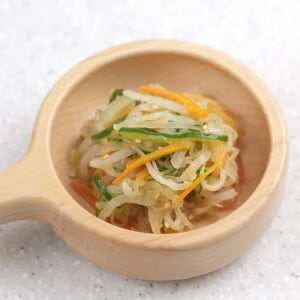
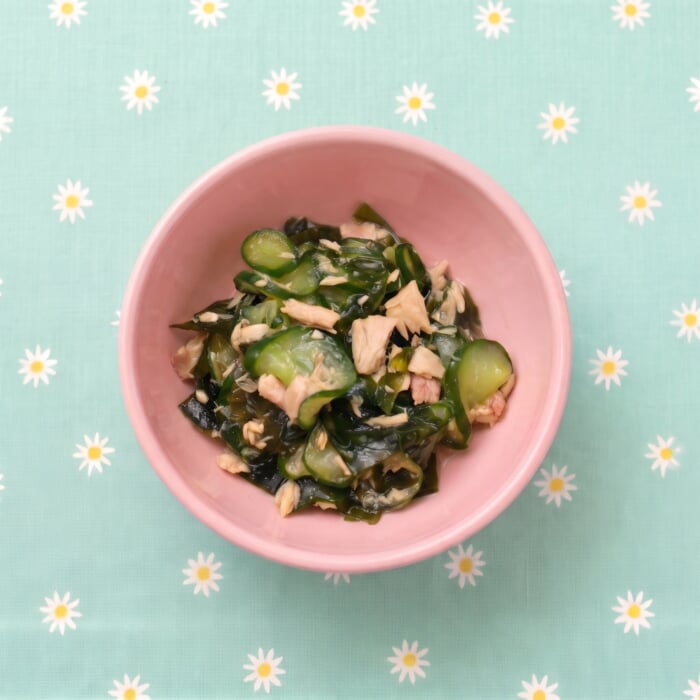
Sunomono is a Japanese vinegared side dish, and this version pairs tender wakame seaweed and thin cucumber rounds with oil-packed tuna. The tuna keeps everything moist and savory, and a little sesame oil softens the vinegar's edge, so even children who usually shy away from sour dishes tend to go back for more. The sauce and the vegetables are chilled separately and tossed together only at the last minute, which keeps the salad crisp instead of watery.
Toddlers to adults. The whole family can eat this exactly as written.
Wheat-free, but uses soy sauce (made with wheat). Japanese school-lunch allergy menus usually allow it, so check with your doctor. How to read the labels
Added. Open the recipe helper (bottom right) → ☰ Menu → 🛒 Shopping list to see the ingredients for your family size.
Printing uses the number of adults and children set under Ingredients, so set those first.
Ingredients
Amounts for 1 child (1 serving). An adult counts as 2 servings.
One serving here is 1.5× the portion served to a child in a Japanese preschool, sized for Western appetites. An adult counts as two servings. Tap an ingredient to check it off.
Ingredients
- to tastedried cut wakameSmall pieces of dried wakame seaweed that rehydrate in a few minutes and are used in soups and salads. Substitute: Any dried seaweed for soup, or omit.
- 48 gcucumber
- 22.5 gcanned tuna (in oil)
- 0.8 gtoasted white sesame seeds
Sauce Mixture (A)
- 2.4 gsugar
- 0.4 gsalt
- 1.8 gsoy sauce
- 5.7 gvinegar
- 2.6 gsesame oil
About the Japanese ingredients in this recipe
- dried cut wakame (カットわかめ)
- Small pieces of dried wakame seaweed that rehydrate in a few minutes and are used in soups and salads. Substitute: Any dried seaweed for soup, or omit.
Directions
Video is in Japanese — the steps below are synced to it, so tap ▶ on a step to jump to that moment.
- 1
Put the (A) ingredients in a microwave-safe container, stir to combine, and microwave uncovered at 1200W for about 15 to 20 seconds (30 to 40 seconds at 600W). Let cool slightly, then chill in the refrigerator.
- 2
Soak the wakame in water for about 5 minutes to rehydrate, then drain in a colander. Cut the cucumber into thin rounds. Drain the oil from the tuna. (For toddlers, chop the wakame finely before heating so it is easier to bite through.)
- 3
Put the cucumber and wakame in a microwave-safe container and add enough water (not included in the ingredient amounts) to cover about a third of them. Cover loosely with plastic wrap, leaving a gap, and microwave at 1200W for about 1 minute (2 minutes at 600W). Drain in a colander and cool under running water. (For children who are not fond of vegetables, boiling the wakame in boiling water for 4 minutes, then adding the cucumber and boiling for about 1 minute more, makes them easier to eat.)
- 4
Squeeze the water out of the vegetables from step 3 firmly, add the tuna, and chill in the refrigerator. (Water tends to seep out once the salad is dressed, so squeeze well.)
- 5
Just before serving, toss with the sauce from step 1 and the white sesame seeds.
Tips for Best Results
- Once the vegetables meet the seasonings, water starts to seep out, so chill the vegetables and the sauce separately and toss them together just before eating. That is the key to keeping this salad tasty.
- Oil-packed tuna stays moist and is easier to eat, and the aroma and savoriness of the sesame oil make this a flavor that even children who are not fond of vinegared dishes can enjoy.
Freezing
This dish does not freeze well. Keep it in the refrigerator and finish it by the next day.
Nutrition
| Per | 1 serving | 1 adult serving | Your total |
|---|---|---|---|
| Energy | 109.5 kcal | 219 kcal | 109.5 kcal |
| Protein | 5.3 g | 10.5 g | 5.3 g |
| Fat | 8 g | 15.9 g | 8 g |
| Carbohydrates | 5.3 g | 10.5 g | 5.3 g |
| Fiber | 1.5 g | 3 g | 1.5 g |
| Salt equivalent | 1.4 g | 2.7 g | 1.4 g |
| Calcium | 43.5 mg | 87 mg | 43.5 mg |
| Iron | 0.5 mg | 0.9 mg | 0.5 mg |
| Potassium | 171 mg | 342 mg | 171 mg |
| Phosphorus | 67.5 mg | 135 mg | 67.5 mg |
| Energy | Protein | Fat | Carbs | Fiber | Salt equiv. | Calcium | Iron | Potassium | Phosphorus | |
|---|---|---|---|---|---|---|---|---|---|---|
| 1 serving | 109.5 kcal | 5.3 g | 8 g | 5.3 g | 1.5 g | 1.4 g | 43.5 mg | 0.5 mg | 171 mg | 67.5 mg |
| 1 adult serving | 219 kcal | 10.5 g | 15.9 g | 10.5 g | 3 g | 2.7 g | 87 mg | 0.9 mg | 342 mg | 135 mg |
Values are per serving (1.5× the Japanese preschool portion); an adult serving is double. They were calculated by a licensed Japanese nutritionist using the Standard Tables of Food Composition in Japan. "Salt equivalent" is sodium × 2.54, the standard Japanese measure. Allergen flags cover egg, milk and wheat only and come from the nutritionist's records. Soy sauce and miso are made with wheat but are usually allowed on Japanese wheat-free school menus, so check with your doctor.
Cooking for bigger kids? See the elementary-school portion of this recipe.