Natto Rice (Elementary School Portion)
納豆ごはん · Natto Gohan
 By Aoi, licensed nutritionist · From a Japanese elementary school lunch menu
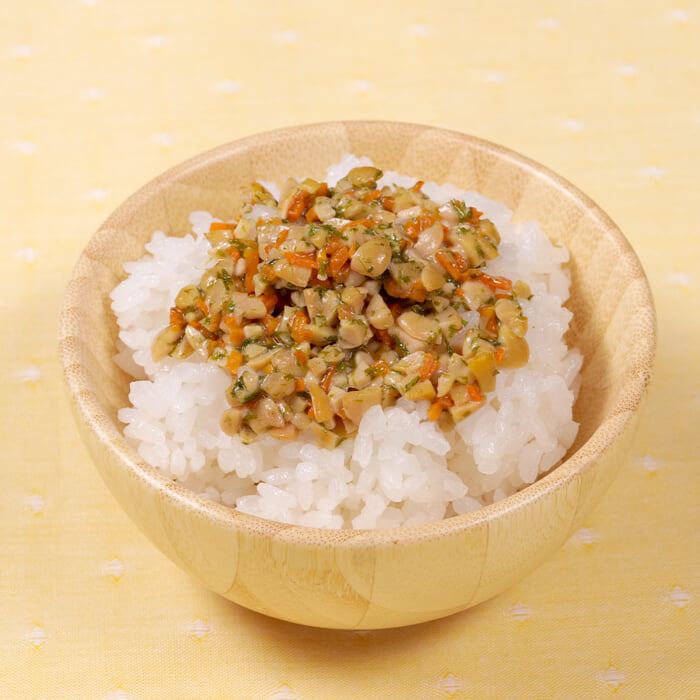
Natto gohan is one of Japan's simplest everyday meals: fermented soybeans stirred into hot rice. In this school lunch version we use hikiwari natto, which is chopped finely, so the sticky beans blend smoothly with the rice and are easy for children to eat. Finely minced carrot and cucumber are boiled and mixed in for color and a gentle crunch, and a sprinkle of aonori adds a savory, seaside aroma that makes the whole bowl smell inviting. Even children who are unsure about natto tend to warm to it when it comes dressed up like this.
Wheat-free, but uses soy sauce (made with wheat). Japanese school-lunch allergy menus usually allow it, so check with your doctor. How to read the labels
Added. Open the recipe helper (bottom right) → ☰ Menu → 🛒 Shopping list to see the ingredients for your family size.
Printing uses the number of adults and children set under Ingredients, so set those first.
Ingredients
Amounts for 1 child (1 serving). An adult counts as 2 servings.
One serving here is 1.5× the portion served to a child in a Japanese elementary school, sized for Western appetites. An adult counts as two servings. Tap an ingredient to check it off.
Ingredients
- 75 griceJapanese short-grain white rice (japonica), which cooks up soft and slightly sticky. The amount listed is for uncooked rice. Substitute: Sushi rice, or another short-grain or medium-grain rice such as Calrose.
- 15 ghikiwari natto (chopped fermented soybeans)Natto made from soybeans that are cracked before fermenting, giving smaller pieces that are easier for small children to eat. Substitute: Regular natto, roughly chopped.
- 7.5 gcarrot
- 4.5 gcucumber
Seasonings
- 0.1 gaonori (green seaweed flakes)Fine, fragrant flakes of dried green seaweed sprinkled over dishes like okonomiyaki and yakisoba. Substitute: Crumbled nori sheets, or omit.
- 0.6 gsoy sauce
About the Japanese ingredients in this recipe
- rice (米)
- Japanese short-grain white rice (japonica), which cooks up soft and slightly sticky. The amount listed is for uncooked rice. Substitute: Sushi rice, or another short-grain or medium-grain rice such as Calrose.
- hikiwari natto (chopped fermented soybeans) (挽きわり納豆)
- Natto made from soybeans that are cracked before fermenting, giving smaller pieces that are easier for small children to eat. Substitute: Regular natto, roughly chopped.
- aonori (green seaweed flakes) (あおのり)
- Fine, fragrant flakes of dried green seaweed sprinkled over dishes like okonomiyaki and yakisoba. Substitute: Crumbled nori sheets, or omit.
Directions
- 1
Finely mince the carrot and cucumber, boil them, then rinse under running water and squeeze out the excess moisture.
- 2
Mix together the natto, the vegetables from step 1, the aonori, and the soy sauce.
- 3
Spoon the mixture over the cooked rice (stir everything together when serving).
Nutrition
| Per | 1 serving | 1 adult serving | Your total |
|---|---|---|---|
| Energy | 288 kcal | 576 kcal | 288 kcal |
| Protein | 7.2 g | 14.4 g | 7.2 g |
| Fat | 2.3 g | 4.5 g | 2.3 g |
| Carbohydrates | 60.8 g | 121.5 g | 60.8 g |
| Fiber | 1.5 g | 3 g | 1.5 g |
| Salt equivalent | 0.2 g | 0.3 g | 0.2 g |
| Calcium | 16.5 mg | 33 mg | 16.5 mg |
| Iron | 1 mg | 2.1 mg | 1 mg |
| Potassium | 210 mg | 420 mg | 210 mg |
| Energy | Protein | Fat | Carbs | Fiber | Salt equiv. | Calcium | Iron | Potassium | |
|---|---|---|---|---|---|---|---|---|---|
| 1 serving | 288 kcal | 7.2 g | 2.3 g | 60.8 g | 1.5 g | 0.2 g | 16.5 mg | 1 mg | 210 mg |
| 1 adult serving | 576 kcal | 14.4 g | 4.5 g | 121.5 g | 3 g | 0.3 g | 33 mg | 2.1 mg | 420 mg |
Values are per serving (1.5× the Japanese elementary-school portion); an adult serving is double. They were calculated by a licensed Japanese nutritionist using the Standard Tables of Food Composition in Japan. "Salt equivalent" is sodium × 2.54, the standard Japanese measure. Allergen flags cover egg, milk and wheat only and come from the nutritionist's records. Soy sauce and miso are made with wheat but are usually allowed on Japanese wheat-free school menus, so check with your doctor.