Atsuage Donburi (Fried Tofu Rice Bowl)
厚揚げ丼 · Atsuage Don
 By Aoi, licensed nutritionist · From a Japanese preschool lunch menu
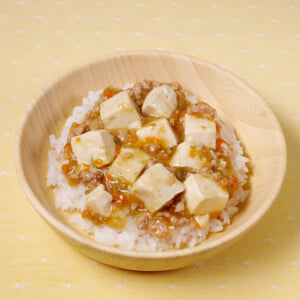
Atsuage is tofu that has been deep-fried until the outside turns golden and slightly chewy while the inside stays soft, and it soaks up seasoning beautifully. Here it is cubed and simmered with ground pork, carrot and cabbage in a gentle miso and soy sauce, then spooned over warm rice. A little potato starch pulls everything together into a glossy topping that clings to the rice and to the spoon, which is exactly why small children find it so easy to eat. The sweet-savory sauce keeps the vegetables disappearing along with the tofu and pork.
Wheat-free, but uses soy sauce and miso (made with wheat). Japanese school-lunch allergy menus usually allow them, so check with your doctor. How to read the labels
Added. Open the recipe helper (bottom right) → ☰ Menu → 🛒 Shopping list to see the ingredients for your family size.
Printing uses the number of adults and children set under Ingredients, so set those first.
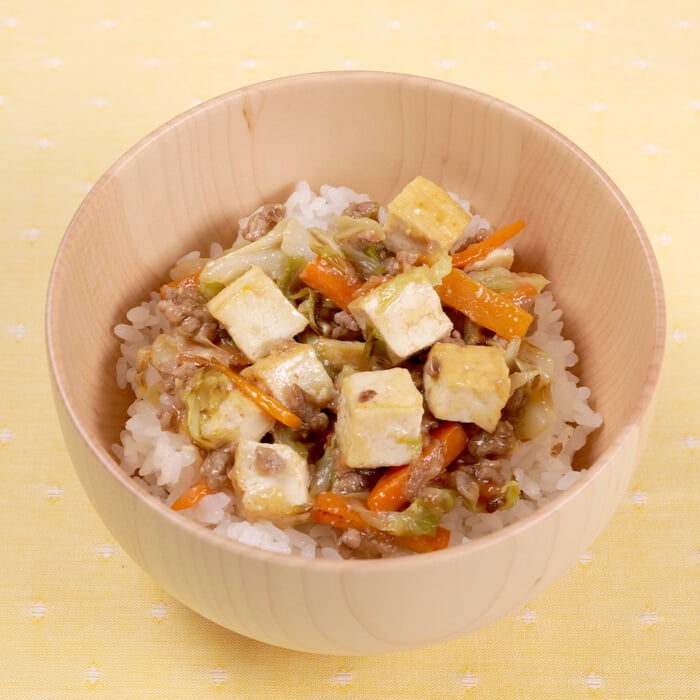
Ingredients
Amounts for 1 child (1 serving). An adult counts as 2 servings.
One serving here is 1.5× the portion served to a child in a Japanese preschool, sized for Western appetites. An adult counts as two servings. Tap an ingredient to check it off.
Ingredients
- 75 griceJapanese short-grain white rice (japonica), which cooks up soft and slightly sticky. The amount listed is for uncooked rice. Substitute: Sushi rice, or another short-grain or medium-grain rice such as Calrose.
- 52.5 gatsuage (thick deep-fried tofu)A thick block of tofu deep-fried so the outside is golden while the inside stays soft and creamy. Substitute: Firm tofu, pressed and pan-fried in a little oil until golden.
- 19.5 gground pork
- 19.5 gcarrot
- 25.5 gcabbage
- 22.5 gwater
Seasonings
- 0.3 gginger paste (tube)Grated ginger sold ready to use in a squeeze tube, a staple in Japanese kitchens. Japanese school lunch kitchens grate fresh ginger for its aroma, but for cooking at home Aoi says the tube works just fine. Tube pastes often contain added salt, oil and other ingredients, so check the label. Substitute: Use freshly grated ginger in the same amount. 1 teaspoon of paste is about 5 g.
- 3 gsesame oil
- 3.9 gmisoFermented soybean paste. Salty and savory, it is Japan's everyday seasoning for miso soup and many simmered dishes. Substitute: Any light (white or awase) miso. Misos differ in saltiness, so start with a little less and taste. Some misos are made with barley or wheat, so check the label if you avoid them.
- 1.4 gsoy sauce
- 0.6 gsugar
- 1.5 gpotato starch (katakuriko)Japanese potato starch used for thickening sauces and coating fried foods. Substitute: Cornstarch: start with the same amount and add a little more if it is still thin. It thickens a little less than potato starch and needs a couple of minutes at a gentle bubble to reach full thickness.
About the Japanese ingredients in this recipe
- rice (米)
- Japanese short-grain white rice (japonica), which cooks up soft and slightly sticky. The amount listed is for uncooked rice. Substitute: Sushi rice, or another short-grain or medium-grain rice such as Calrose.
- atsuage (thick deep-fried tofu) (厚揚げ)
- A thick block of tofu deep-fried so the outside is golden while the inside stays soft and creamy. Substitute: Firm tofu, pressed and pan-fried in a little oil until golden.
- ginger paste (tube) (しょうがチューブ)
- Grated ginger sold ready to use in a squeeze tube, a staple in Japanese kitchens. Japanese school lunch kitchens grate fresh ginger for its aroma, but for cooking at home Aoi says the tube works just fine. Tube pastes often contain added salt, oil and other ingredients, so check the label. Substitute: Use freshly grated ginger in the same amount. 1 teaspoon of paste is about 5 g.
- miso (みそ)
- Fermented soybean paste. Salty and savory, it is Japan's everyday seasoning for miso soup and many simmered dishes. Substitute: Any light (white or awase) miso. Misos differ in saltiness, so start with a little less and taste. Some misos are made with barley or wheat, so check the label if you avoid them.
- potato starch (katakuriko) (かたくり粉)
- Japanese potato starch used for thickening sauces and coating fried foods. Substitute: Cornstarch: start with the same amount and add a little more if it is still thin. It thickens a little less than potato starch and needs a couple of minutes at a gentle bubble to reach full thickness. Read the guide: Katakuriko (Japanese Potato Starch) and What to Use Instead → Guide: japanese-school-lunch.com/articles/katakuriko-potato-starch/
Directions
Video is in Japanese and may show a different version of this dish (other ingredients or steps). Follow the ingredients and steps on this page, especially when cooking for allergies.
- 1
Pour boiling water over the atsuage to rinse off excess oil so it absorbs the seasoning more easily, then cut it into 1 cm cubes. Cut the carrot and cabbage into short, thin rectangles.
- 2
Heat the sesame oil in a frying pan, add the carrot and cabbage, and stir-fry over medium heat for about 10 minutes.
- 3
Add the ground pork and atsuage and stir-fry until the pork is cooked through. Add the miso, soy sauce, sugar and ginger paste, and stir-fry briefly over low heat just until the seasonings are evenly coated.
- 4
Stir the potato starch into the water, drizzle the mixture into the pan and stir until everything comes together (if it thickens too much, add a little water to adjust). Spoon over warm rice.
Binding the topping with potato starch helps it hold together in the mouth, which makes it much easier for little ones to eat.
Nutrition
| Per | 1 serving | 1 adult serving | Your total |
|---|---|---|---|
| Energy | 429 kcal | 858 kcal | 429 kcal |
| Protein | 14.7 g | 29.4 g | 14.7 g |
| Fat | 13.4 g | 26.7 g | 13.4 g |
| Carbohydrates | 64.7 g | 129.3 g | 64.7 g |
| Fiber | 2.1 g | 4.2 g | 2.1 g |
| Salt equivalent | 0.6 g | 1.2 g | 0.6 g |
| Calcium | 153 mg | 306 mg | 153 mg |
| Iron | 2.4 mg | 4.8 mg | 2.4 mg |
| Potassium | 315 mg | 630 mg | 315 mg |
| Energy | Protein | Fat | Carbs | Fiber | Salt equiv. | Calcium | Iron | Potassium | |
|---|---|---|---|---|---|---|---|---|---|
| 1 serving | 429 kcal | 14.7 g | 13.4 g | 64.7 g | 2.1 g | 0.6 g | 153 mg | 2.4 mg | 315 mg |
| 1 adult serving | 858 kcal | 29.4 g | 26.7 g | 129.3 g | 4.2 g | 1.2 g | 306 mg | 4.8 mg | 630 mg |
Values are per serving (1.5× the Japanese preschool portion); an adult serving is double. They were calculated by a licensed Japanese nutritionist using the Standard Tables of Food Composition in Japan. "Salt equivalent" is sodium × 2.54, the standard Japanese measure. Allergen flags cover egg, milk and wheat only and come from the nutritionist's records. Soy sauce and miso are made with wheat but are usually allowed on Japanese wheat-free school menus, so check with your doctor.