Mabo Don (Mapo Tofu Rice Bowl)
マーボー丼 · Mabo Don
 By Aoi, licensed nutritionist · From a Japanese preschool lunch menu
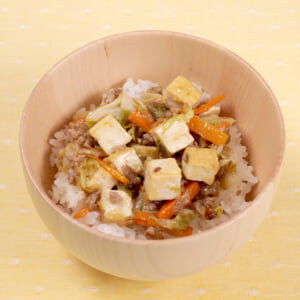
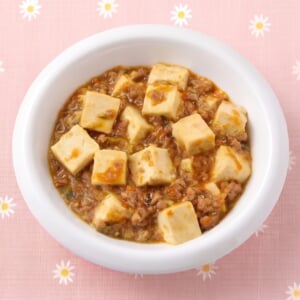
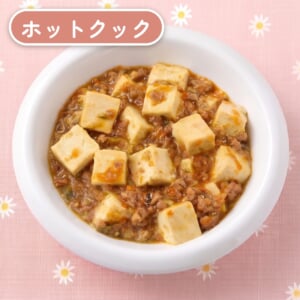
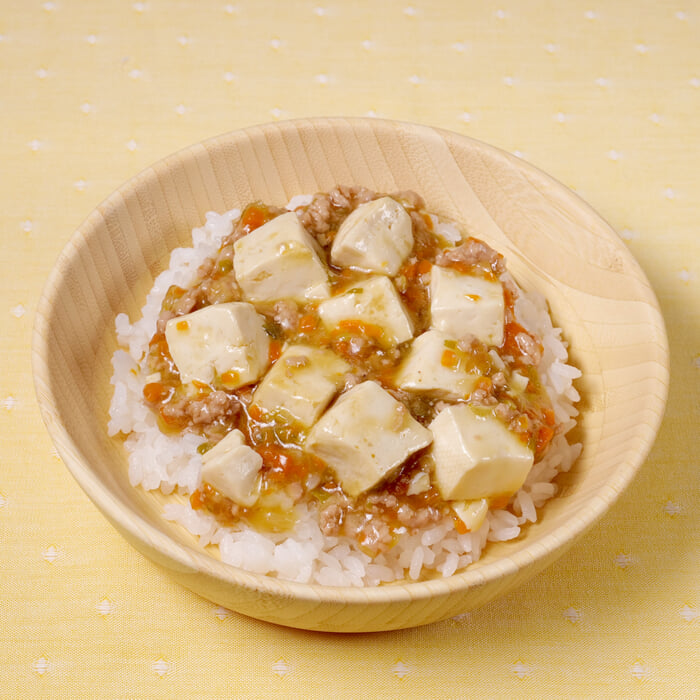
Mabo don is mapo tofu served over rice, the way it appears on Japanese school lunch menus. Japan adapted the fiery Sichuan original into a much gentler dish, and this preschool version goes one step further: the sauce is seasoned with miso, soy sauce and a little sugar instead of chili paste, so it is savory and comforting rather than spicy. Finely chopped carrot and green onion melt into the sauce, and the tofu is briefly boiled first so the cubes stay whole in the bowl. Spooned over warm rice, it is one of those lunches children clean up without any coaxing.
Wheat-free, but uses soy sauce and miso (made with wheat). Japanese school-lunch allergy menus usually allow them, so check with your doctor. How to read the labels
Added. Open the recipe helper (bottom right) → ☰ Menu → 🛒 Shopping list to see the ingredients for your family size.
Printing uses the number of adults and children set under Ingredients, so set those first.
Ingredients
Amounts for 1 child (1 serving). An adult counts as 2 servings.
One serving here is 1.5× the portion served to a child in a Japanese preschool, sized for Western appetites. An adult counts as two servings. Tap an ingredient to check it off.
Ingredients
- 75 griceJapanese short-grain white rice (japonica), which cooks up soft and slightly sticky. The amount listed is for uncooked rice. Substitute: Sushi rice, or another short-grain or medium-grain rice such as Calrose.
- 90 gfirm tofu
- 25.5 gground pork
- 12 gcarrot
- 21 ggreen onion (naga negi)Japanese long onion, thicker and milder than Western scallions. Substitute: Scallions or the white part of a leek.
- 97.5 gwater
- 3.3 gwater (for the starch slurry)
Seasonings
- 4.5 gsesame oil
- 2.3 gsugar
- 3 gmisoFermented soybean paste. Salty and savory, it is Japan's everyday seasoning for miso soup and many simmered dishes. Substitute: Any light (white or awase) miso. Misos differ in saltiness, so start with a little less and taste. Some misos are made with barley or wheat, so check the label if you avoid them.
- 3.8 gsoy sauce
- 0.2 gsalt
- 3.3 gpotato starch (katakuriko)Japanese potato starch used for thickening sauces and coating fried foods. Substitute: Cornstarch: start with the same amount and add a little more if it is still thin. It thickens a little less than potato starch and needs a couple of minutes at a gentle bubble to reach full thickness.
About the Japanese ingredients in this recipe
- rice (米)
- Japanese short-grain white rice (japonica), which cooks up soft and slightly sticky. The amount listed is for uncooked rice. Substitute: Sushi rice, or another short-grain or medium-grain rice such as Calrose.
- green onion (naga negi) (ねぎ)
- Japanese long onion, thicker and milder than Western scallions. Substitute: Scallions or the white part of a leek.
- miso (みそ)
- Fermented soybean paste. Salty and savory, it is Japan's everyday seasoning for miso soup and many simmered dishes. Substitute: Any light (white or awase) miso. Misos differ in saltiness, so start with a little less and taste. Some misos are made with barley or wheat, so check the label if you avoid them.
- potato starch (katakuriko) (かたくり粉)
- Japanese potato starch used for thickening sauces and coating fried foods. Substitute: Cornstarch: start with the same amount and add a little more if it is still thin. It thickens a little less than potato starch and needs a couple of minutes at a gentle bubble to reach full thickness. Read the guide: Katakuriko (Japanese Potato Starch) and What to Use Instead → Guide: japanese-school-lunch.com/articles/katakuriko-potato-starch/
Directions
- 1
Finely mince the carrot and green onion.
- 2
Heat the sesame oil in a frying pan, add the minced vegetables, and cook over low heat for 7 minutes.
- 3
Add the ground pork and stir-fry, breaking it up, until it changes color. Add the water, sugar, miso, soy sauce and salt, and simmer over low heat for 10 minutes.
- 4
Cut the tofu into 1.5 cm cubes. Drop them into boiling water and cook until the tofu floats to the surface (about 3 minutes after it goes in), then drain in a colander.
- 5
Add the drained tofu to the meat sauce, gently breaking it up as you fold it in to coat. Simmer over low heat for 5 minutes so the flavors come together.
- 6
Turn off the heat and stir in the potato starch slurry. Turn the heat back to low and cook for 2 minutes, stirring, until the sauce thickens.
- 7
Spoon over warm rice.
Boiling the tofu first keeps the cubes from falling apart as they simmer in the sauce.
Nutrition
| Per | 1 serving | 1 adult serving | Your total |
|---|---|---|---|
| Energy | 457.5 kcal | 915 kcal | 457.5 kcal |
| Protein | 16.7 g | 33.3 g | 16.7 g |
| Fat | 14.1 g | 28.2 g | 14.1 g |
| Carbohydrates | 68.3 g | 136.5 g | 68.3 g |
| Fiber | 2.6 g | 5.1 g | 2.6 g |
| Salt equivalent | 1 g | 2.1 g | 1 g |
| Calcium | 105 mg | 210 mg | 105 mg |
| Iron | 2.4 mg | 4.8 mg | 2.4 mg |
| Potassium | 346.5 mg | 693 mg | 346.5 mg |
| Energy | Protein | Fat | Carbs | Fiber | Salt equiv. | Calcium | Iron | Potassium | |
|---|---|---|---|---|---|---|---|---|---|
| 1 serving | 457.5 kcal | 16.7 g | 14.1 g | 68.3 g | 2.6 g | 1 g | 105 mg | 2.4 mg | 346.5 mg |
| 1 adult serving | 915 kcal | 33.3 g | 28.2 g | 136.5 g | 5.1 g | 2.1 g | 210 mg | 4.8 mg | 693 mg |
Values are per serving (1.5× the Japanese preschool portion); an adult serving is double. They were calculated by a licensed Japanese nutritionist using the Standard Tables of Food Composition in Japan. "Salt equivalent" is sodium × 2.54, the standard Japanese measure. Allergen flags cover egg, milk and wheat only and come from the nutritionist's records. Soy sauce and miso are made with wheat but are usually allowed on Japanese wheat-free school menus, so check with your doctor.