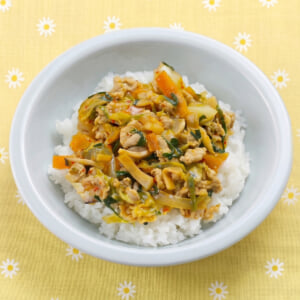
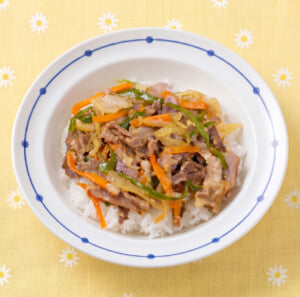
Mozuku Don (Seaweed and Pork Rice Bowl)
もずく丼 · Mozuku Don
 By Aoi, licensed nutritionist · From a Japanese preschool lunch menu
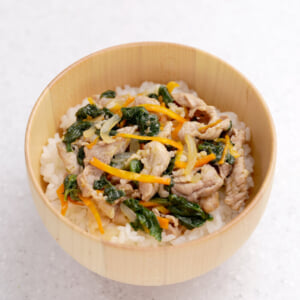
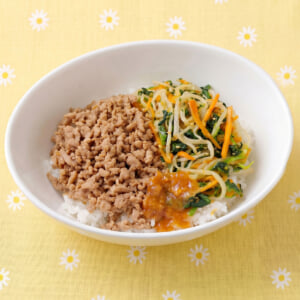
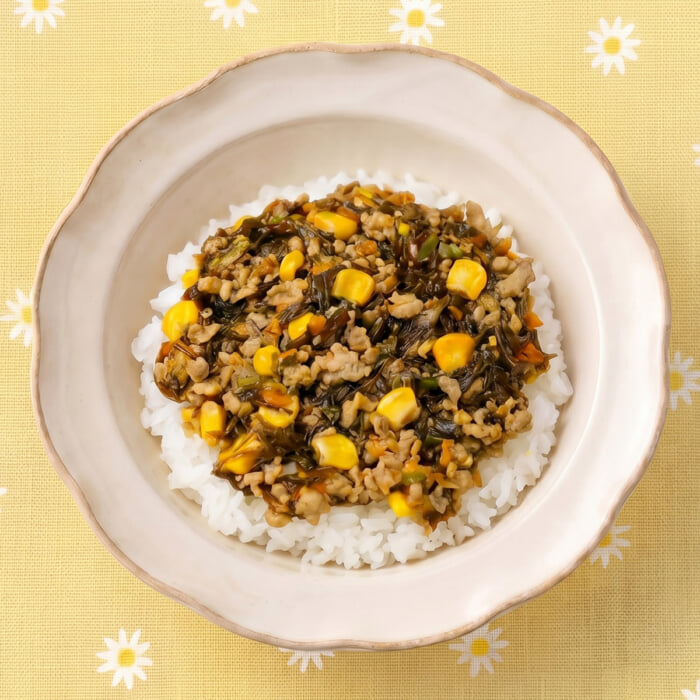
Mozuku is a fine, slippery seaweed that is mostly harvested in Okinawa, where it is a much-loved everyday food. In this rice bowl it is cut short and stir-fried with ground pork, sweet corn and finely minced carrot, onion and green bell pepper, then bound with a light soy-based sauce so it clings to the rice. The gentle sweetness of the corn and mirin makes the seaweed easy for children to accept, and the vegetables are minced so small that even picky eaters hardly notice them. The seasonings are added in two stages so you can make a milder toddler version and a fuller-flavored one for older children from the same pan.
Toddlers to adults. Portion out the children's share before the final seasoning, then season the rest for adults.
Wheat-free, but uses soy sauce (made with wheat). Japanese school-lunch allergy menus usually allow it, so check with your doctor. How to read the labels
Added. Open the recipe helper (bottom right) → ☰ Menu → 🛒 Shopping list to see the ingredients for your family size.
Printing uses the number of adults and children set under Ingredients, so set those first.
Ingredients
Amounts for 1 child (1 serving). An adult counts as 2 servings.
One serving here is 1.5× the portion served to a child in a Japanese preschool, sized for Western appetites. An adult counts as two servings. Tap an ingredient to check it off.
Ingredients
- 36 gfresh mozuku seaweedA fine, slippery Okinawan seaweed sold fresh or salted in the refrigerated section, usually eaten in soups or with vinegar. Substitute: Rehydrated wakame.
- 12 gcarrot
- 24 gonion
- 6 ggreen bell pepper
- 2.4 gvegetable oil
- 42 gground pork
- 0.5 gginger paste (tube)Grated ginger sold ready to use in a squeeze tube, a staple in Japanese kitchens. Japanese school lunch kitchens grate fresh ginger for its aroma, but for cooking at home Aoi says the tube works just fine. Tube pastes often contain added salt, oil and other ingredients, so check the label. Substitute: Use freshly grated ginger in the same amount. 1 teaspoon of paste is about 5 g.
- 12 gwhole kernel corn (canned or frozen)
Seasonings (A)
- 2.7 gsoy sauce
- 1.5 gsugar
- 0.9 gmirinMirin is a sweet Japanese rice seasoning that adds gentle sweetness and a glossy finish. Hon-mirin (true mirin) contains about 14% alcohol; "mirin-style seasoning" has little or no alcohol. Some alcohol can remain after short cooking. If you prefer no alcohol for children, use the substitute. Substitute: For each tablespoon of mirin, use 1 tablespoon water plus 1 to 2 teaspoons sugar.
- 0.9 gsakeSake (Japanese rice wine) is used in small amounts to soften the smell of fish and meat and add depth. Japanese "cooking sake" often contains added salt. Some alcohol can remain after short cooking. If you prefer no alcohol for children, use the substitute. Substitute: The same amount of water (the taste will be a little simpler), or dry white wine.
- 0.8 gchicken stock powder (Chinese-style)Japanese granulated chicken bone soup base used for Chinese-style soups and stir-fries. Substitute: Chicken bouillon granules or powder.
Starch Slurry
- 1.8 gpotato starch (katakuriko)Japanese potato starch used for thickening sauces and coating fried foods. Substitute: Cornstarch: start with the same amount and add a little more if it is still thin. It thickens a little less than potato starch and needs a couple of minutes at a gentle bubble to reach full thickness.
- 6 gwater
To Finish
- 0.9 cup (rice bowl)warm cooked rice
About the Japanese ingredients in this recipe
- fresh mozuku seaweed (生もずく)
- A fine, slippery Okinawan seaweed sold fresh or salted in the refrigerated section, usually eaten in soups or with vinegar. Substitute: Rehydrated wakame.
- ginger paste (tube) (しょうがチューブ)
- Grated ginger sold ready to use in a squeeze tube, a staple in Japanese kitchens. Japanese school lunch kitchens grate fresh ginger for its aroma, but for cooking at home Aoi says the tube works just fine. Tube pastes often contain added salt, oil and other ingredients, so check the label. Substitute: Use freshly grated ginger in the same amount. 1 teaspoon of paste is about 5 g.
- mirin (みりん)
- Mirin is a sweet Japanese rice seasoning that adds gentle sweetness and a glossy finish. Hon-mirin (true mirin) contains about 14% alcohol; "mirin-style seasoning" has little or no alcohol. Some alcohol can remain after short cooking. If you prefer no alcohol for children, use the substitute. Substitute: For each tablespoon of mirin, use 1 tablespoon water plus 1 to 2 teaspoons sugar.
- sake (酒)
- Sake (Japanese rice wine) is used in small amounts to soften the smell of fish and meat and add depth. Japanese "cooking sake" often contains added salt. Some alcohol can remain after short cooking. If you prefer no alcohol for children, use the substitute. Substitute: The same amount of water (the taste will be a little simpler), or dry white wine.
- chicken stock powder (Chinese-style) (鶏ガラスープの素)
- Japanese granulated chicken bone soup base used for Chinese-style soups and stir-fries. Substitute: Chicken bouillon granules or powder.
- potato starch (katakuriko) (かたくり粉)
- Japanese potato starch used for thickening sauces and coating fried foods. Substitute: Cornstarch: start with the same amount and add a little more if it is still thin. It thickens a little less than potato starch and needs a couple of minutes at a gentle bubble to reach full thickness. Read the guide: Katakuriko (Japanese Potato Starch) and What to Use Instead → Guide: japanese-school-lunch.com/articles/katakuriko-potato-starch/
Directions
Video is in Japanese — the steps below are synced to it, so tap ▶ on a step to jump to that moment.
- 1
Soak the mozuku in plenty of water and wash it well, repeating 2 to 3 times to rinse off the saltiness. Cut it into short lengths. Note: A quick rinse will leave it salty, so be sure to repeat 2 to 3 times.
- 2
Finely mince the carrot, onion, and green bell pepper.
- 3
Heat the oil in a frying pan and add the carrot, onion, and green bell pepper. Stir-fry over medium heat for about 5 minutes until softened, adding a splash of water (not included in the ingredient amounts) from time to time. Note: The cooking after this point is short, so make sure the vegetables are cooked well here.
- 4
Add the pork, ginger paste, and drained corn, and stir-fry until the pork is cooked through.
- 5
Add the mozuku and Seasonings (A) and stir-fry everything, breaking the mozuku apart as you go. Note: If you are also making a toddler version, add only about 70% of the combined Seasonings (A) and continue as written.
- 6
Once the seasonings have blended in, turn off the heat, add the starch slurry, then return to low heat and stir until everything comes together. Serve over the rice. Note: Set aside the toddler portions at this point. For elementary-school age and up, add the remaining seasonings to taste and heat briefly.
Tips for Best Results
・Cut the mozuku short for easier eating, or leave it longer to enjoy its texture.
・If using salted mozuku, rinse it in water 2 to 3 times and soak for about 5 minutes to remove the salt.
・You are not aiming for a thick, glossy ankake-style sauce; it is fine once everything just holds together!
Freezing
Spread single portions thinly in freezer bags and freeze. To eat, reheat in the microwave and spoon over rice.
Keeps for about 2 weeks (best eaten as soon as possible).
Nutrition
| Per | 1 serving | 1 adult serving | Your total |
|---|---|---|---|
| Energy | 151.5 kcal | 303 kcal | 151.5 kcal |
| Protein | 8.4 g | 16.8 g | 8.4 g |
| Fat | 9.6 g | 19.2 g | 9.6 g |
| Carbohydrates | 9.5 g | 18.9 g | 9.5 g |
| Fiber | 1.7 g | 3.3 g | 1.7 g |
| Salt equivalent | 0.5 g | 0.9 g | 0.5 g |
| Calcium | 19.5 mg | 39 mg | 19.5 mg |
| Iron | 0.8 mg | 1.5 mg | 0.8 mg |
| Potassium | 231 mg | 462 mg | 231 mg |
| Phosphorus | 72 mg | 144 mg | 72 mg |
| Energy | Protein | Fat | Carbs | Fiber | Salt equiv. | Calcium | Iron | Potassium | Phosphorus | |
|---|---|---|---|---|---|---|---|---|---|---|
| 1 serving | 151.5 kcal | 8.4 g | 9.6 g | 9.5 g | 1.7 g | 0.5 g | 19.5 mg | 0.8 mg | 231 mg | 72 mg |
| 1 adult serving | 303 kcal | 16.8 g | 19.2 g | 18.9 g | 3.3 g | 0.9 g | 39 mg | 1.5 mg | 462 mg | 144 mg |
Values are per serving (1.5× the Japanese preschool portion); an adult serving is double. They were calculated by a licensed Japanese nutritionist using the Standard Tables of Food Composition in Japan. "Salt equivalent" is sodium × 2.54, the standard Japanese measure. Allergen flags cover egg, milk and wheat only and come from the nutritionist's records. Soy sauce and miso are made with wheat but are usually allowed on Japanese wheat-free school menus, so check with your doctor.