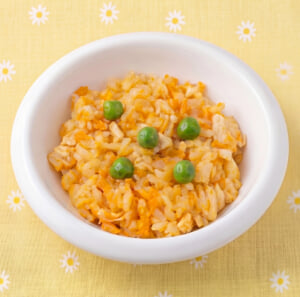
Hijiki Fried Rice
ひじきチャーハン · Hijiki Chahan
 By Aoi, licensed nutritionist · From a Japanese preschool lunch menu
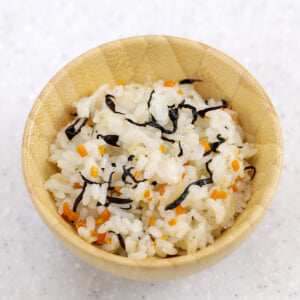
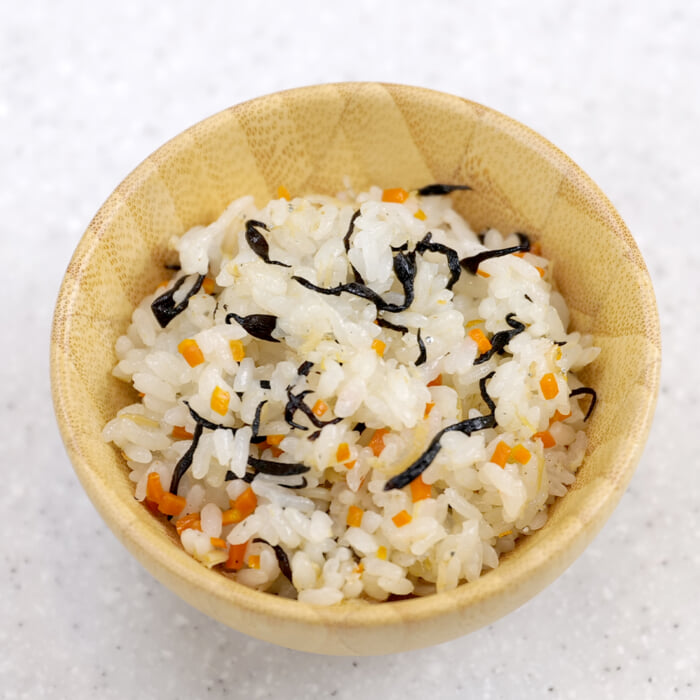
Chahan is Japanese fried rice, and this version folds in hijiki, a mild, dark sea vegetable that cooks up soft and slightly sweet, along with shirasu (tiny dried baby sardines) and finely chopped carrot. Rather than frying the rice itself, we stir-fry the toppings and mix them into freshly cooked rice, so it stays fluffy and never greasy. The seasoning is just a touch of soy sauce, salt and pepper, and children scoop it up happily without noticing how much seaweed and fish they are eating. Hijiki is a staple of Japanese preschool kitchens, and this is one of the easiest ways to get it onto a small plate.
Added. Open the recipe helper (bottom right) → ☰ Menu → 🛒 Shopping list to see the ingredients for your family size.
Printing uses the number of adults and children set under Ingredients, so set those first.
Ingredients
Amounts for 1 child (1 serving). An adult counts as 2 servings.
One serving here is 1.5× the portion served to a child in a Japanese preschool, sized for Western appetites. An adult counts as two servings. Tap an ingredient to check it off.
Ingredients
- 45 griceJapanese short-grain white rice (japonica), which cooks up soft and slightly sticky. The amount listed is for uncooked rice. Substitute: Sushi rice, or another short-grain or medium-grain rice such as Calrose.
- 0.6 ghijiki seaweedA dark, thin dried seaweed that is soaked before cooking and often simmered with vegetables. Substitute: Dried arame or wakame seaweed; the flavor will be milder.
- 4.1 gshirasu (dried baby sardines)Tiny, lightly salted and dried whole baby sardines that add gentle saltiness and calcium. Substitute: A small amount of flaked canned sardines, or omit.
- 16.5 gcarrot
Seasonings
- 0.8 gsoy sauce
- 0.3 gsalt
- to tastepepper
- 1.5 gvegetable oil
About the Japanese ingredients in this recipe
- rice (米)
- Japanese short-grain white rice (japonica), which cooks up soft and slightly sticky. The amount listed is for uncooked rice. Substitute: Sushi rice, or another short-grain or medium-grain rice such as Calrose.
- hijiki seaweed (ひじき)
- A dark, thin dried seaweed that is soaked before cooking and often simmered with vegetables. Substitute: Dried arame or wakame seaweed; the flavor will be milder.
- shirasu (dried baby sardines) (しらす干し)
- Tiny, lightly salted and dried whole baby sardines that add gentle saltiness and calcium. Substitute: A small amount of flaked canned sardines, or omit.
Directions
- 1
Cook the rice as usual.
- 2
Finely chop the carrot. Soak the dried hijiki in water to rehydrate it, and briefly blanch the shirasu in boiling water.
- 3
Heat the vegetable oil in a frying pan, drain the hijiki well, and stir-fry the carrot and hijiki thoroughly.
- 4
Add the shirasu, salt, pepper and soy sauce and stir-fry briefly.
- 5
Mix the cooked rice from step 1 with the stir-fried mixture from step 4.
Nutrition
| Per | 1 serving | 1 adult serving | Your total |
|---|---|---|---|
| Energy | 180 kcal | 360 kcal | 180 kcal |
| Protein | 4.1 g | 8.1 g | 4.1 g |
| Fat | 2.1 g | 4.2 g | 2.1 g |
| Carbohydrates | 39.9 g | 79.8 g | 39.9 g |
| Salt equivalent | 0.6 g | 1.2 g | 0.6 g |
| Calcium | 24 mg | 48 mg | 24 mg |
| Iron | 0.5 mg | 0.9 mg | 0.5 mg |
| Energy | Protein | Fat | Carbs | Salt equiv. | Calcium | Iron | |
|---|---|---|---|---|---|---|---|
| 1 serving | 180 kcal | 4.1 g | 2.1 g | 39.9 g | 0.6 g | 24 mg | 0.5 mg |
| 1 adult serving | 360 kcal | 8.1 g | 4.2 g | 79.8 g | 1.2 g | 48 mg | 0.9 mg |
Values are per serving (1.5× the Japanese preschool portion); an adult serving is double. They were calculated by a licensed Japanese nutritionist using the Standard Tables of Food Composition in Japan. "Salt equivalent" is sodium × 2.54, the standard Japanese measure. Allergen flags cover egg, milk and wheat only and come from the nutritionist's records. Soy sauce and miso are made with wheat but are usually allowed on Japanese wheat-free school menus, so check with your doctor.