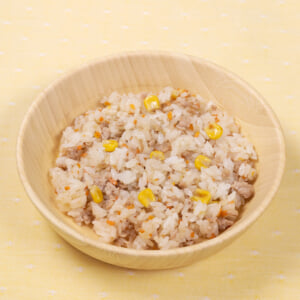
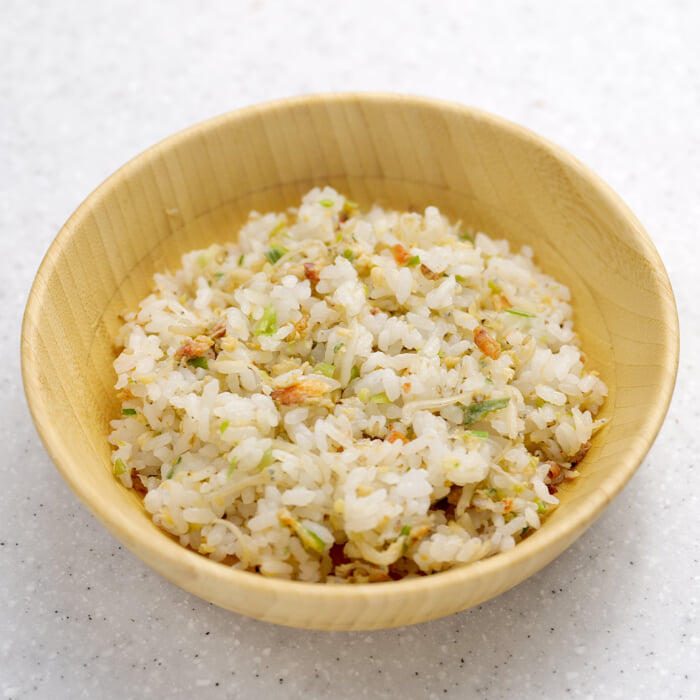
Shirasu and Sakura Shrimp Fried Rice
しらすと桜えびのチャーハン · Shirasu to Sakura Ebi no Chahan
 By Aoi, licensed nutritionist · From a Japanese preschool lunch menu
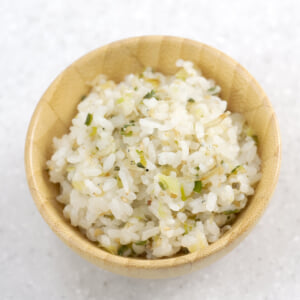
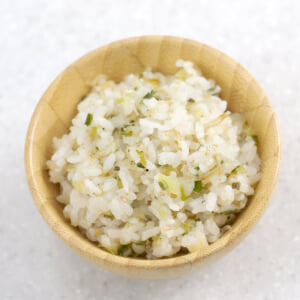
This is a gentle, savory fried rice built around two small seafoods that Japanese kitchens love: shirasu (tiny dried baby sardines) and sakura ebi, the little pink dried shrimp best known from Suruga Bay in Shizuoka. Because both are eaten whole, they bring plenty of calcium along with a deep, toasty umami, so the rice needs only a light hand with salt and soy sauce. Grinding the sakura shrimp finely in a food processor means their flavor spreads through every grain and there are no crunchy bits for little ones to pick out. With soft scrambled egg and green onion folded in, this is the kind of dish where kids clean their plates without noticing how much fish they have eaten.
Added. Open the recipe helper (bottom right) → ☰ Menu → 🛒 Shopping list to see the ingredients for your family size.
Printing uses the number of adults and children set under Ingredients, so set those first.
Ingredients
Amounts for 1 child (1 serving). An adult counts as 2 servings.
One serving here is 1.5× the portion served to a child in a Japanese preschool, sized for Western appetites. An adult counts as two servings. Tap an ingredient to check it off.
Ingredients
- 52.5 griceJapanese short-grain white rice (japonica), which cooks up soft and slightly sticky. The amount listed is for uncooked rice. Substitute: Sushi rice, or another short-grain or medium-grain rice such as Calrose.
- 1.5 gsakura shrimp (dried)Tiny pink dried shrimp from Japan, used to add umami and color. Substitute: Small dried shrimp from an Asian grocery (contains shellfish).
- 6.6 gshirasu (dried baby sardines)Tiny, lightly salted and dried whole baby sardines that add gentle saltiness and calcium. Substitute: A small amount of flaked canned sardines, or omit.
- 18 ggreen onion (naga negi)Japanese long onion, thicker and milder than Western scallions. Substitute: Scallions or the white part of a leek.
- 18 gegg
Seasonings
- 1.5 gwhite sesame seeds
- 0.3 gvegetable oil
- 0.5 gsalt
- to tastepepper
- 1.5 gvegetable oil
About the Japanese ingredients in this recipe
- rice (米)
- Japanese short-grain white rice (japonica), which cooks up soft and slightly sticky. The amount listed is for uncooked rice. Substitute: Sushi rice, or another short-grain or medium-grain rice such as Calrose.
- sakura shrimp (dried) (さくらえび)
- Tiny pink dried shrimp from Japan, used to add umami and color. Substitute: Small dried shrimp from an Asian grocery (contains shellfish).
- shirasu (dried baby sardines) (しらす干し)
- Tiny, lightly salted and dried whole baby sardines that add gentle saltiness and calcium. Substitute: A small amount of flaked canned sardines, or omit.
- green onion (naga negi) (ねぎ)
- Japanese long onion, thicker and milder than Western scallions. Substitute: Scallions or the white part of a leek.
Directions
- 1
Cook the rice as usual.
- 2
Grind the sakura shrimp finely in a food processor. Finely chop the green onion.
- 3
Heat the oil in a frying pan and sauté the green onion. Add the beaten egg, the cooked rice and crushed sakura shrimp, the shirasu and the white sesame seeds, and stir-fry.
- 4
Add the salt, pepper and soy sauce, and mix everything together well.
Nutrition
| Per | 1 serving | 1 adult serving | Your total |
|---|---|---|---|
| Energy | 249 kcal | 498 kcal | 249 kcal |
| Protein | 8.6 g | 17.1 g | 8.6 g |
| Fat | 5.1 g | 10.2 g | 5.1 g |
| Carbohydrates | 46.2 g | 92.4 g | 46.2 g |
| Salt equivalent | 0.9 g | 1.8 g | 0.9 g |
| Calcium | 84 mg | 168 mg | 84 mg |
| Iron | 0.9 mg | 1.8 mg | 0.9 mg |
| Energy | Protein | Fat | Carbs | Salt equiv. | Calcium | Iron | |
|---|---|---|---|---|---|---|---|
| 1 serving | 249 kcal | 8.6 g | 5.1 g | 46.2 g | 0.9 g | 84 mg | 0.9 mg |
| 1 adult serving | 498 kcal | 17.1 g | 10.2 g | 92.4 g | 1.8 g | 168 mg | 1.8 mg |
Values are per serving (1.5× the Japanese preschool portion); an adult serving is double. They were calculated by a licensed Japanese nutritionist using the Standard Tables of Food Composition in Japan. "Salt equivalent" is sodium × 2.54, the standard Japanese measure. Allergen flags cover egg, milk and wheat only and come from the nutritionist's records. Soy sauce and miso are made with wheat but are usually allowed on Japanese wheat-free school menus, so check with your doctor.