Takenoko Gohan (Bamboo Shoot Rice)
たけのこごはん · Takenoko Gohan
 By Aoi, licensed nutritionist · From a Japanese preschool lunch menu
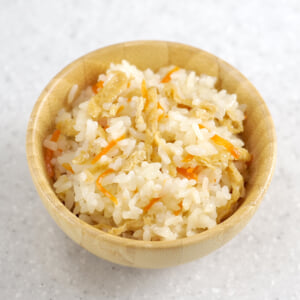
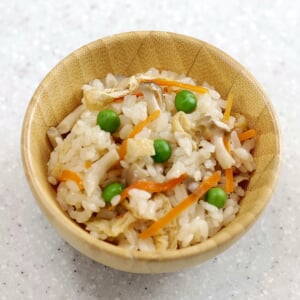
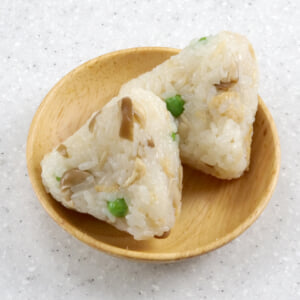
Takenoko gohan is a classic Japanese mixed rice that celebrates spring, when fresh bamboo shoots come into season. The rice cooks together with bamboo shoots, carrot and aburaage in a lightly sweet soy seasoning, so every grain picks up the flavor without being salty. Children love the soft, slightly crunchy bamboo shoots, and cutting everything into short, thin pieces makes it easy for little mouths to chew. Using ready-boiled bamboo shoots (sold in vacuum packs or cans at Asian grocers) keeps it simple enough for a weeknight.
Added. Open the recipe helper (bottom right) → ☰ Menu → 🛒 Shopping list to see the ingredients for your family size.
Printing uses the number of adults and children set under Ingredients, so set those first.
Ingredients
Amounts for 1 child (1 serving). An adult counts as 2 servings.
One serving here is 1.5× the portion served to a child in a Japanese preschool, sized for Western appetites. An adult counts as two servings. Tap an ingredient to check it off.
Ingredients
- 75 griceJapanese short-grain white rice (japonica), which cooks up soft and slightly sticky. The amount listed is for uncooked rice. Substitute: Sushi rice, or another short-grain or medium-grain rice such as Calrose.
- 25.5 gboiled bamboo shootsPre-cooked bamboo shoots, sold in vacuum packs or cans. Substitute: Canned bamboo shoots, rinsed and drained.
- 10.5 gcarrot
- 6 gaburaage (fried tofu pouch)Thin slices of tofu deep-fried until puffy and golden, sold in packs in the refrigerated section of Japanese and Asian markets. Substitute: Firm tofu, thinly sliced and pan-fried until golden.
Seasonings
- 2.6 gsugar
- 3 gsoy sauce
- 0.6 gsalt
About the Japanese ingredients in this recipe
- rice (米)
- Japanese short-grain white rice (japonica), which cooks up soft and slightly sticky. The amount listed is for uncooked rice. Substitute: Sushi rice, or another short-grain or medium-grain rice such as Calrose.
- boiled bamboo shoots (たけのこ(ゆで))
- Pre-cooked bamboo shoots, sold in vacuum packs or cans. Substitute: Canned bamboo shoots, rinsed and drained.
- aburaage (fried tofu pouch) (油揚げ)
- Thin slices of tofu deep-fried until puffy and golden, sold in packs in the refrigerated section of Japanese and Asian markets. Substitute: Firm tofu, thinly sliced and pan-fried until golden.
Directions
Video is in Japanese and may show a different version of this dish (other ingredients or steps). Follow the ingredients and steps on this page, especially when cooking for allergies.
- 1
Rinse the rice and soak it in water for at least 30 minutes.
- 2
Cut the boiled bamboo shoots and carrot into short, thin matchsticks.
- 3
Pour boiling water over the aburaage to remove excess oil, then cut it into short, thin strips.
- 4
Add the seasonings to the rice from step 1, then add the usual amount of water you would use to cook that rice, and stir.
- 5
Place the bamboo shoots, carrot and aburaage from steps 2 and 3 on top of the rice and cook as usual.
- 6
Once the rice is cooked, gently mix everything together.
Nutrition
| Per | 1 serving | 1 adult serving | Your total |
|---|---|---|---|
| Energy | 301.5 kcal | 603 kcal | 301.5 kcal |
| Protein | 7.2 g | 14.4 g | 7.2 g |
| Fat | 2.8 g | 5.7 g | 2.8 g |
| Carbohydrates | 67.9 g | 135.9 g | 67.9 g |
| Salt equivalent | 1 g | 2.1 g | 1 g |
| Calcium | 31.5 mg | 63 mg | 31.5 mg |
| Iron | 0.9 mg | 1.8 mg | 0.9 mg |
| Energy | Protein | Fat | Carbs | Salt equiv. | Calcium | Iron | |
|---|---|---|---|---|---|---|---|
| 1 serving | 301.5 kcal | 7.2 g | 2.8 g | 67.9 g | 1 g | 31.5 mg | 0.9 mg |
| 1 adult serving | 603 kcal | 14.4 g | 5.7 g | 135.9 g | 2.1 g | 63 mg | 1.8 mg |
Values are per serving (1.5× the Japanese preschool portion); an adult serving is double. They were calculated by a licensed Japanese nutritionist using the Standard Tables of Food Composition in Japan. "Salt equivalent" is sodium × 2.54, the standard Japanese measure. Allergen flags cover egg, milk and wheat only and come from the nutritionist's records. Soy sauce and miso are made with wheat but are usually allowed on Japanese wheat-free school menus, so check with your doctor.