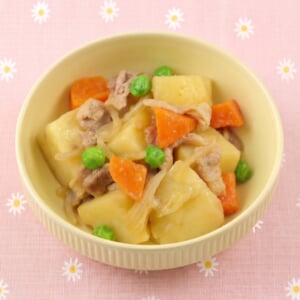
Miso Oden
味噌おでん · Miso Oden
 By Aoi, licensed nutritionist · From a Japanese preschool lunch menu
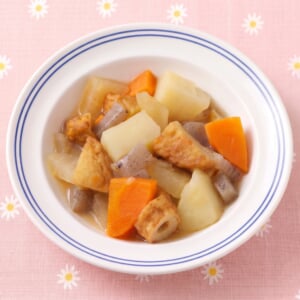
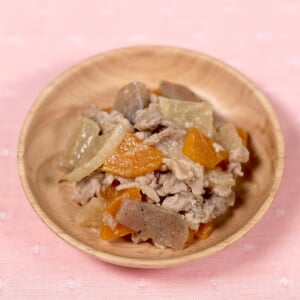
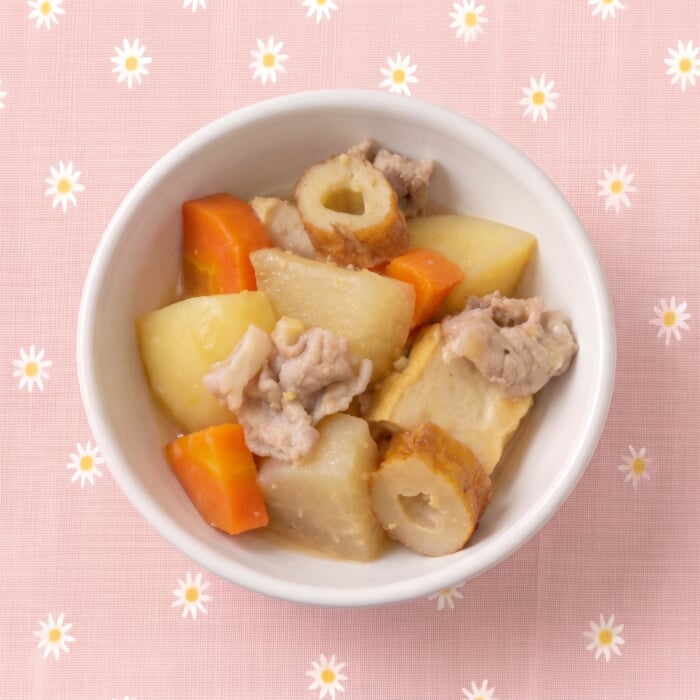
Oden is Japan's classic winter simmer: daikon, konnyaku, fried tofu and fish cakes cooked slowly in dashi until everything is soft and full of flavor. This version seasons the broth with miso, giving it a rounded sweetness and depth that makes chunky simmered vegetables much easier for little ones to take to. Pork and potato make it hearty enough to be the main dish, and it is made without egg or milk. Letting the pot cool before serving is the secret - that is when the flavor really soaks in.
Toddlers to adults. The whole family can eat this exactly as written.
Added. Open the recipe helper (bottom right) → ☰ Menu → 🛒 Shopping list to see the ingredients for your family size.
Printing uses the number of adults and children set under Ingredients, so set those first.
Ingredients
Amounts for 1 child (1 serving). An adult counts as 2 servings.
One serving here is 1.5× the portion served to a child in a Japanese preschool, sized for Western appetites. An adult counts as two servings. Tap an ingredient to check it off.
- 45 gdaikon radish
- 18 gcarrot
- 60 gpotato
- 24 ggobo-ten (fried fish cake with burdock)A Japanese fried fish cake with strips of burdock root mixed in. Substitute: Other Japanese fish cake such as chikuwa or satsuma-age; there is no close Western substitute.
- 36 gatsuage (thick deep-fried tofu)A thick block of tofu deep-fried so the outside is golden while the inside stays soft and creamy. Substitute: Firm tofu, pressed and pan-fried in a little oil until golden.
- 30 gkonnyakuA firm, jelly-like gray block made from konjac yam, nearly calorie-free with a bouncy, chewy texture that soaks up flavor. Substitute: No close substitute - look for it (sometimes labeled konjac cake) at a Japanese or Asian grocery or online, or simply leave it out.
- 36 gthinly sliced pork (komagire)Small, thin offcuts of pork sold in Japan for quick stir-fries and simmered dishes. Substitute: Thinly sliced pork shoulder or loin cut into bite-size pieces.
- 240 mldashi stockJapanese soup stock, usually made from kombu (dried kelp) and/or bonito flakes; the base of most Japanese soups and simmered dishes. Substitute: Instant dashi granules dissolved in water, or a mild unsalted chicken or vegetable stock.
- 2.4 gsugar
- 1.5 gmirinMirin is a sweet Japanese rice seasoning that adds gentle sweetness and a glossy finish. Hon-mirin (true mirin) contains about 14% alcohol; "mirin-style seasoning" has little or no alcohol. Some alcohol can remain after short cooking. If you prefer no alcohol for children, use the substitute. Substitute: For each tablespoon of mirin, use 1 tablespoon water plus 1 to 2 teaspoons sugar.
- 9 gmisoFermented soybean paste. Salty and savory, it is Japan's everyday seasoning for miso soup and many simmered dishes. Substitute: Any light (white or awase) miso. Misos differ in saltiness, so start with a little less and taste. Some misos are made with barley or wheat, so check the label if you avoid them.
- 2.4 gsoy sauce
About the Japanese ingredients in this recipe
- gobo-ten (fried fish cake with burdock) (ごぼう天)
- A Japanese fried fish cake with strips of burdock root mixed in. Substitute: Other Japanese fish cake such as chikuwa or satsuma-age; there is no close Western substitute.
- atsuage (thick deep-fried tofu) (厚揚げ)
- A thick block of tofu deep-fried so the outside is golden while the inside stays soft and creamy. Substitute: Firm tofu, pressed and pan-fried in a little oil until golden.
- konnyaku (こんにゃく)
- A firm, jelly-like gray block made from konjac yam, nearly calorie-free with a bouncy, chewy texture that soaks up flavor. Substitute: No close substitute - look for it (sometimes labeled konjac cake) at a Japanese or Asian grocery or online, or simply leave it out.
- thinly sliced pork (komagire) (豚こま切れ肉)
- Small, thin offcuts of pork sold in Japan for quick stir-fries and simmered dishes. Substitute: Thinly sliced pork shoulder or loin cut into bite-size pieces.
- dashi stock (だし汁)
- Japanese soup stock, usually made from kombu (dried kelp) and/or bonito flakes; the base of most Japanese soups and simmered dishes. Substitute: Instant dashi granules dissolved in water, or a mild unsalted chicken or vegetable stock.
- mirin (みりん)
- Mirin is a sweet Japanese rice seasoning that adds gentle sweetness and a glossy finish. Hon-mirin (true mirin) contains about 14% alcohol; "mirin-style seasoning" has little or no alcohol. Some alcohol can remain after short cooking. If you prefer no alcohol for children, use the substitute. Substitute: For each tablespoon of mirin, use 1 tablespoon water plus 1 to 2 teaspoons sugar.
- miso (みそ)
- Fermented soybean paste. Salty and savory, it is Japan's everyday seasoning for miso soup and many simmered dishes. Substitute: Any light (white or awase) miso. Misos differ in saltiness, so start with a little less and taste. Some misos are made with barley or wheat, so check the label if you avoid them.
Directions
Video is in Japanese — the steps below are synced to it, so tap ▶ on a step to jump to that moment.
- 1
Cut the carrot into 1 cm-thick quarter-rounds and the daikon into 1.5 cm-thick quarter-rounds. Place them in a microwave-safe bowl, add 1 tbsp water (not included in the ingredient amounts), cover loosely with plastic wrap leaving a gap for steam to escape, and microwave at 1200W for about 1 1/2 to 2 1/2 minutes (3 to 5 minutes at 600W). Cut the potato into 2 cm-thick quarter-rounds.
- 2
Pour boiling water over the gobo-ten and atsuage to rinse off excess oil. Cut the gobo-ten into 1 cm-thick rounds. Cut the atsuage lengthwise into 3 strips, then into 1.5 cm-thick pieces. Cut the pork into 2 cm-wide pieces.
- 3
Cut the konnyaku lengthwise into 3 strips, then into 1 cm-thick pieces. Place in a microwave-safe container, cover loosely with plastic wrap leaving a gap for steam to escape, and microwave at 1200W for about 1 minute (2 minutes at 600W), then rinse under water to remove any bitterness. (For children of elementary-school age and younger, thin shirataki-style konnyaku noodles are the safer choice.)
- 4
Put the vegetables from step 1 in a pot with enough dashi stock to just cover them and bring to a boil. Add the pork and konnyaku and skim off any scum, then add the sugar and mirin and simmer over low heat for about 10 minutes. (Adding the sweet seasonings first lets a gentle flavor soak into the ingredients.)
- 5
Add the gobo-ten, atsuage, miso and soy sauce and simmer over low heat for about 15 minutes. Let it cool so the flavors soak in. (Dissolving the miso in a little of the cooking liquid before adding it helps prevent lumps.)
Tips for Best Results
- You can adjust how strong the dish tastes by how much cooking liquid you leave at the end. Leave more if you prefer a lighter flavor, less if you like it richer.
- Adding miso for depth and sweetness makes this easier to eat for children who are not keen on chunky simmered dishes.
Freezing and Storage
This dish does not freeze well. Keep it in the refrigerator and finish it by the next day.
Nutrition
| Per | 1 serving | 1 adult serving | Your total |
|---|---|---|---|
| Energy | 231 kcal | 462 kcal | 231 kcal |
| Protein | 17.9 g | 35.7 g | 17.9 g |
| Fat | 9.3 g | 18.6 g | 9.3 g |
| Carbohydrates | 24 g | 48 g | 24 g |
| Fiber | 7.8 g | 15.6 g | 7.8 g |
| Salt equivalent | 2.3 g | 4.5 g | 2.3 g |
| Calcium | 144 mg | 288 mg | 144 mg |
| Iron | 2.1 mg | 4.2 mg | 2.1 mg |
| Potassium | 807 mg | 1614 mg | 807 mg |
| Phosphorus | 252 mg | 504 mg | 252 mg |
| Energy | Protein | Fat | Carbs | Fiber | Salt equiv. | Calcium | Iron | Potassium | Phosphorus | |
|---|---|---|---|---|---|---|---|---|---|---|
| 1 serving | 231 kcal | 17.9 g | 9.3 g | 24 g | 7.8 g | 2.3 g | 144 mg | 2.1 mg | 807 mg | 252 mg |
| 1 adult serving | 462 kcal | 35.7 g | 18.6 g | 48 g | 15.6 g | 4.5 g | 288 mg | 4.2 mg | 1614 mg | 504 mg |
Values are per serving (1.5× the Japanese preschool portion); an adult serving is double. They were calculated by a licensed Japanese nutritionist using the Standard Tables of Food Composition in Japan. "Salt equivalent" is sodium × 2.54, the standard Japanese measure. Allergen flags cover egg, milk and wheat only and come from the nutritionist's records. Soy sauce and miso are made with wheat but are usually allowed on Japanese wheat-free school menus, so check with your doctor.
Cooking for bigger kids? See the elementary-school portion of this recipe.