Miso Nikomi Udon (Miso-Simmered Udon)
味噌煮込みうどん · Miso Nikomi Udon
 By Aoi, licensed nutritionist · From a Japanese preschool lunch menu
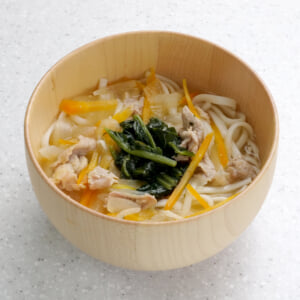
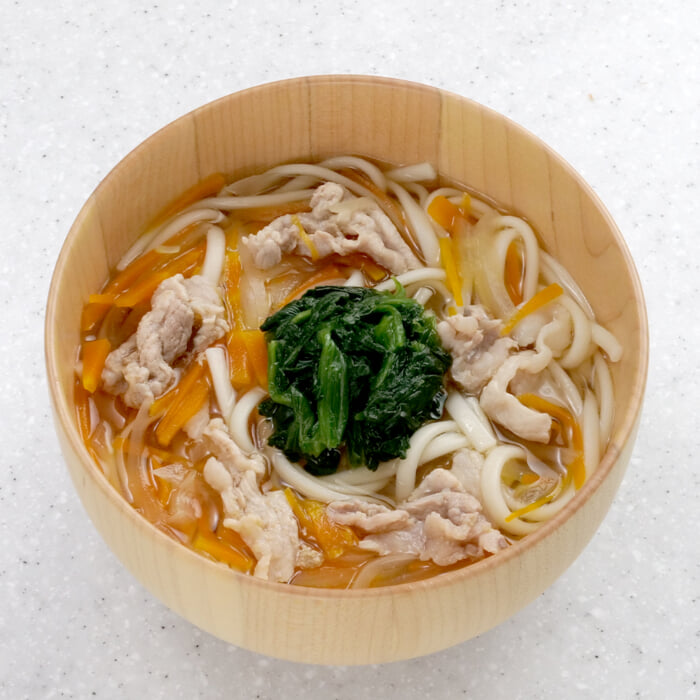
Miso nikomi udon is a comforting noodle dish best known from Nagoya, where it is traditionally simmered in a clay pot with the region's dark, robust miso. This preschool version keeps the same warming idea but uses light rice miso and a bonito-and-kombu dashi, so the broth stays mild and gentle on young palates. The noodles are boiled separately, broken into short lengths and rinsed to wash off their salt, which makes them easier for small mouths to manage and keeps the whole bowl low in salt. With soft carrot, sweet onion, lean pork and a topping of spinach, it is a full meal in one bowl that children happily slurp up.
Added. Open the recipe helper (bottom right) → ☰ Menu → 🛒 Shopping list to see the ingredients for your family size.
Printing uses the number of adults and children set under Ingredients, so set those first.
Ingredients
Amounts for 1 child (1 serving). An adult counts as 2 servings.
One serving here is 1.5× the portion served to a child in a Japanese preschool, sized for Western appetites. An adult counts as two servings. Tap an ingredient to check it off.
Ingredients
- 60 gdried udon noodles
- 24 gpork leg (lean pork)
- 13.5 gcarrot
- 22.5 gonion
- 12 gspinach
Seasonings
- 300 gbonito and kombu dashiJapanese soup stock made from dried bonito flakes and kombu kelp, the everyday base for soups and simmered dishes. Substitute: Instant dashi granules dissolved in water, or a light vegetable or chicken stock.
- 6 gmirinMirin is a sweet Japanese rice seasoning that adds gentle sweetness and a glossy finish. Hon-mirin (true mirin) contains about 14% alcohol; "mirin-style seasoning" has little or no alcohol. Some alcohol can remain after short cooking. If you prefer no alcohol for children, use the substitute. Substitute: For each tablespoon of mirin, use 1 tablespoon water plus 1 to 2 teaspoons sugar.
- 13.5 glight rice misoA pale, salty rice miso, the standard everyday miso in Japan. Substitute: Any light, white, or awase (blended) miso.
About the Japanese ingredients in this recipe
- bonito and kombu dashi (かつお・昆布だし汁)
- Japanese soup stock made from dried bonito flakes and kombu kelp, the everyday base for soups and simmered dishes. Substitute: Instant dashi granules dissolved in water, or a light vegetable or chicken stock.
- mirin (みりん)
- Mirin is a sweet Japanese rice seasoning that adds gentle sweetness and a glossy finish. Hon-mirin (true mirin) contains about 14% alcohol; "mirin-style seasoning" has little or no alcohol. Some alcohol can remain after short cooking. If you prefer no alcohol for children, use the substitute. Substitute: For each tablespoon of mirin, use 1 tablespoon water plus 1 to 2 teaspoons sugar.
- light rice miso (米みそ(淡色辛みそ))
- A pale, salty rice miso, the standard everyday miso in Japan. Substitute: Any light, white, or awase (blended) miso.
Directions
- 1
Break the dried udon into thirds and boil them. Rinse under water to wash off the saltiness.
- 2
Cut the carrot into short matchsticks, and slice the onion thinly, cutting the slices in half so they are shorter.
- 3
Cut the spinach into 2 to 3 cm pieces and boil it.
- 4
Put the dashi, the pork, and the carrot and onion from step 2 in a pot and bring to a simmer. Once the vegetables are cooked through, add the mirin and miso and simmer a little longer.
- 5
Put the noodles in bowls, pour the hot soup from step 4 over them, and top with the boiled spinach.
Nutrition
| Per | 1 serving | 1 adult serving | Your total |
|---|---|---|---|
| Energy | 312 kcal | 624 kcal | 312 kcal |
| Protein | 12.9 g | 25.8 g | 12.9 g |
| Fat | 5.3 g | 10.5 g | 5.3 g |
| Carbohydrates | 58.4 g | 116.7 g | 58.4 g |
| Salt equivalent | 4.8 g | 9.6 g | 4.8 g |
| Calcium | 49.5 mg | 99 mg | 49.5 mg |
| Iron | 1.5 mg | 3 mg | 1.5 mg |
| Energy | Protein | Fat | Carbs | Salt equiv. | Calcium | Iron | |
|---|---|---|---|---|---|---|---|
| 1 serving | 312 kcal | 12.9 g | 5.3 g | 58.4 g | 4.8 g | 49.5 mg | 1.5 mg |
| 1 adult serving | 624 kcal | 25.8 g | 10.5 g | 116.7 g | 9.6 g | 99 mg | 3 mg |
Values are per serving (1.5× the Japanese preschool portion); an adult serving is double. They were calculated by a licensed Japanese nutritionist using the Standard Tables of Food Composition in Japan. "Salt equivalent" is sodium × 2.54, the standard Japanese measure. Allergen flags cover egg, milk and wheat only and come from the nutritionist's records. Soy sauce and miso are made with wheat but are usually allowed on Japanese wheat-free school menus, so check with your doctor.