Hiyashi Udon (Chilled Udon Noodles)
冷やしうどん · Hiyashi Udon
 By Aoi, licensed nutritionist · From a Japanese preschool lunch menu
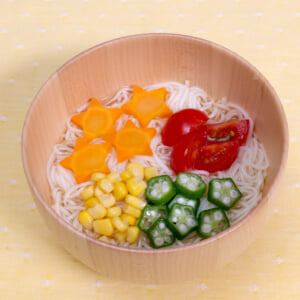
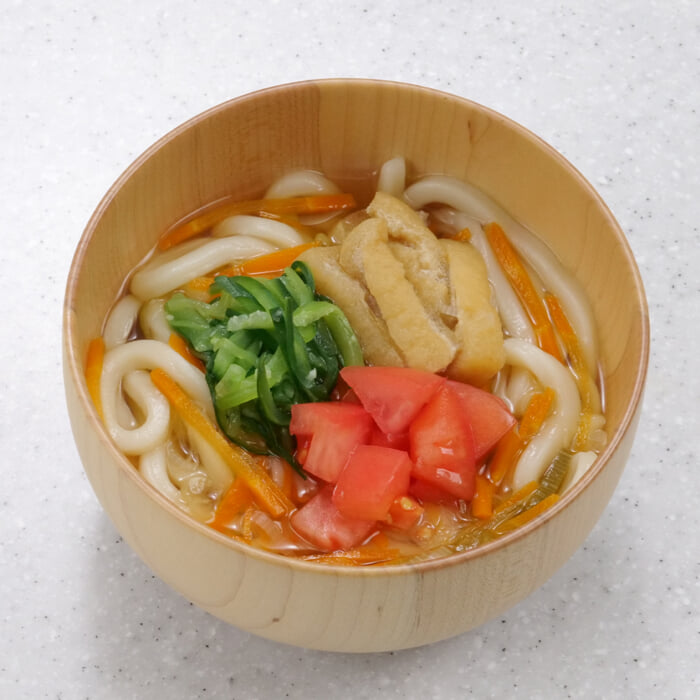
Hiyashi udon is the summertime way to eat udon in Japan: the noodles are boiled, plunged into cold water and served in a chilled soy-and-dashi broth. Here the broth is simmered with carrot, green onion and aburaage, then cooled in the fridge, and the bowl is topped with diced tomato and cucumber for color and crunch. The soft, slippery noodles and mild broth go down easily even when the heat has taken away children's appetites. In preschool kitchens the udon is boiled a little longer than the package says so it is extra soft and easy for small mouths to chew.
Added. Open the recipe helper (bottom right) → ☰ Menu → 🛒 Shopping list to see the ingredients for your family size.
Printing uses the number of adults and children set under Ingredients, so set those first.
Ingredients
Amounts for 1 child (1 serving). An adult counts as 2 servings.
One serving here is 1.5× the portion served to a child in a Japanese preschool, sized for Western appetites. An adult counts as two servings. Tap an ingredient to check it off.
Ingredients
- 10.5 gcarrot
- 6 ggreen onion (naga negi)Japanese long onion, thicker and milder than Western scallions. Substitute: Scallions or the white part of a leek.
- 3.8 gaburaage (fried tofu pouch)Thin slices of tofu deep-fried until puffy and golden, sold in packs in the refrigerated section of Japanese and Asian markets. Substitute: Firm tofu, thinly sliced and pan-fried until golden.
- 22.5 gtomato
- 15 gcucumber
- 150 gcooked udon noodles (pre-boiled)Thick wheat noodles sold pre-boiled in vacuum packs that only need a quick reheat. Substitute: Dried udon, boiled according to the package.
Seasonings
- 210 gbonito and kombu dashiJapanese soup stock made from dried bonito flakes and kombu kelp, the everyday base for soups and simmered dishes. Substitute: Instant dashi granules dissolved in water, or a light vegetable or chicken stock.
- 4.1 gmirinMirin is a sweet Japanese rice seasoning that adds gentle sweetness and a glossy finish. Hon-mirin (true mirin) contains about 14% alcohol; "mirin-style seasoning" has little or no alcohol. Some alcohol can remain after short cooking. If you prefer no alcohol for children, use the substitute. Substitute: For each tablespoon of mirin, use 1 tablespoon water plus 1 to 2 teaspoons sugar.
- 4.1 gsoy sauce
- 0.5 gsalt
About the Japanese ingredients in this recipe
- green onion (naga negi) (ねぎ)
- Japanese long onion, thicker and milder than Western scallions. Substitute: Scallions or the white part of a leek.
- aburaage (fried tofu pouch) (油揚げ)
- Thin slices of tofu deep-fried until puffy and golden, sold in packs in the refrigerated section of Japanese and Asian markets. Substitute: Firm tofu, thinly sliced and pan-fried until golden.
- bonito and kombu dashi (かつお・昆布だし汁)
- Japanese soup stock made from dried bonito flakes and kombu kelp, the everyday base for soups and simmered dishes. Substitute: Instant dashi granules dissolved in water, or a light vegetable or chicken stock.
- mirin (みりん)
- Mirin is a sweet Japanese rice seasoning that adds gentle sweetness and a glossy finish. Hon-mirin (true mirin) contains about 14% alcohol; "mirin-style seasoning" has little or no alcohol. Some alcohol can remain after short cooking. If you prefer no alcohol for children, use the substitute. Substitute: For each tablespoon of mirin, use 1 tablespoon water plus 1 to 2 teaspoons sugar.
- cooked udon noodles (pre-boiled) (ゆでうどん)
- Thick wheat noodles sold pre-boiled in vacuum packs that only need a quick reheat. Substitute: Dried udon, boiled according to the package.
Directions
- 1
Cut the carrot into short, thin strips and thinly slice the green onion crosswise. Pour boiling water over the aburaage to remove excess oil, then cut it into short, thin strips.
- 2
Put the dashi and carrot in a pot and bring to a boil. Add the green onion and aburaage and simmer over low heat for about 15 minutes. Add the seasonings (mirin, soy sauce and salt) and simmer over low heat for about 5 more minutes. Let cool slightly, then chill in the refrigerator.
- 3
Cut the tomato into small cubes. Cut the cucumber into short, thin strips, boil in hot water for 1 minute, rinse under running water, then squeeze out the excess water.
- 4
Add the udon to boiling water and cook 5 minutes longer than the package directions. Drain in a colander and plunge into cold water to cool. Once cool, drain well.
- 5
Place the noodles from step 4 in a bowl, pour the chilled broth from step 2 over them, and top with the tomato and cucumber from step 3.
Nutrition
| Per | 1 serving | 1 adult serving | Your total |
|---|---|---|---|
| Energy | 187.5 kcal | 375 kcal | 187.5 kcal |
| Protein | 6.5 g | 12.9 g | 6.5 g |
| Fat | 2 g | 3.9 g | 2 g |
| Carbohydrates | 38 g | 75.9 g | 38 g |
| Salt equivalent | 1.8 g | 3.6 g | 1.8 g |
| Calcium | 39 mg | 78 mg | 39 mg |
| Iron | 0.6 mg | 1.2 mg | 0.6 mg |
| Energy | Protein | Fat | Carbs | Salt equiv. | Calcium | Iron | |
|---|---|---|---|---|---|---|---|
| 1 serving | 187.5 kcal | 6.5 g | 2 g | 38 g | 1.8 g | 39 mg | 0.6 mg |
| 1 adult serving | 375 kcal | 12.9 g | 3.9 g | 75.9 g | 3.6 g | 78 mg | 1.2 mg |
Values are per serving (1.5× the Japanese preschool portion); an adult serving is double. They were calculated by a licensed Japanese nutritionist using the Standard Tables of Food Composition in Japan. "Salt equivalent" is sodium × 2.54, the standard Japanese measure. Allergen flags cover egg, milk and wheat only and come from the nutritionist's records. Soy sauce and miso are made with wheat but are usually allowed on Japanese wheat-free school menus, so check with your doctor.