Miso Udon
味噌うどん · Miso Udon
 By Aoi, licensed nutritionist · From a Japanese preschool lunch menu
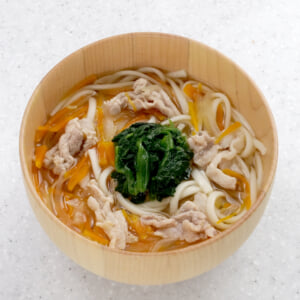
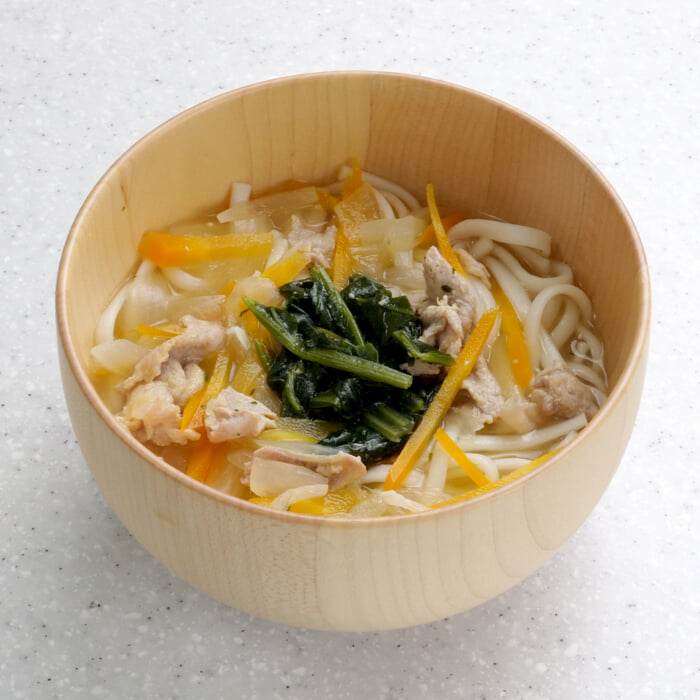
Miso udon is a comforting bowl of udon noodles served in a dashi soup seasoned with miso and a touch of mirin, with pork, carrot, onion and spinach for a full meal in one bowl. The sweetness of slowly simmered onion and carrot rounds out the miso, so the soup stays gentle enough for little ones. Breaking the dried noodles into thirds before boiling makes them easy to slurp from a small bowl, and the spinach goes on top at the end so it keeps its bright color.
Added. Open the recipe helper (bottom right) → ☰ Menu → 🛒 Shopping list to see the ingredients for your family size.
Printing uses the number of adults and children set under Ingredients, so set those first.
Ingredients
Amounts for 1 child (1 serving). An adult counts as 2 servings.
One serving here is 1.5× the portion served to a child in a Japanese preschool, sized for Western appetites. An adult counts as two servings. Tap an ingredient to check it off.
Ingredients
- 52.5 gdried udon noodles
- 12 gcarrot
- 19.5 gonion
- 22.5 gthinly sliced pork (komagire)Small, thin offcuts of pork sold in Japan for quick stir-fries and simmered dishes. Substitute: Thinly sliced pork shoulder or loin cut into bite-size pieces.
- 18 gspinach
Seasonings
- 210 gdashi stockJapanese soup stock, usually made from kombu (dried kelp) and/or bonito flakes; the base of most Japanese soups and simmered dishes. Substitute: Instant dashi granules dissolved in water, or a mild unsalted chicken or vegetable stock.
- 3 gmirinMirin is a sweet Japanese rice seasoning that adds gentle sweetness and a glossy finish. Hon-mirin (true mirin) contains about 14% alcohol; "mirin-style seasoning" has little or no alcohol. Some alcohol can remain after short cooking. If you prefer no alcohol for children, use the substitute. Substitute: For each tablespoon of mirin, use 1 tablespoon water plus 1 to 2 teaspoons sugar.
- 6.8 gmisoFermented soybean paste. Salty and savory, it is Japan's everyday seasoning for miso soup and many simmered dishes. Substitute: Any light (white or awase) miso. Misos differ in saltiness, so start with a little less and taste. Some misos are made with barley or wheat, so check the label if you avoid them.
About the Japanese ingredients in this recipe
- thinly sliced pork (komagire) (豚こま切れ肉)
- Small, thin offcuts of pork sold in Japan for quick stir-fries and simmered dishes. Substitute: Thinly sliced pork shoulder or loin cut into bite-size pieces.
- dashi stock (だし汁)
- Japanese soup stock, usually made from kombu (dried kelp) and/or bonito flakes; the base of most Japanese soups and simmered dishes. Substitute: Instant dashi granules dissolved in water, or a mild unsalted chicken or vegetable stock.
- mirin (みりん)
- Mirin is a sweet Japanese rice seasoning that adds gentle sweetness and a glossy finish. Hon-mirin (true mirin) contains about 14% alcohol; "mirin-style seasoning" has little or no alcohol. Some alcohol can remain after short cooking. If you prefer no alcohol for children, use the substitute. Substitute: For each tablespoon of mirin, use 1 tablespoon water plus 1 to 2 teaspoons sugar.
- miso (みそ)
- Fermented soybean paste. Salty and savory, it is Japan's everyday seasoning for miso soup and many simmered dishes. Substitute: Any light (white or awase) miso. Misos differ in saltiness, so start with a little less and taste. Some misos are made with barley or wheat, so check the label if you avoid them.
Directions
Video is in Japanese and may show a different version of this dish (other ingredients or steps). Follow the ingredients and steps on this page, especially when cooking for allergies.
- 1
Break the dried noodles into thirds by hand, drop them into boiling water and cook, loosening them with chopsticks, for 5 minutes longer than the package directs. Rinse under running water to wash off the saltiness.
- 2
Cut the carrot into 4 cm long matchsticks and the onion into thin slices, then cut the slices in half. Cut the pork into 1 to 2 cm wide strips.
- 3
Cut the spinach into 2 cm pieces and boil in hot water for 2 minutes. Cool under running water, then squeeze out the excess water.
- 4
Put the dashi stock, carrot and onion in a pot and simmer over low heat for 15 minutes. Add the seasonings and the pork and simmer over low heat for another 3 to 5 minutes or so.
- 5
Place the noodles in bowls, pour the soup over the top, and finish with the boiled spinach.
To save time, you can skip step 3 and stir in frozen spinach at the end instead!
Nutrition
| Per | 1 serving | 1 adult serving | Your total |
|---|---|---|---|
| Energy | 252 kcal | 504 kcal | 252 kcal |
| Protein | 11.4 g | 22.8 g | 11.4 g |
| Fat | 3.3 g | 6.6 g | 3.3 g |
| Carbohydrates | 44.6 g | 89.1 g | 44.6 g |
| Fiber | 2.6 g | 5.1 g | 2.6 g |
| Salt equivalent | 3.3 g | 6.6 g | 3.3 g |
| Calcium | 39 mg | 78 mg | 39 mg |
| Iron | 1 mg | 2.1 mg | 1 mg |
| Potassium | 496.5 mg | 993 mg | 496.5 mg |
| Energy | Protein | Fat | Carbs | Fiber | Salt equiv. | Calcium | Iron | Potassium | |
|---|---|---|---|---|---|---|---|---|---|
| 1 serving | 252 kcal | 11.4 g | 3.3 g | 44.6 g | 2.6 g | 3.3 g | 39 mg | 1 mg | 496.5 mg |
| 1 adult serving | 504 kcal | 22.8 g | 6.6 g | 89.1 g | 5.1 g | 6.6 g | 78 mg | 2.1 mg | 993 mg |
Values are per serving (1.5× the Japanese preschool portion); an adult serving is double. They were calculated by a licensed Japanese nutritionist using the Standard Tables of Food Composition in Japan. "Salt equivalent" is sodium × 2.54, the standard Japanese measure. Allergen flags cover egg, milk and wheat only and come from the nutritionist's records. Soy sauce and miso are made with wheat but are usually allowed on Japanese wheat-free school menus, so check with your doctor.