Hiyashi Chuka (Chilled Noodle Salad)
冷やし中華(卵乳なし) · Hiyashi Chuka
 By Aoi, licensed nutritionist · From a Japanese elementary school lunch menu
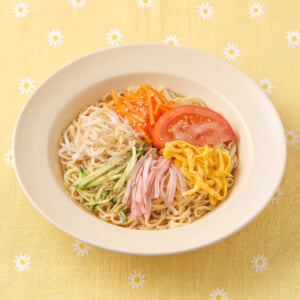
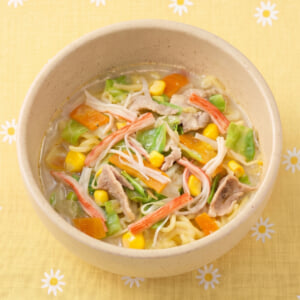
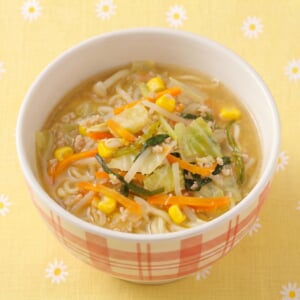
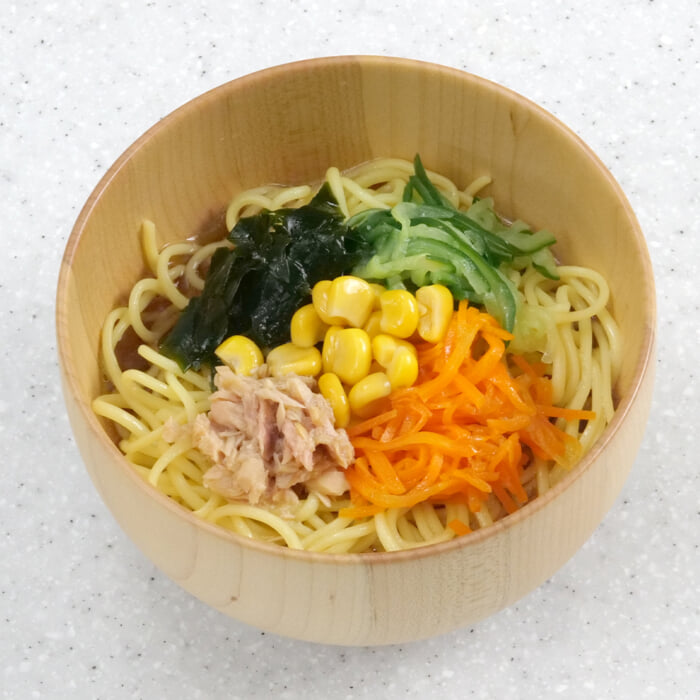
Hiyashi chuka is the dish Japan reaches for once the weather turns hot: chilled Chinese-style noodles topped with colorful strips of vegetables and ham, finished with a cool, tangy sauce of soy sauce, vinegar and sesame oil. Restaurants all over Japan hang up signs announcing "hiyashi chuka has started" at the beginning of summer. In the preschool kitchen the toppings are cut into short matchsticks and the noodles are cut in a cross before boiling, so even the littlest eaters can manage them with a fork or spoon. The sweet-sour sauce is kept mild, and the mix of green cucumber, orange carrot, pink ham, dark wakame and yellow corn makes a plate kids are happy to dig into.
Added. Open the recipe helper (bottom right) → ☰ Menu → 🛒 Shopping list to see the ingredients for your family size.
Printing uses the number of adults and children set under Ingredients, so set those first.
Ingredients
Amounts for 1 child (1 serving). An adult counts as 2 servings.
One serving here is 1.5× the portion served to a child in a Japanese elementary school, sized for Western appetites. An adult counts as two servings. Tap an ingredient to check it off.
Ingredients
- 90 gfresh Chinese-style noodles (egg-free)Fresh ramen-style wheat noodles made without egg. Substitute: Fresh or dried ramen noodles with no egg in the ingredients; check the label.
- 18 gcucumber
- 12 gcarrot
- 9.8 gham (egg- and milk-free)
- 0.6 gdried cut wakameSmall pieces of dried wakame seaweed that rehydrate in a few minutes and are used in soups and salads. Substitute: Any dried seaweed for soup, or omit.
- 13.5 gwhole kernel corn (canned or frozen)
Seasonings
- 135 mlwater
- 0.4 gconsommé bouillon (allergen-free)Japanese-style consommé stock granules or cubes, used as a Western-style soup base. This kind is made without egg and milk, but most recipes on this site that use it list wheat in their allergens, so check the label if you avoid wheat. Substitute: A chicken or vegetable bouillon powder or cube made without egg, milk or wheat (check the label).
- 6.9 gsugar
- 6.9 gsoy sauce
- 0.6 gsalt
- 2.1 gsesame oil
- 6.9 gvinegar
About the Japanese ingredients in this recipe
- fresh Chinese-style noodles (egg-free) (生中華めん(卵不使用))
- Fresh ramen-style wheat noodles made without egg. Substitute: Fresh or dried ramen noodles with no egg in the ingredients; check the label.
- dried cut wakame (カットわかめ)
- Small pieces of dried wakame seaweed that rehydrate in a few minutes and are used in soups and salads. Substitute: Any dried seaweed for soup, or omit.
- consommé bouillon (allergen-free) (コンソメ(アレルゲン不使用))
- Japanese-style consommé stock granules or cubes, used as a Western-style soup base. This kind is made without egg and milk, but most recipes on this site that use it list wheat in their allergens, so check the label if you avoid wheat. Substitute: A chicken or vegetable bouillon powder or cube made without egg, milk or wheat (check the label).
Directions
- 1
Put the water, consommé, sugar, soy sauce, salt, sesame oil and vinegar in a pot and bring to a boil. Turn off the heat, let it cool slightly, then chill it in the refrigerator or by setting the pot in cold running water.
- 2
Cut the cucumber, carrot and ham into short matchsticks, and rehydrate the wakame in water, then chop it finely. Boil the vegetables, ham and corn separately, then rinse each under cold running water to cool.
- 3
Cut the Chinese-style noodles in a cross to shorten them, then boil. Rinse under cold running water and drain well.
- 4
Serve the noodles in a bowl, arrange the toppings from step 2 on top, and pour the sauce over.
The sauce needs time to chill, so make it first.
Nutrition
| Per | 1 serving | 1 adult serving | Your total |
|---|---|---|---|
| Energy | 316.5 kcal | 633 kcal | 316.5 kcal |
| Protein | 11 g | 21.9 g | 11 g |
| Fat | 4.5 g | 9 g | 4.5 g |
| Carbohydrates | 62.4 g | 124.8 g | 62.4 g |
| Fiber | 6 g | 12 g | 6 g |
| Salt equivalent | 3 g | 6 g | 3 g |
| Calcium | 33 mg | 66 mg | 33 mg |
| Iron | 0.6 mg | 1.2 mg | 0.6 mg |
| Potassium | 465 mg | 930 mg | 465 mg |
| Energy | Protein | Fat | Carbs | Fiber | Salt equiv. | Calcium | Iron | Potassium | |
|---|---|---|---|---|---|---|---|---|---|
| 1 serving | 316.5 kcal | 11 g | 4.5 g | 62.4 g | 6 g | 3 g | 33 mg | 0.6 mg | 465 mg |
| 1 adult serving | 633 kcal | 21.9 g | 9 g | 124.8 g | 12 g | 6 g | 66 mg | 1.2 mg | 930 mg |
Values are per serving (1.5× the Japanese elementary-school portion); an adult serving is double. They were calculated by a licensed Japanese nutritionist using the Standard Tables of Food Composition in Japan. "Salt equivalent" is sodium × 2.54, the standard Japanese measure. Allergen flags cover egg, milk and wheat only and come from the nutritionist's records. Soy sauce and miso are made with wheat but are usually allowed on Japanese wheat-free school menus, so check with your doctor.