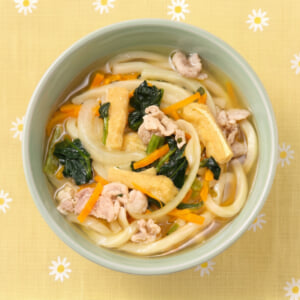
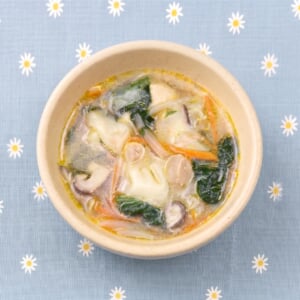
Vegetable-Packed Champon (Nagasaki Noodle Soup)
野菜たっぷりちゃんぽん · Yasai Tappuri Champon
 By Aoi, licensed nutritionist · From a Japanese preschool lunch menu
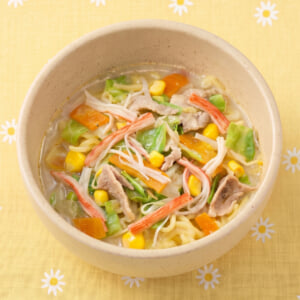
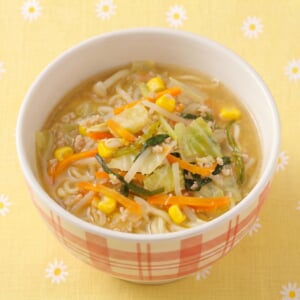
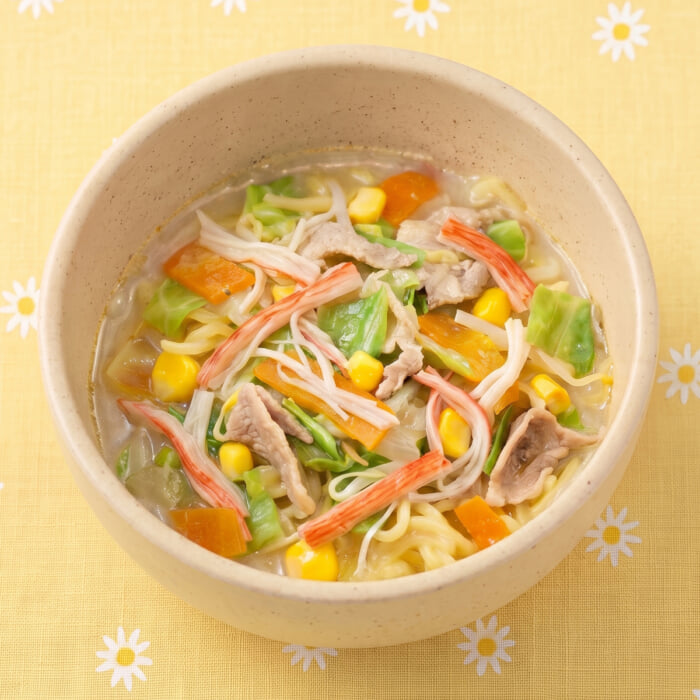
Champon is the signature noodle dish of Nagasaki: ramen-style noodles in a rich, milky broth heaped with stir-fried pork, seafood and vegetables, first served in the city's Chinatown over a century ago. In this preschool version, a splash of milk stands in for the long-simmered pork-bone broth, giving the soup that creamy, comforting body while keeping the seasoning mild. Carrot, onion, cabbage, bean sprouts, corn and spinach all go in, and because they cook down soft in the soup, even children who usually push vegetables aside tend to slurp them right up with the noodles. Rinsing the fresh noodles before boiling washes off extra salt, and the soup can be thinned a little further for the youngest eaters.
Toddlers to adults. The whole family can eat this exactly as written.
Added. Open the recipe helper (bottom right) → ☰ Menu → 🛒 Shopping list to see the ingredients for your family size.
Printing uses the number of adults and children set under Ingredients, so set those first.
Ingredients
Amounts for 1 child (1 serving). An adult counts as 2 servings.
One serving here is 1.5× the portion served to a child in a Japanese preschool, sized for Western appetites. An adult counts as two servings. Tap an ingredient to check it off.
Ingredients
- 12 gcarrot
- 15 gonion
- 33 gcabbage
- 21 gbean sprouts
- 27 gthinly sliced pork (komagire)Small, thin offcuts of pork sold in Japan for quick stir-fries and simmered dishes. Substitute: Thinly sliced pork shoulder or loin cut into bite-size pieces.
- 9 gimitation crab sticks (kanikama)
- 9 gwhole kernel corn (canned or frozen)
- 12 gfrozen spinach
For Stir-Frying
- 3.6 gsesame oil
Soup
- 210 mlwater
- 1.5 gchicken stock powder (Chinese-style)Japanese granulated chicken bone soup base used for Chinese-style soups and stir-fries. Substitute: Chicken bouillon granules or powder.
Seasonings (A)
- 3.3 gsoy sauce
- 27 mlmilk
- 0.5 gsalt
- a pinchpepper
Ingredients
- 0.9 ball(s)fresh ramen noodlesFresh Chinese-style wheat noodles sold refrigerated in Japan for ramen and stir-fried noodles. Substitute: Dried ramen noodles (discard the seasoning packet) or thin spaghetti.
About the Japanese ingredients in this recipe
- thinly sliced pork (komagire) (豚こま切れ肉)
- Small, thin offcuts of pork sold in Japan for quick stir-fries and simmered dishes. Substitute: Thinly sliced pork shoulder or loin cut into bite-size pieces.
- chicken stock powder (Chinese-style) (鶏ガラスープの素)
- Japanese granulated chicken bone soup base used for Chinese-style soups and stir-fries. Substitute: Chicken bouillon granules or powder.
- fresh ramen noodles (生中華麺)
- Fresh Chinese-style wheat noodles sold refrigerated in Japan for ramen and stir-fried noodles. Substitute: Dried ramen noodles (discard the seasoning packet) or thin spaghetti.
Directions
Video is in Japanese — the steps below are synced to it, so tap ▶ on a step to jump to that moment.
- 1
Cut the carrot into short, thin rectangular strips, thinly slice the onion, and cut the cabbage into 2 cm squares. Rinse the bean sprouts briefly and cut the pork into 2 cm-wide pieces. Shred the crab sticks and drain the corn.
- 2
Heat the sesame oil in a pot and stir-fry the carrot and onion over medium heat for about 2 minutes. Add the cabbage, bean sprouts and pork and stir-fry for about 3 minutes more.
- 3
Add the water and chicken stock powder and bring to a boil, then add the crab sticks, corn and frozen spinach and simmer over low heat for about 8 minutes.
- 4
Add the (A) seasonings and bring back to a brief boil.
- 5
Just before cooking the noodles, rinse them under running lukewarm water to wash off the salt, then immediately cook them in boiling water. Note: The noodles tend to clump together if left sitting, so boil them right after rinsing.
- 6
Place the noodles in bowls and ladle the soup from step 4 over them. Note: For toddlers, after plating, thin the soup by adding 4 to 5 tbsp of hot water per 100 ml of soup, tasting and adjusting as you go.
Tips for Best Results
- Fresh ramen noodles carry quite a bit of salt, so rinse them in lukewarm water before boiling to wash some of it off. If you are cooking for adults only, you can skip the rinse and boil them as they are.
- For adults, a little yuzu kosho (yuzu-chili paste) stirred in adds a lovely peppery kick and fragrance.
Freezing Instructions
Leave out the noodles and freeze the soup in freezer bags, one meal's worth per bag, spread thin. To serve, reheat in the microwave and pour over freshly boiled noodles.
Keeps for about 2 weeks (best eaten as soon as possible).
Nutrition
Nutrition values include the soup.
Nutrition values do not include the noodles.
| Per | 1 serving | 1 adult serving | Your total |
|---|---|---|---|
| Energy | 130.5 kcal | 261 kcal | 130.5 kcal |
| Protein | 9.1 g | 18.2 g | 9.1 g |
| Fat | 7.1 g | 14.1 g | 7.1 g |
| Carbohydrates | 8.6 g | 17.3 g | 8.6 g |
| Fiber | 2.2 g | 4.4 g | 2.2 g |
| Salt equivalent | 1 g | 2 g | 1 g |
| Calcium | 73.5 mg | 147 mg | 73.5 mg |
| Iron | 0.5 mg | 0.9 mg | 0.5 mg |
| Potassium | 319.5 mg | 639 mg | 319.5 mg |
| Phosphorus | 119.3 mg | 238.5 mg | 119.3 mg |
| Energy | Protein | Fat | Carbs | Fiber | Salt equiv. | Calcium | Iron | Potassium | Phosphorus | |
|---|---|---|---|---|---|---|---|---|---|---|
| 1 serving | 130.5 kcal | 9.1 g | 7.1 g | 8.6 g | 2.2 g | 1 g | 73.5 mg | 0.5 mg | 319.5 mg | 119.3 mg |
| 1 adult serving | 261 kcal | 18.2 g | 14.1 g | 17.3 g | 4.4 g | 2 g | 147 mg | 0.9 mg | 639 mg | 238.5 mg |
Values are per serving (1.5× the Japanese preschool portion); an adult serving is double. They were calculated by a licensed Japanese nutritionist using the Standard Tables of Food Composition in Japan. "Salt equivalent" is sodium × 2.54, the standard Japanese measure. Allergen flags cover egg, milk and wheat only and come from the nutritionist's records. Soy sauce and miso are made with wheat but are usually allowed on Japanese wheat-free school menus, so check with your doctor.