Halloween Rice
ハロウィンライス
 By Aoi, licensed nutritionist · From a Japanese preschool lunch menu
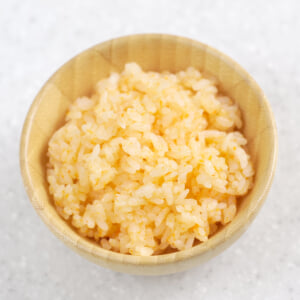
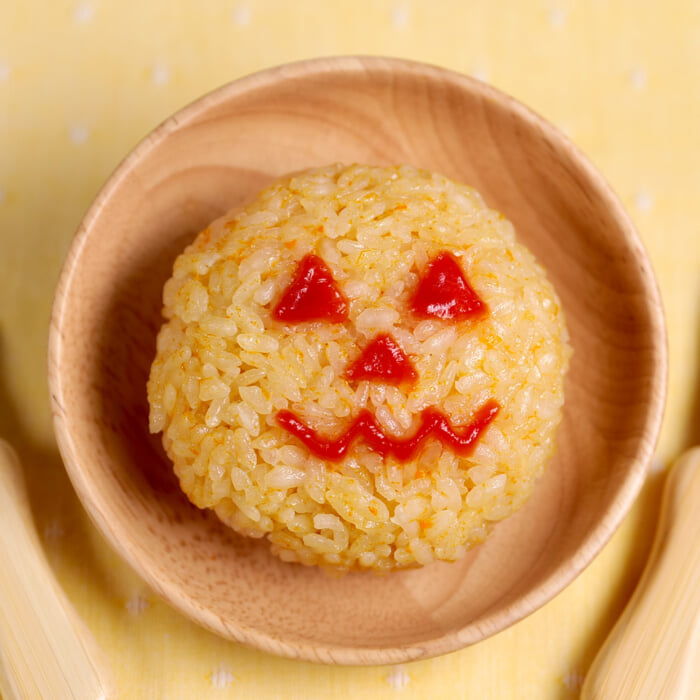
This is the Halloween treat that comes out of the preschool kitchen every October: rice cooked with pureed carrot so it turns a soft pumpkin orange, then shaped into rounds and given jack-o'-lantern faces with a squeeze of ketchup. The carrot melts right into the grains, so even children who push carrots aside eat it happily, and the seasoning stays gentle with just a little sake, soy sauce and salt. Drawing the faces is the part the kids love most, so let them help if you can.
Wheat-free, but uses soy sauce (made with wheat). Japanese school-lunch allergy menus usually allow it, so check with your doctor. How to read the labels
Added. Open the recipe helper (bottom right) → ☰ Menu → 🛒 Shopping list to see the ingredients for your family size.
Printing uses the number of adults and children set under Ingredients, so set those first.
Ingredients
Amounts for 1 child (1 serving). An adult counts as 2 servings.
One serving here is 1.5× the portion served to a child in a Japanese preschool, sized for Western appetites. An adult counts as two servings. Tap an ingredient to check it off.
Ingredients
- 75 griceJapanese short-grain white rice (japonica), which cooks up soft and slightly sticky. The amount listed is for uncooked rice. Substitute: Sushi rice, or another short-grain or medium-grain rice such as Calrose.
- 30 gcarrot
Seasonings
- 1.5 gsakeSake (Japanese rice wine) is used in small amounts to soften the smell of fish and meat and add depth. Japanese "cooking sake" often contains added salt. Some alcohol can remain after short cooking. If you prefer no alcohol for children, use the substitute. Substitute: The same amount of water (the taste will be a little simpler), or dry white wine.
- 2.8 gsoy sauce
- 0.3 gsalt
- 0.8 gketchup
About the Japanese ingredients in this recipe
- rice (米)
- Japanese short-grain white rice (japonica), which cooks up soft and slightly sticky. The amount listed is for uncooked rice. Substitute: Sushi rice, or another short-grain or medium-grain rice such as Calrose.
- sake (酒)
- Sake (Japanese rice wine) is used in small amounts to soften the smell of fish and meat and add depth. Japanese "cooking sake" often contains added salt. Some alcohol can remain after short cooking. If you prefer no alcohol for children, use the substitute. Substitute: The same amount of water (the taste will be a little simpler), or dry white wine.
Directions
- 1
Soak the rice in water for at least 30 minutes.
- 2
Briefly boil the carrot and blend it into a paste in a food processor (or simply grate it raw).
- 3
Add the carrot paste, sake, soy sauce, and salt to the soaked rice, mix everything well, and cook in the rice cooker.
- 4
Once the rice is cooked, stir it all together (letting it steam for a few minutes helps the flavors blend in). Shape into rounds and draw faces on them with ketchup.
Nutrition
| Per | 1 serving | 1 adult serving | Your total |
|---|---|---|---|
| Energy | 271.5 kcal | 543 kcal | 271.5 kcal |
| Protein | 4.9 g | 9.9 g | 4.9 g |
| Fat | 0.8 g | 1.5 g | 0.8 g |
| Carbohydrates | 61.5 g | 123 g | 61.5 g |
| Fiber | 1.4 g | 2.7 g | 1.4 g |
| Salt equivalent | 0.8 g | 1.5 g | 0.8 g |
| Calcium | 15 mg | 30 mg | 15 mg |
| Iron | 0.6 mg | 1.2 mg | 0.6 mg |
| Potassium | 171 mg | 342 mg | 171 mg |
| Energy | Protein | Fat | Carbs | Fiber | Salt equiv. | Calcium | Iron | Potassium | |
|---|---|---|---|---|---|---|---|---|---|
| 1 serving | 271.5 kcal | 4.9 g | 0.8 g | 61.5 g | 1.4 g | 0.8 g | 15 mg | 0.6 mg | 171 mg |
| 1 adult serving | 543 kcal | 9.9 g | 1.5 g | 123 g | 2.7 g | 1.5 g | 30 mg | 1.2 mg | 342 mg |
Values are per serving (1.5× the Japanese preschool portion); an adult serving is double. They were calculated by a licensed Japanese nutritionist using the Standard Tables of Food Composition in Japan. "Salt equivalent" is sodium × 2.54, the standard Japanese measure. Allergen flags cover egg, milk and wheat only and come from the nutritionist's records. Soy sauce and miso are made with wheat but are usually allowed on Japanese wheat-free school menus, so check with your doctor.