Torimeshi (Japanese Chicken Rice)
鶏めし · Torimeshi
 By Aoi, licensed nutritionist · From a Japanese preschool lunch menu
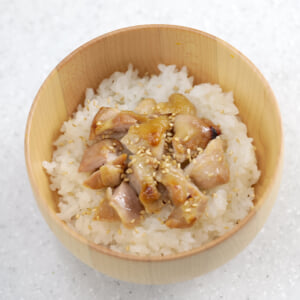
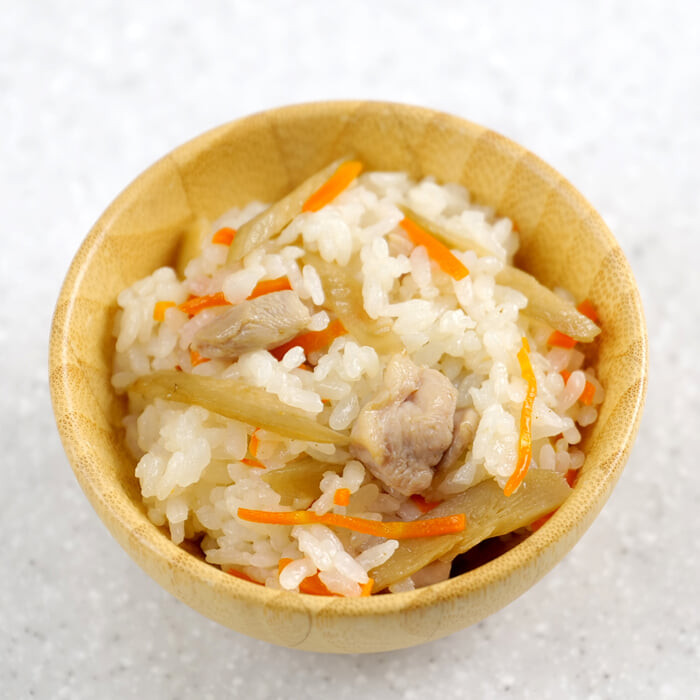
Torimeshi is a savory mixed rice: chicken, carrot and gobo (burdock root) are simmered in a light soy sauce and sake seasoning, then folded through freshly cooked rice. In Oita Prefecture, chicken-and-gobo torimeshi is a well-loved local dish, and it's just as popular in preschool kitchens. Part of the seasoning goes into the rice cooker, so the rice itself picks up a gentle flavor that helps children who usually shy away from vegetables eat every last grain. Simmering the gobo slowly in water first makes it soft enough for little mouths.
Wheat-free, but uses soy sauce (made with wheat). Japanese school-lunch allergy menus usually allow it, so check with your doctor. How to read the labels
Added. Open the recipe helper (bottom right) → ☰ Menu → 🛒 Shopping list to see the ingredients for your family size.
Printing uses the number of adults and children set under Ingredients, so set those first.
Ingredients
Amounts for 1 child (1 serving). An adult counts as 2 servings.
One serving here is 1.5× the portion served to a child in a Japanese preschool, sized for Western appetites. An adult counts as two servings. Tap an ingredient to check it off.
Ingredients
- 60 griceJapanese short-grain white rice (japonica), which cooks up soft and slightly sticky. The amount listed is for uncooked rice. Substitute: Sushi rice, or another short-grain or medium-grain rice such as Calrose.
- 10.5 gcarrot
- 10.5 ggobo (burdock root)A long, slender, earthy-tasting root vegetable with a pleasant crunch, usually scraped rather than peeled. Substitute: Parsnip or carrot.
- 19.5 gchicken thigh
Seasonings
- 1.2 gsakeSake (Japanese rice wine) is used in small amounts to soften the smell of fish and meat and add depth. Japanese "cooking sake" often contains added salt. Some alcohol can remain after short cooking. If you prefer no alcohol for children, use the substitute. Substitute: The same amount of water (the taste will be a little simpler), or dry white wine.
- 1.2 gsoy sauce
- 0.2 gsalt
About the Japanese ingredients in this recipe
- rice (米)
- Japanese short-grain white rice (japonica), which cooks up soft and slightly sticky. The amount listed is for uncooked rice. Substitute: Sushi rice, or another short-grain or medium-grain rice such as Calrose.
- gobo (burdock root) (ごぼう)
- A long, slender, earthy-tasting root vegetable with a pleasant crunch, usually scraped rather than peeled. Substitute: Parsnip or carrot.
- sake (酒)
- Sake (Japanese rice wine) is used in small amounts to soften the smell of fish and meat and add depth. Japanese "cooking sake" often contains added salt. Some alcohol can remain after short cooking. If you prefer no alcohol for children, use the substitute. Substitute: The same amount of water (the taste will be a little simpler), or dry white wine.
Directions
- 1
Add the usual amount of water to the rice and let it soak for at least 30 minutes. Stir in one-third of the combined seasonings (sake, soy sauce and salt) and cook the rice.
- 2
Cut the carrot into 4 cm long matchsticks. Halve the gobo lengthwise and slice it thinly on the diagonal. Cut the chicken into 1 cm dice.
- 3
Put the carrot and gobo in a pot with just enough water to cover (not included in the ingredient amounts) and simmer over low heat for about 15 to 20 minutes. Once the vegetables are soft, add the chicken and the remaining seasonings and simmer until the chicken is cooked through and the liquid has cooked off.
- 4
Fold the chicken and vegetable mixture into the cooked rice until evenly combined.
Nutrition
| Per | 1 serving | 1 adult serving | Your total |
|---|---|---|---|
| Energy | 255 kcal | 510 kcal | 255 kcal |
| Protein | 7.2 g | 14.4 g | 7.2 g |
| Fat | 3.3 g | 6.6 g | 3.3 g |
| Carbohydrates | 49.3 g | 98.7 g | 49.3 g |
| Fiber | 1.2 g | 2.4 g | 1.2 g |
| Salt equivalent | 0.5 g | 0.9 g | 0.5 g |
| Calcium | 12 mg | 24 mg | 12 mg |
| Iron | 0.6 mg | 1.2 mg | 0.6 mg |
| Potassium | 180 mg | 360 mg | 180 mg |
| Energy | Protein | Fat | Carbs | Fiber | Salt equiv. | Calcium | Iron | Potassium | |
|---|---|---|---|---|---|---|---|---|---|
| 1 serving | 255 kcal | 7.2 g | 3.3 g | 49.3 g | 1.2 g | 0.5 g | 12 mg | 0.6 mg | 180 mg |
| 1 adult serving | 510 kcal | 14.4 g | 6.6 g | 98.7 g | 2.4 g | 0.9 g | 24 mg | 1.2 mg | 360 mg |
Values are per serving (1.5× the Japanese preschool portion); an adult serving is double. They were calculated by a licensed Japanese nutritionist using the Standard Tables of Food Composition in Japan. "Salt equivalent" is sodium × 2.54, the standard Japanese measure. Allergen flags cover egg, milk and wheat only and come from the nutritionist's records. Soy sauce and miso are made with wheat but are usually allowed on Japanese wheat-free school menus, so check with your doctor.