Carrot Rice
にんじんごはん · Ninjin Gohan
 By Aoi, licensed nutritionist · From a Japanese preschool lunch menu
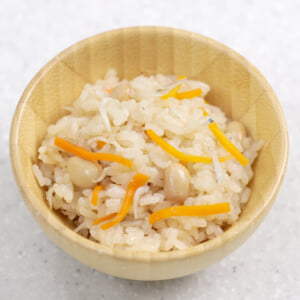
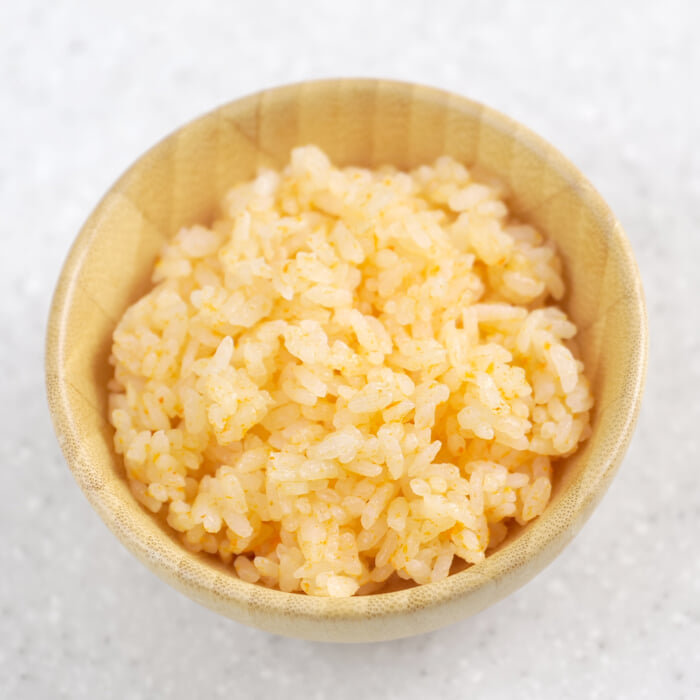
Ninjin gohan is a Japanese mixed rice in which carrot is blended into a smooth paste and cooked right into the rice, tinting every grain a soft orange. Because the carrot is pureed rather than chopped, there are no pieces for little ones to pick out - just a gentle, natural sweetness that even carrot skeptics tend to accept. Seasoned with only a splash of sake, soy sauce and a pinch of salt, it is mild enough to pair with almost any main dish, and it is a lovely way to sneak a vegetable into a bowl of plain rice.
Wheat-free, but uses soy sauce (made with wheat). Japanese school-lunch allergy menus usually allow it, so check with your doctor. How to read the labels
Added. Open the recipe helper (bottom right) → ☰ Menu → 🛒 Shopping list to see the ingredients for your family size.
Printing uses the number of adults and children set under Ingredients, so set those first.
Ingredients
Amounts for 1 child (1 serving). An adult counts as 2 servings.
One serving here is 1.5× the portion served to a child in a Japanese preschool, sized for Western appetites. An adult counts as two servings. Tap an ingredient to check it off.
Ingredients
- 75 griceJapanese short-grain white rice (japonica), which cooks up soft and slightly sticky. The amount listed is for uncooked rice. Substitute: Sushi rice, or another short-grain or medium-grain rice such as Calrose.
- 30 gcarrot
Seasonings
- 2 gsakeSake (Japanese rice wine) is used in small amounts to soften the smell of fish and meat and add depth. Japanese "cooking sake" often contains added salt. Some alcohol can remain after short cooking. If you prefer no alcohol for children, use the substitute. Substitute: The same amount of water (the taste will be a little simpler), or dry white wine.
- 3.8 gsoy sauce
- 0.2 gsalt
About the Japanese ingredients in this recipe
- rice (米)
- Japanese short-grain white rice (japonica), which cooks up soft and slightly sticky. The amount listed is for uncooked rice. Substitute: Sushi rice, or another short-grain or medium-grain rice such as Calrose.
- sake (酒)
- Sake (Japanese rice wine) is used in small amounts to soften the smell of fish and meat and add depth. Japanese "cooking sake" often contains added salt. Some alcohol can remain after short cooking. If you prefer no alcohol for children, use the substitute. Substitute: The same amount of water (the taste will be a little simpler), or dry white wine.
Directions
Video is in Japanese and may show a different version of this dish (other ingredients or steps). Follow the ingredients and steps on this page, especially when cooking for allergies.
- 1
Add the usual amount of water to the rice and let it soak for at least 30 minutes.
- 2
Cut the carrot into thick rounds and place them in a microwave-safe container. Add 1 tbsp of water (not included in the ingredient amounts), cover loosely with plastic wrap, and microwave at 1200W for about 1 minute (about 2 minutes at 600W). The heating time will vary with the amount of carrot; heat until a toothpick slides in easily.
- 3
Blend the carrot into a smooth paste in a food processor.
- 4
Add the carrot paste and the seasonings to the soaked rice in the rice cooker, stir well so everything is evenly combined, and start the rice cooker.
- 5
Once the rice is cooked, mix everything together well (letting it rest and steam helps the flavors settle in).
The salt in the seasonings keeps the rice from absorbing water, so always soak the rice first and stir in the seasonings only right before you start cooking.
Nutrition
| Per | 1 serving | 1 adult serving | Your total |
|---|---|---|---|
| Energy | 271.5 kcal | 543 kcal | 271.5 kcal |
| Protein | 5.1 g | 10.2 g | 5.1 g |
| Fat | 0.8 g | 1.5 g | 0.8 g |
| Carbohydrates | 61.5 g | 123 g | 61.5 g |
| Fiber | 1.4 g | 2.7 g | 1.4 g |
| Salt equivalent | 0.8 g | 1.5 g | 0.8 g |
| Calcium | 15 mg | 30 mg | 15 mg |
| Iron | 0.6 mg | 1.2 mg | 0.6 mg |
| Potassium | 172.5 mg | 345 mg | 172.5 mg |
| Energy | Protein | Fat | Carbs | Fiber | Salt equiv. | Calcium | Iron | Potassium | |
|---|---|---|---|---|---|---|---|---|---|
| 1 serving | 271.5 kcal | 5.1 g | 0.8 g | 61.5 g | 1.4 g | 0.8 g | 15 mg | 0.6 mg | 172.5 mg |
| 1 adult serving | 543 kcal | 10.2 g | 1.5 g | 123 g | 2.7 g | 1.5 g | 30 mg | 1.2 mg | 345 mg |
Values are per serving (1.5× the Japanese preschool portion); an adult serving is double. They were calculated by a licensed Japanese nutritionist using the Standard Tables of Food Composition in Japan. "Salt equivalent" is sodium × 2.54, the standard Japanese measure. Allergen flags cover egg, milk and wheat only and come from the nutritionist's records. Soy sauce and miso are made with wheat but are usually allowed on Japanese wheat-free school menus, so check with your doctor.