Mame Gohan (Soybean Rice)
豆ごはん · Mame Gohan
 By Aoi, licensed nutritionist · From a Japanese preschool lunch menu
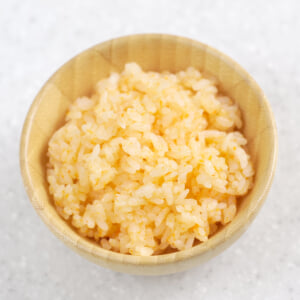
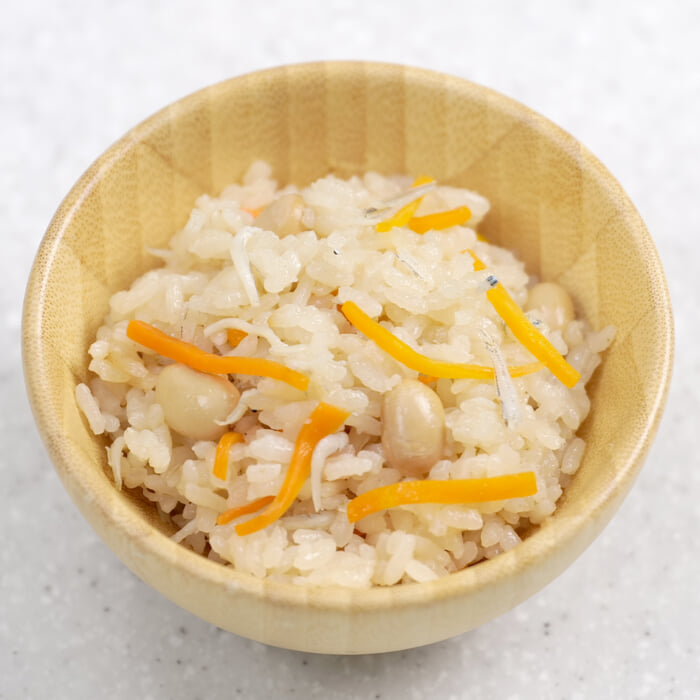
Mame gohan simply means "bean rice": rice cooked together with soybeans, a little carrot and shirasu (tiny dried baby sardines), seasoned lightly with sake, soy sauce and salt. Everything goes into the rice cooker at once, so it is an easy way to get beans and a bit of calcium-rich fish into a meal without a fuss. The soybeans turn soft and nutty as they cook with the rice, the carrot adds a touch of color and sweetness, and the gentle savory seasoning makes it a mixed rice that young children take to readily.
Wheat-free, but uses soy sauce (made with wheat). Japanese school-lunch allergy menus usually allow it, so check with your doctor. How to read the labels
Added. Open the recipe helper (bottom right) → ☰ Menu → 🛒 Shopping list to see the ingredients for your family size.
Printing uses the number of adults and children set under Ingredients, so set those first.
Ingredients
Amounts for 1 child (1 serving). An adult counts as 2 servings.
One serving here is 1.5× the portion served to a child in a Japanese preschool, sized for Western appetites. An adult counts as two servings. Tap an ingredient to check it off.
Ingredients
- 60 griceJapanese short-grain white rice (japonica), which cooks up soft and slightly sticky. The amount listed is for uncooked rice. Substitute: Sushi rice, or another short-grain or medium-grain rice such as Calrose.
- 7.5 gcarrot
- 9 gboiled soybeans (canned or vacuum-packed)Plain cooked whole soybeans sold in cans or pouches, ready to use. Substitute: Canned chickpeas or white beans.
- 4.5 gshirasu (dried baby sardines)Tiny, lightly salted and dried whole baby sardines that add gentle saltiness and calcium. Substitute: A small amount of flaked canned sardines, or omit.
Seasonings
- 2 gsakeSake (Japanese rice wine) is used in small amounts to soften the smell of fish and meat and add depth. Japanese "cooking sake" often contains added salt. Some alcohol can remain after short cooking. If you prefer no alcohol for children, use the substitute. Substitute: The same amount of water (the taste will be a little simpler), or dry white wine.
- 2 gsoy sauce
- 0.3 gsalt
About the Japanese ingredients in this recipe
- rice (米)
- Japanese short-grain white rice (japonica), which cooks up soft and slightly sticky. The amount listed is for uncooked rice. Substitute: Sushi rice, or another short-grain or medium-grain rice such as Calrose.
- boiled soybeans (canned or vacuum-packed) (大豆水煮)
- Plain cooked whole soybeans sold in cans or pouches, ready to use. Substitute: Canned chickpeas or white beans.
- shirasu (dried baby sardines) (しらす干し)
- Tiny, lightly salted and dried whole baby sardines that add gentle saltiness and calcium. Substitute: A small amount of flaked canned sardines, or omit.
- sake (酒)
- Sake (Japanese rice wine) is used in small amounts to soften the smell of fish and meat and add depth. Japanese "cooking sake" often contains added salt. Some alcohol can remain after short cooking. If you prefer no alcohol for children, use the substitute. Substitute: The same amount of water (the taste will be a little simpler), or dry white wine.
Directions
- 1
Rinse the rice, add the usual amount of water for cooking, and let it soak for at least 30 minutes.
- 2
Cut the carrot into 4 cm long matchsticks (julienne).
- 3
Add the seasonings (sake, soy sauce and salt) to the soaked rice from step 1 and stir. Place the carrot, soybeans and shirasu on top and cook in the rice cooker.
- 4
Once the rice is cooked, gently mix everything together.
The salt in the seasonings keeps the rice from absorbing water properly, so always soak the rice first and stir in the seasonings only right before you start cooking.
Nutrition
| Per | 1 serving | 1 adult serving | Your total |
|---|---|---|---|
| Energy | 231 kcal | 462 kcal | 231 kcal |
| Protein | 6.1 g | 12.3 g | 6.1 g |
| Fat | 1.7 g | 3.3 g | 1.7 g |
| Carbohydrates | 48.3 g | 96.6 g | 48.3 g |
| Fiber | 1.2 g | 2.4 g | 1.2 g |
| Salt equivalent | 0.8 g | 1.5 g | 0.8 g |
| Calcium | 24 mg | 48 mg | 24 mg |
| Iron | 0.6 mg | 1.2 mg | 0.6 mg |
| Potassium | 139.5 mg | 279 mg | 139.5 mg |
| Energy | Protein | Fat | Carbs | Fiber | Salt equiv. | Calcium | Iron | Potassium | |
|---|---|---|---|---|---|---|---|---|---|
| 1 serving | 231 kcal | 6.1 g | 1.7 g | 48.3 g | 1.2 g | 0.8 g | 24 mg | 0.6 mg | 139.5 mg |
| 1 adult serving | 462 kcal | 12.3 g | 3.3 g | 96.6 g | 2.4 g | 1.5 g | 48 mg | 1.2 mg | 279 mg |
Values are per serving (1.5× the Japanese preschool portion); an adult serving is double. They were calculated by a licensed Japanese nutritionist using the Standard Tables of Food Composition in Japan. "Salt equivalent" is sodium × 2.54, the standard Japanese measure. Allergen flags cover egg, milk and wheat only and come from the nutritionist's records. Soy sauce and miso are made with wheat but are usually allowed on Japanese wheat-free school menus, so check with your doctor.