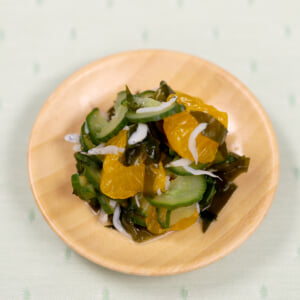
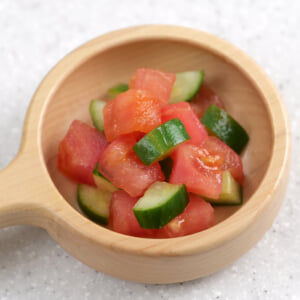
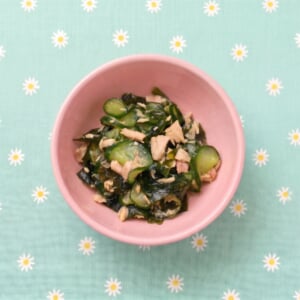
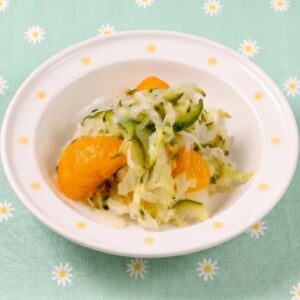
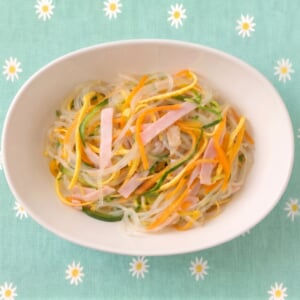
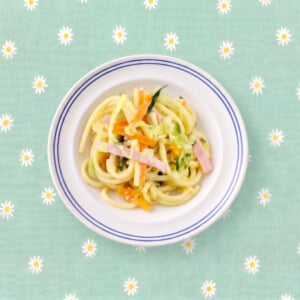
Amazu-ae (Sweet Vinegar Tomato and Cucumber Salad)
甘酢和え · Amazu-ae
 By Aoi, licensed nutritionist · From a Japanese preschool lunch menu
Amazu-ae is a classic Japanese side dish of vegetables tossed in amazu, a simple sweet-and-sour dressing of vinegar, sugar and a little salt. Here juicy tomato, crisp cucumber and tender wakame make a cool, refreshing salad that goes well with rice and a main dish. The trick for young children is to warm the dressing briefly so the vinegar loses its sharp edge, leaving just a gentle tang that even vinegar-shy kids enjoy. In preschool kitchens the cucumber and wakame also get a quick boil, which keeps them safe for little ones and makes them soft and easy to chew.
Added. Open the recipe helper (bottom right) → ☰ Menu → 🛒 Shopping list to see the ingredients for your family size.
Printing uses the number of adults and children set under Ingredients, so set those first.
Ingredients
Amounts for 1 child (1 serving). An adult counts as 2 servings.
One serving here is 1.5× the portion served to a child in a Japanese preschool, sized for Western appetites. An adult counts as two servings. Tap an ingredient to check it off.
Ingredients
- 63 gtomato
- 24 gcucumber
- 3 gfresh wakame seaweedTender green seaweed sold fresh or salted in Japan and used in soups and salads. Substitute: Dried wakame, soaked in water for about 5 minutes and drained.
Seasonings
- 1.8 gsugar
- 3.6 gvinegar
- 0.2 gsalt
About the Japanese ingredients in this recipe
- fresh wakame seaweed (生わかめ)
- Tender green seaweed sold fresh or salted in Japan and used in soups and salads. Substitute: Dried wakame, soaked in water for about 5 minutes and drained.
Directions
- 1
Blanch the tomato in hot water to peel it, then cut it into small cubes. Set the pieces in a colander to drain, as they will release water.
- 2
Slice the cucumber into rounds and chop the wakame finely, then boil each separately. Rinse under running water to cool.
- 3
Combine the sugar, vinegar and salt and heat the mixture to cook off some of the vinegar's sharpness.
- 4
Squeeze the cucumber and wakame from step 2 well to remove excess water, then toss them with the tomato from step 1 and the dressing from step 3.
Nutrition
| Per | 1 serving | 1 adult serving | Your total |
|---|---|---|---|
| Energy | 24 kcal | 48 kcal | 24 kcal |
| Protein | 0.9 g | 1.8 g | 0.9 g |
| Fat | 0 g | 0 g | 0 g |
| Carbohydrates | 5.9 g | 11.7 g | 5.9 g |
| Salt equivalent | 0.2 g | 0.3 g | 0.2 g |
| Calcium | 13.5 mg | 27 mg | 13.5 mg |
| Iron | 0.3 mg | 0.6 mg | 0.3 mg |
| Energy | Protein | Fat | Carbs | Salt equiv. | Calcium | Iron | |
|---|---|---|---|---|---|---|---|
| 1 serving | 24 kcal | 0.9 g | 0 g | 5.9 g | 0.2 g | 13.5 mg | 0.3 mg |
| 1 adult serving | 48 kcal | 1.8 g | 0 g | 11.7 g | 0.3 g | 27 mg | 0.6 mg |
Values are per serving (1.5× the Japanese preschool portion); an adult serving is double. They were calculated by a licensed Japanese nutritionist using the Standard Tables of Food Composition in Japan. "Salt equivalent" is sodium × 2.54, the standard Japanese measure. Allergen flags cover egg, milk and wheat only and come from the nutritionist's records. Soy sauce and miso are made with wheat but are usually allowed on Japanese wheat-free school menus, so check with your doctor.