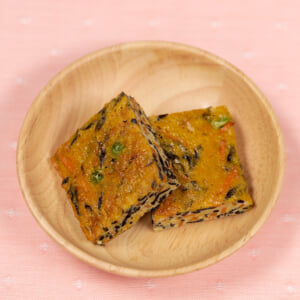
Vegetable-Packed Tamagoyaki (Baked Omelet)
野菜たっぷり卵焼き · Yasai Tappuri Tamagoyaki
 By Aoi, licensed nutritionist · From a Japanese preschool lunch menu
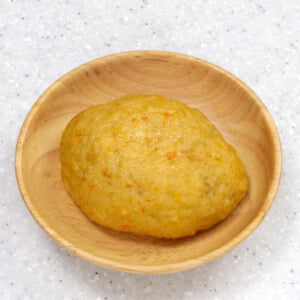
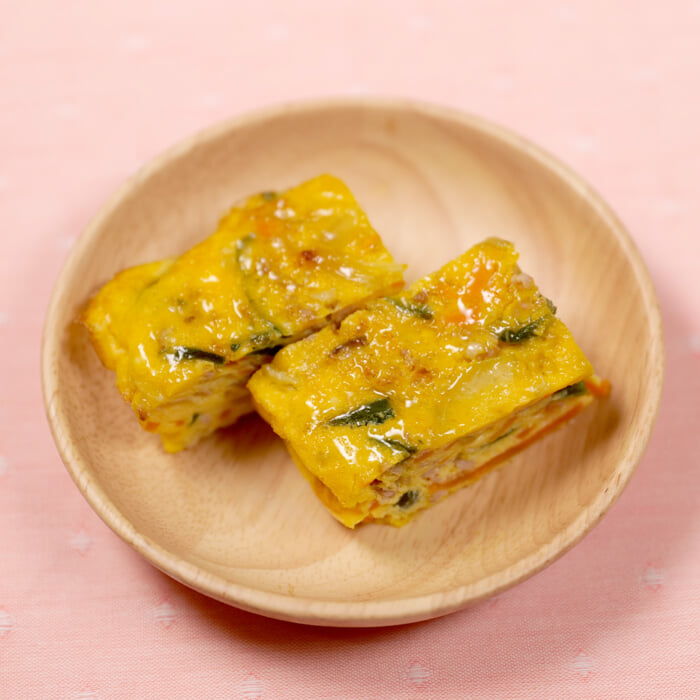
This is tamagoyaki the way school kitchens make it: instead of rolling the egg in a pan, the mixture is poured into a lined baking sheet and baked in the oven, so a whole class's worth comes out at once and the texture stays soft and even. Sautéed ground pork, carrot, onion and green pepper are folded right into the egg, and the vegetables are cut short and thin so they melt into each bite and even children who usually pick out green pepper eat it happily. A little dashi and sugar give it the gentle, lightly sweet flavor kids love, and it works just as well as a main dish, a side, or tucked into a lunch box.
Added. Open the recipe helper (bottom right) → ☰ Menu → 🛒 Shopping list to see the ingredients for your family size.
Printing uses the number of adults and children set under Ingredients, so set those first.
Ingredients
Amounts for 1 child (1 serving). An adult counts as 2 servings.
One serving here is 1.5× the portion served to a child in a Japanese preschool, sized for Western appetites. An adult counts as two servings. Tap an ingredient to check it off.
Ingredients
- 52.5 gegg
- 15 gground pork
- 9 gcarrot
- 16.5 gonion
- 7.5 ggreen bell pepper
Seasonings
- 1.5 gvegetable oil
- 1 gsugar
- 0.3 gsalt
- 7.5 gbonito and kombu dashiJapanese soup stock made from dried bonito flakes and kombu kelp, the everyday base for soups and simmered dishes. Substitute: Instant dashi granules dissolved in water, or a light vegetable or chicken stock.
About the Japanese ingredients in this recipe
- bonito and kombu dashi (かつお・昆布だし汁)
- Japanese soup stock made from dried bonito flakes and kombu kelp, the everyday base for soups and simmered dishes. Substitute: Instant dashi granules dissolved in water, or a light vegetable or chicken stock.
Directions
- 1
Cut the onion into thin slices, then cut the slices in half so they are half the length. Cut the carrot and green bell pepper into short, thin strips.
- 2
Heat the oil in a pan, add the vegetables from step 1 and sauté well. Add the ground pork and cook, stirring, until it is cooked through.
- 3
Turn off the heat, then add the beaten egg, sugar, salt and dashi and mix well.
- 4
Line a baking sheet with parchment paper and pour in the mixture from step 3. Bake in a 180°C (350°F) oven for about 20 minutes.
Nutrition
| Per | 1 serving | 1 adult serving | Your total |
|---|---|---|---|
| Energy | 133.5 kcal | 267 kcal | 133.5 kcal |
| Protein | 9.5 g | 18.9 g | 9.5 g |
| Fat | 9.5 g | 18.9 g | 9.5 g |
| Carbohydrates | 2.8 g | 5.7 g | 2.8 g |
| Salt equivalent | 0.6 g | 1.2 g | 0.6 g |
| Calcium | 31.5 mg | 63 mg | 31.5 mg |
| Iron | 1 mg | 2.1 mg | 1 mg |
| Energy | Protein | Fat | Carbs | Salt equiv. | Calcium | Iron | |
|---|---|---|---|---|---|---|---|
| 1 serving | 133.5 kcal | 9.5 g | 9.5 g | 2.8 g | 0.6 g | 31.5 mg | 1 mg |
| 1 adult serving | 267 kcal | 18.9 g | 18.9 g | 5.7 g | 1.2 g | 63 mg | 2.1 mg |
Values are per serving (1.5× the Japanese preschool portion); an adult serving is double. They were calculated by a licensed Japanese nutritionist using the Standard Tables of Food Composition in Japan. "Salt equivalent" is sodium × 2.54, the standard Japanese measure. Allergen flags cover egg, milk and wheat only and come from the nutritionist's records. Soy sauce and miso are made with wheat but are usually allowed on Japanese wheat-free school menus, so check with your doctor.