Steamed Rice
ごはん · Gohan
 By Aoi, licensed nutritionist · From a Japanese preschool lunch menu
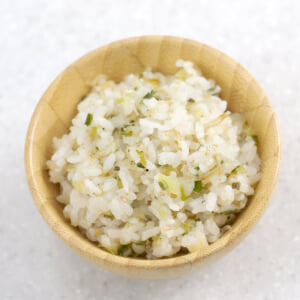
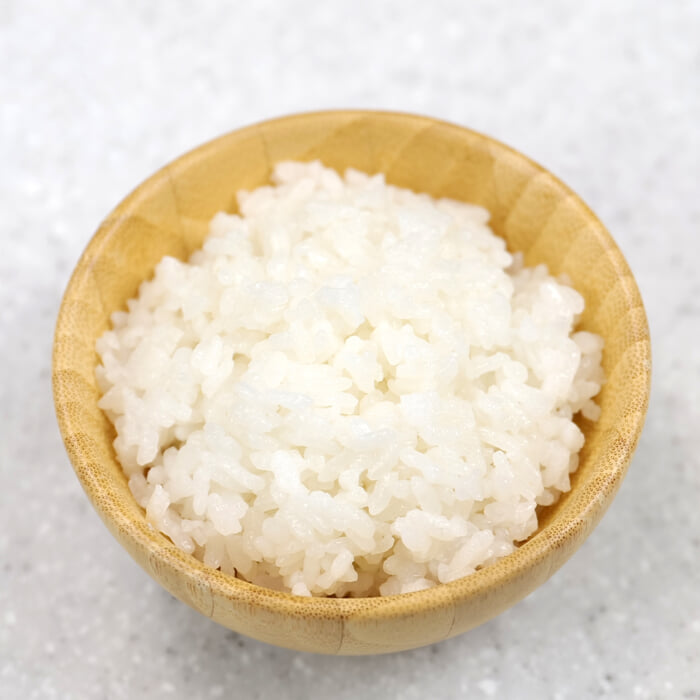
Gohan, plain steamed rice, is the quiet center of nearly every Japanese school lunch tray, sitting alongside the soup, main dish and vegetable side. Children eat it with everything, and because it has no seasoning of its own it lets even young toddlers enjoy the mild flavors of the dishes around it. The only real technique is in the rinsing: washing the rice well removes the surface starch so the grains cook up fluffy and separate rather than gummy. In preschool kitchens we simply rinse, drain and let the rice cooker do the rest.
Added. Open the recipe helper (bottom right) → ☰ Menu → 🛒 Shopping list to see the ingredients for your family size.
Printing uses the number of adults and children set under Ingredients, so set those first.
Ingredients
Amounts for 1 child (1 serving). An adult counts as 2 servings.
One serving here is 1.5× the portion served to a child in a Japanese preschool, sized for Western appetites. An adult counts as two servings. Tap an ingredient to check it off.
- 75 griceJapanese short-grain white rice (japonica), which cooks up soft and slightly sticky. The amount listed is for uncooked rice. Substitute: Sushi rice, or another short-grain or medium-grain rice such as Calrose.
About the Japanese ingredients in this recipe
- rice (米)
- Japanese short-grain white rice (japonica), which cooks up soft and slightly sticky. The amount listed is for uncooked rice. Substitute: Sushi rice, or another short-grain or medium-grain rice such as Calrose.
Directions
- 1
Set a sieve inside a bowl and add the rice. Rinse the rice, changing the water about 10 times, then drain well.
- 2
Transfer to the rice cooker's inner pot, add the usual amount of water and cook as normal.
Nutrition
| Per | 1 serving | 1 adult serving | Your total |
|---|---|---|---|
| Energy | 256.5 kcal | 513 kcal | 256.5 kcal |
| Protein | 4.7 g | 9.3 g | 4.7 g |
| Fat | 0.8 g | 1.5 g | 0.8 g |
| Carbohydrates | 58.2 g | 116.4 g | 58.2 g |
| Fiber | 0.5 g | 0.9 g | 0.5 g |
| Salt equivalent | 0 g | 0 g | 0 g |
| Calcium | 4.5 mg | 9 mg | 4.5 mg |
| Iron | 0.6 mg | 1.2 mg | 0.6 mg |
| Potassium | 67.5 mg | 135 mg | 67.5 mg |
| Energy | Protein | Fat | Carbs | Fiber | Salt equiv. | Calcium | Iron | Potassium | |
|---|---|---|---|---|---|---|---|---|---|
| 1 serving | 256.5 kcal | 4.7 g | 0.8 g | 58.2 g | 0.5 g | 0 g | 4.5 mg | 0.6 mg | 67.5 mg |
| 1 adult serving | 513 kcal | 9.3 g | 1.5 g | 116.4 g | 0.9 g | 0 g | 9 mg | 1.2 mg | 135 mg |
Values are per serving (1.5× the Japanese preschool portion); an adult serving is double. They were calculated by a licensed Japanese nutritionist using the Standard Tables of Food Composition in Japan. "Salt equivalent" is sodium × 2.54, the standard Japanese measure. Allergen flags cover egg, milk and wheat only and come from the nutritionist's records. Soy sauce and miso are made with wheat but are usually allowed on Japanese wheat-free school menus, so check with your doctor.