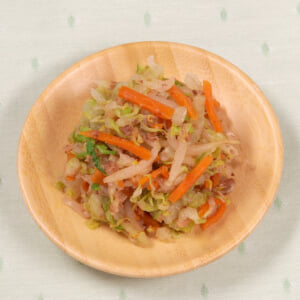
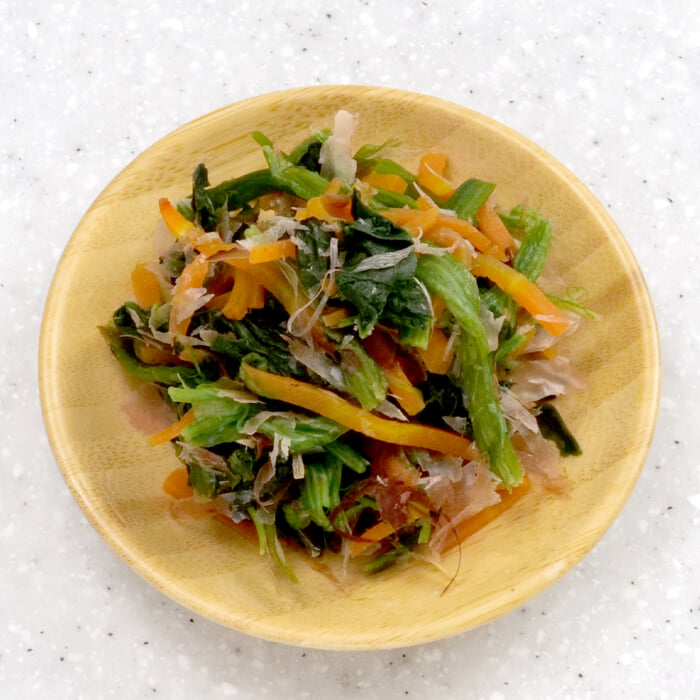
Spinach Ohitashi (Dashi-Soaked Spinach)
ほうれん草のおひたし · Horenso no Ohitashi
 By Aoi, licensed nutritionist · From a Japanese preschool lunch menu
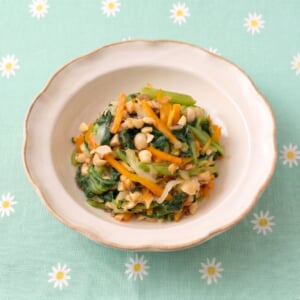
Ohitashi is one of the most classic Japanese side dishes: blanched greens soaked in a light dashi and soy sauce dressing, then topped with bonito flakes. This preschool version adds thin strips of carrot for a little color and sweetness, and cuts everything short so it is easy for small children to pick up with a spoon or chopsticks. The dressing is mild and savory rather than salty, so the natural flavor of the spinach comes through, and the katsuobushi on top gives just enough umami to win over kids who are unsure about greens.
Added. Open the recipe helper (bottom right) → ☰ Menu → 🛒 Shopping list to see the ingredients for your family size.
Printing uses the number of adults and children set under Ingredients, so set those first.
Ingredients
Amounts for 1 child (1 serving). An adult counts as 2 servings.
One serving here is 1.5× the portion served to a child in a Japanese preschool, sized for Western appetites. An adult counts as two servings. Tap an ingredient to check it off.
Ingredients
- 45 gspinach
- 12 gcarrot
- 0.8 gkatsuobushi (bonito flakes)Paper-thin flakes of dried, smoked bonito used for dashi and as a savory topping. Substitute: Omit, or a pinch of instant dashi powder.
Seasonings
- 1.5 gsoy sauce
- 2.6 gbonito and kombu dashiJapanese soup stock made from dried bonito flakes and kombu kelp, the everyday base for soups and simmered dishes. Substitute: Instant dashi granules dissolved in water, or a light vegetable or chicken stock.
About the Japanese ingredients in this recipe
- bonito and kombu dashi (かつお・昆布だし汁)
- Japanese soup stock made from dried bonito flakes and kombu kelp, the everyday base for soups and simmered dishes. Substitute: Instant dashi granules dissolved in water, or a light vegetable or chicken stock.
- katsuobushi (bonito flakes) (かつお節)
- Paper-thin flakes of dried, smoked bonito used for dashi and as a savory topping. Substitute: Omit, or a pinch of instant dashi powder.
Directions
- 1
Cut the spinach into 2 cm lengths and cut the carrot into short, thin matchsticks.
- 2
Boil the spinach and carrot separately. Rinse under running water to cool.
- 3
Squeeze the water out of the cooled spinach and carrot well, then toss with the dashi, soy sauce and katsuobushi.
Nutrition
| Per | 1 serving | 1 adult serving | Your total |
|---|---|---|---|
| Energy | 15 kcal | 30 kcal | 15 kcal |
| Protein | 1.8 g | 3.6 g | 1.8 g |
| Fat | 0.2 g | 0.3 g | 0.2 g |
| Carbohydrates | 1.8 g | 3.6 g | 1.8 g |
| Salt equivalent | 0.3 g | 0.6 g | 0.3 g |
| Calcium | 25.5 mg | 51 mg | 25.5 mg |
| Iron | 1 mg | 2.1 mg | 1 mg |
| Energy | Protein | Fat | Carbs | Salt equiv. | Calcium | Iron | |
|---|---|---|---|---|---|---|---|
| 1 serving | 15 kcal | 1.8 g | 0.2 g | 1.8 g | 0.3 g | 25.5 mg | 1 mg |
| 1 adult serving | 30 kcal | 3.6 g | 0.3 g | 3.6 g | 0.6 g | 51 mg | 2.1 mg |
Values are per serving (1.5× the Japanese preschool portion); an adult serving is double. They were calculated by a licensed Japanese nutritionist using the Standard Tables of Food Composition in Japan. "Salt equivalent" is sodium × 2.54, the standard Japanese measure. Allergen flags cover egg, milk and wheat only and come from the nutritionist's records. Soy sauce and miso are made with wheat but are usually allowed on Japanese wheat-free school menus, so check with your doctor.