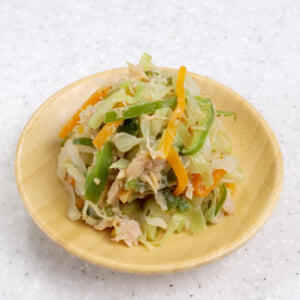
Natto-ae (Vegetables Dressed with Natto)
納豆和え · Natto-ae
 By Aoi, licensed nutritionist · From a Japanese preschool lunch menu
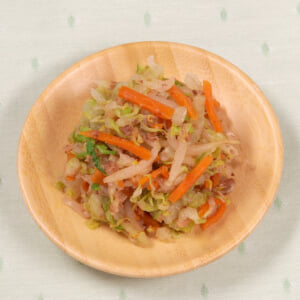
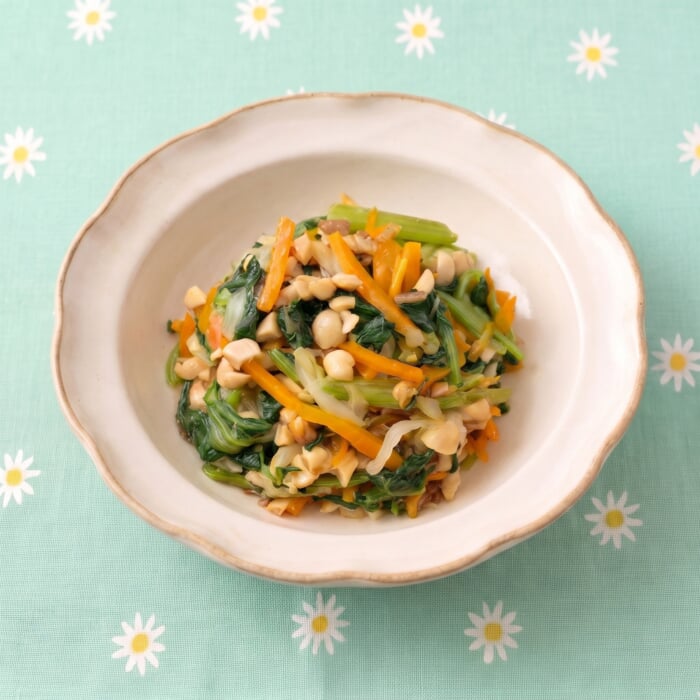
Natto-ae is a simple Japanese side dish of blanched vegetables dressed with natto, the sticky fermented soybeans that are a breakfast staple in Japan. Here we use hikiwari natto, which is chopped into small pieces, so it clings to the cabbage, carrot and spinach and coats every bite evenly. That stickiness is exactly what makes it work for little ones: the vegetables hold together and slide down easily, so even children who usually push spinach aside tend to eat it up. A generous handful of bonito flakes brings plenty of savory flavor with only a little soy sauce, and it is made without egg or dairy.
Toddlers to adults. Portion out the children's share before the final seasoning, then season the rest for adults.
Wheat-free, but uses soy sauce (made with wheat). Japanese school-lunch allergy menus usually allow it, so check with your doctor. How to read the labels
Added. Open the recipe helper (bottom right) → ☰ Menu → 🛒 Shopping list to see the ingredients for your family size.
Printing uses the number of adults and children set under Ingredients, so set those first.
Ingredients
Amounts for 1 child (1 serving). An adult counts as 2 servings.
One serving here is 1.5× the portion served to a child in a Japanese preschool, sized for Western appetites. An adult counts as two servings. Tap an ingredient to check it off.
- 30 gcabbage
- 15 gcarrot
- 60 gspinach
- 15 ghikiwari natto (chopped natto)Fermented soybeans that are cracked into small pieces before fermenting, giving a finer texture that is easy for young children to eat. Substitute: Regular natto, roughly chopped.
- 3 gsoy sauce
- 1.5 gkatsuobushi (bonito flakes)Paper-thin flakes of dried, smoked bonito used for dashi and as a savory topping. Substitute: Omit, or a pinch of instant dashi powder.
- 0.3 gJapanese mustard paste (karashi)A sharp, hot Japanese mustard paste sold in small tubes, used in tiny amounts as a condiment. Substitute: Hot English mustard or Chinese hot mustard is closest; Dijon is milder but works.
About the Japanese ingredients in this recipe
- hikiwari natto (chopped natto) (ひきわり納豆)
- Fermented soybeans that are cracked into small pieces before fermenting, giving a finer texture that is easy for young children to eat. Substitute: Regular natto, roughly chopped.
- katsuobushi (bonito flakes) (かつお節)
- Paper-thin flakes of dried, smoked bonito used for dashi and as a savory topping. Substitute: Omit, or a pinch of instant dashi powder.
- Japanese mustard paste (karashi) (練りからし)
- A sharp, hot Japanese mustard paste sold in small tubes, used in tiny amounts as a condiment. Substitute: Hot English mustard or Chinese hot mustard is closest; Dijon is milder but works.
Directions
Video is in Japanese — the steps below are synced to it, so tap ▶ on a step to jump to that moment.
- 1
Cut the cabbage and carrot into thin strips. Trim the root ends off the spinach, wash it well, and cut it into 4 cm lengths. (Washing the dirt out of the root ends thoroughly gets rid of any earthy taste. For toddlers, chop the leaves finely too.)
- 2
Bring a pot of water to a boil, boil the carrot and cabbage for about 2 minutes, then add the spinach and boil for about 1 minute 30 seconds more. Cool under running water. (In school kitchens we boil each vegetable separately, but at home boiling them together saves effort.)
- 3
Squeeze the vegetables from step 2 well to remove the excess water, then toss them with the lightly stirred natto, the soy sauce and the bonito flakes and divide into portions. For elementary-school age and up, mix in a little mustard if you like. (Hikiwari natto clings well to the vegetables so the seasoning is evenly distributed, which makes the vegetables easier for children to eat.)
Tips for Making It Well
- The stickiness of the natto binds the vegetables together, so they slide down easily. It is a good choice for children who are not fond of spinach.
- Add plenty of bonito flakes for flavor and the dish will taste satisfying even with just a little soy sauce. The mustard is only a tiny amount, as an accent of flavor.
Freezing and Storage
This does not freeze well, so keep it in the refrigerator and finish it by the next day.
Nutrition
| Per | 1 serving | 1 adult serving | Your total |
|---|---|---|---|
| Energy | 58.5 kcal | 117 kcal | 58.5 kcal |
| Protein | 5.7 g | 11.4 g | 5.7 g |
| Fat | 2 g | 3.9 g | 2 g |
| Carbohydrates | 6.8 g | 13.5 g | 6.8 g |
| Fiber | 3.6 g | 7.2 g | 3.6 g |
| Salt equivalent | 0.5 g | 0.9 g | 0.5 g |
| Calcium | 57 mg | 114 mg | 57 mg |
| Iron | 1.8 mg | 3.6 mg | 1.8 mg |
| Potassium | 648 mg | 1296 mg | 648 mg |
| Phosphorus | 94.5 mg | 189 mg | 94.5 mg |
| Energy | Protein | Fat | Carbs | Fiber | Salt equiv. | Calcium | Iron | Potassium | Phosphorus | |
|---|---|---|---|---|---|---|---|---|---|---|
| 1 serving | 58.5 kcal | 5.7 g | 2 g | 6.8 g | 3.6 g | 0.5 g | 57 mg | 1.8 mg | 648 mg | 94.5 mg |
| 1 adult serving | 117 kcal | 11.4 g | 3.9 g | 13.5 g | 7.2 g | 0.9 g | 114 mg | 3.6 mg | 1296 mg | 189 mg |
Values are per serving (1.5× the Japanese preschool portion); an adult serving is double. They were calculated by a licensed Japanese nutritionist using the Standard Tables of Food Composition in Japan. "Salt equivalent" is sodium × 2.54, the standard Japanese measure. Allergen flags cover egg, milk and wheat only and come from the nutritionist's records. Soy sauce and miso are made with wheat but are usually allowed on Japanese wheat-free school menus, so check with your doctor.
Cooking for bigger kids? See the elementary-school portion of this recipe.