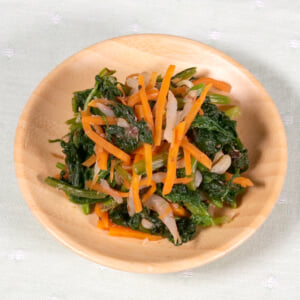
Natto Ae (Vegetables Tossed with Natto) (Elementary School Portion)
【小学校】納豆和え · Natto Ae
 By Aoi, licensed nutritionist · From a Japanese elementary school lunch menu
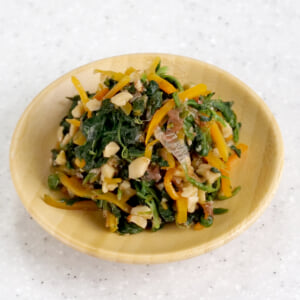
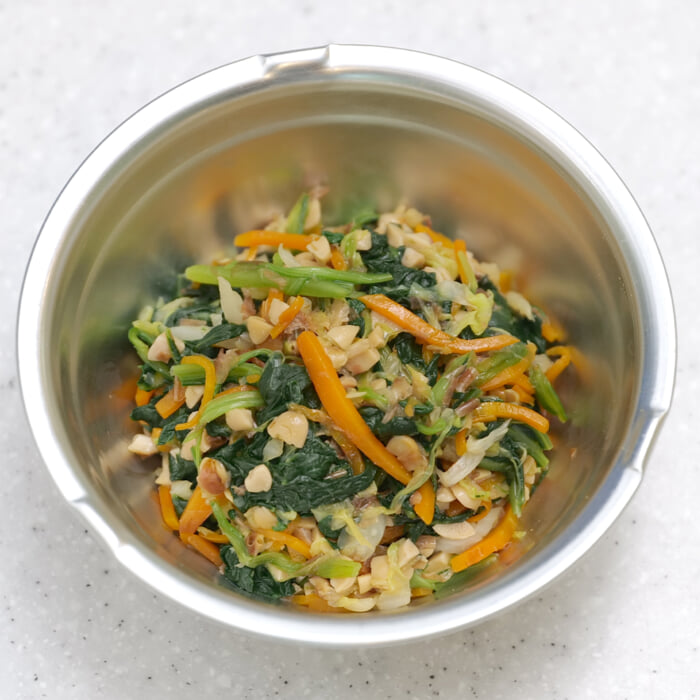
Natto ae is a simple side dish from Japanese school lunch menus: blanched cabbage, carrot and spinach tossed with hikiwari natto (fermented soybeans that are chopped before fermenting, so they are finer and less sticky than whole natto), soy sauce and a scattering of katsuobushi. The savory natto and bonito flakes coat the vegetables and help even reluctant vegetable eaters clean their plates. Chilling the vegetables under running water keeps their color bright, and squeezing them well means the dressing clings instead of pooling at the bottom of the bowl. A touch of karashi (Japanese mustard) is optional - add it for older children who like a little kick, or leave it out.
Wheat-free, but uses soy sauce (made with wheat). Japanese school-lunch allergy menus usually allow it, so check with your doctor. How to read the labels
Added. Open the recipe helper (bottom right) → ☰ Menu → 🛒 Shopping list to see the ingredients for your family size.
Printing uses the number of adults and children set under Ingredients, so set those first.
Ingredients
Amounts for 1 child (1 serving). An adult counts as 2 servings.
One serving here is 1.5× the portion served to a child in a Japanese elementary school, sized for Western appetites. An adult counts as two servings. Tap an ingredient to check it off.
Ingredients
- 29.9 gcabbage
- 14.4 gcarrot
- 58.8 gspinach
- 14.4 ghikiwari natto (chopped fermented soybeans)Natto made from soybeans that are cracked before fermenting, giving smaller pieces that are easier for small children to eat. Substitute: Regular natto, roughly chopped.
- 1.4 gkatsuobushi (dried bonito flakes)Paper-thin shavings of dried, smoked skipjack tuna that add a savory, smoky depth as a topping or stock base. Substitute: A pinch of dashi powder, or omit.
Seasonings
- 2.8 gsoy sauce
- 0.2 gJapanese mustard (karashi)A sharp, hot yellow mustard sold as a paste in tubes or as a powder to mix with water. Substitute: Hot English mustard.
About the Japanese ingredients in this recipe
- hikiwari natto (chopped fermented soybeans) (挽きわり納豆)
- Natto made from soybeans that are cracked before fermenting, giving smaller pieces that are easier for small children to eat. Substitute: Regular natto, roughly chopped.
- katsuobushi (dried bonito flakes) (かつお削り節)
- Paper-thin shavings of dried, smoked skipjack tuna that add a savory, smoky depth as a topping or stock base. Substitute: A pinch of dashi powder, or omit.
- Japanese mustard (karashi) (からし)
- A sharp, hot yellow mustard sold as a paste in tubes or as a powder to mix with water. Substitute: Hot English mustard.
Directions
- 1
Cut the cabbage and carrot into thin strips. Cut the spinach into 4 cm lengths.
- 2
Boil the carrot and cabbage in boiling water for 2 minutes, then add the spinach and boil for about 1 minute 30 seconds more. Rinse under running water to cool.
- 3
Squeeze the vegetables well to remove the water, then toss with the natto, soy sauce, katsuobushi and, if you like, the Japanese mustard.
Nutrition
| Per | 1 serving | 1 adult serving | Your total |
|---|---|---|---|
| Energy | 57 kcal | 114 kcal | 57 kcal |
| Protein | 5.6 g | 11.1 g | 5.6 g |
| Fat | 1.7 g | 3.3 g | 1.7 g |
| Carbohydrates | 6.5 g | 12.9 g | 6.5 g |
| Fiber | 3.5 g | 6.9 g | 3.5 g |
| Salt equivalent | 0.3 g | 0.6 g | 0.3 g |
| Calcium | 55.5 mg | 111 mg | 55.5 mg |
| Iron | 1.7 mg | 3.3 mg | 1.7 mg |
| Potassium | 631.5 mg | 1263 mg | 631.5 mg |
| Energy | Protein | Fat | Carbs | Fiber | Salt equiv. | Calcium | Iron | Potassium | |
|---|---|---|---|---|---|---|---|---|---|
| 1 serving | 57 kcal | 5.6 g | 1.7 g | 6.5 g | 3.5 g | 0.3 g | 55.5 mg | 1.7 mg | 631.5 mg |
| 1 adult serving | 114 kcal | 11.1 g | 3.3 g | 12.9 g | 6.9 g | 0.6 g | 111 mg | 3.3 mg | 1263 mg |
Values are per serving (1.5× the Japanese elementary-school portion); an adult serving is double. They were calculated by a licensed Japanese nutritionist using the Standard Tables of Food Composition in Japan. "Salt equivalent" is sodium × 2.54, the standard Japanese measure. Allergen flags cover egg, milk and wheat only and come from the nutritionist's records. Soy sauce and miso are made with wheat but are usually allowed on Japanese wheat-free school menus, so check with your doctor.
This is the elementary-school portion of Natto-ae (Vegetables Dressed with Natto) (larger quantities, same method).