Sesame Stir-Fried Vegetables
野菜の胡麻炒め · Yasai no Goma Itame
 By Aoi, licensed nutritionist · From a Japanese preschool lunch menu
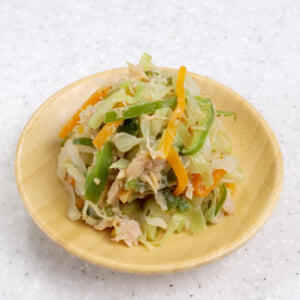
This is one of the simplest side dishes on our preschool menu: cabbage, carrot and green beans stir-fried in sesame oil, then finished with a splash of soy sauce and a scattering of white sesame seeds. The nutty aroma of sesame oil is what wins children over, and cooking the vegetables until they are properly soft makes them easy for little mouths to chew. The green beans are boiled first so everything reaches the same tender texture in the pan. It goes with almost any main dish and a bowl of rice.
Added. Open the recipe helper (bottom right) → ☰ Menu → 🛒 Shopping list to see the ingredients for your family size.
Printing uses the number of adults and children set under Ingredients, so set those first.
Ingredients
Amounts for 1 child (1 serving). An adult counts as 2 servings.
One serving here is 1.5× the portion served to a child in a Japanese preschool, sized for Western appetites. An adult counts as two servings. Tap an ingredient to check it off.
Ingredients
- 54 gcabbage
- 16.5 gcarrot
- 10.5 ggreen beans
Seasonings
- 1.8 gsesame oil
- 1.7 gsoy sauce
- 3 gwhite sesame seeds
Directions
- 1
Roughly chop the cabbage into 2 cm pieces and cut the carrot into thin rectangles (tanzaku-giri). Cut the green beans diagonally into 2 cm lengths and boil them.
- 2
Heat the sesame oil in a frying pan and stir-fry the carrot first, then add the cabbage.
- 3
Once the vegetables begin to wilt, add the green beans and keep stir-frying. When everything is soft, add the soy sauce and white sesame seeds and give it a quick final toss.
Nutrition
| Per | 1 serving | 1 adult serving | Your total |
|---|---|---|---|
| Energy | 54 kcal | 108 kcal | 54 kcal |
| Protein | 1.8 g | 3.6 g | 1.8 g |
| Fat | 3.6 g | 7.2 g | 3.6 g |
| Carbohydrates | 4.2 g | 8.4 g | 4.2 g |
| Salt equivalent | 0.3 g | 0.6 g | 0.3 g |
| Calcium | 69 mg | 138 mg | 69 mg |
| Iron | 0.6 mg | 1.2 mg | 0.6 mg |
| Energy | Protein | Fat | Carbs | Salt equiv. | Calcium | Iron | |
|---|---|---|---|---|---|---|---|
| 1 serving | 54 kcal | 1.8 g | 3.6 g | 4.2 g | 0.3 g | 69 mg | 0.6 mg |
| 1 adult serving | 108 kcal | 3.6 g | 7.2 g | 8.4 g | 0.6 g | 138 mg | 1.2 mg |
Values are per serving (1.5× the Japanese preschool portion); an adult serving is double. They were calculated by a licensed Japanese nutritionist using the Standard Tables of Food Composition in Japan. "Salt equivalent" is sodium × 2.54, the standard Japanese measure. Allergen flags cover egg, milk and wheat only and come from the nutritionist's records. Soy sauce and miso are made with wheat but are usually allowed on Japanese wheat-free school menus, so check with your doctor.