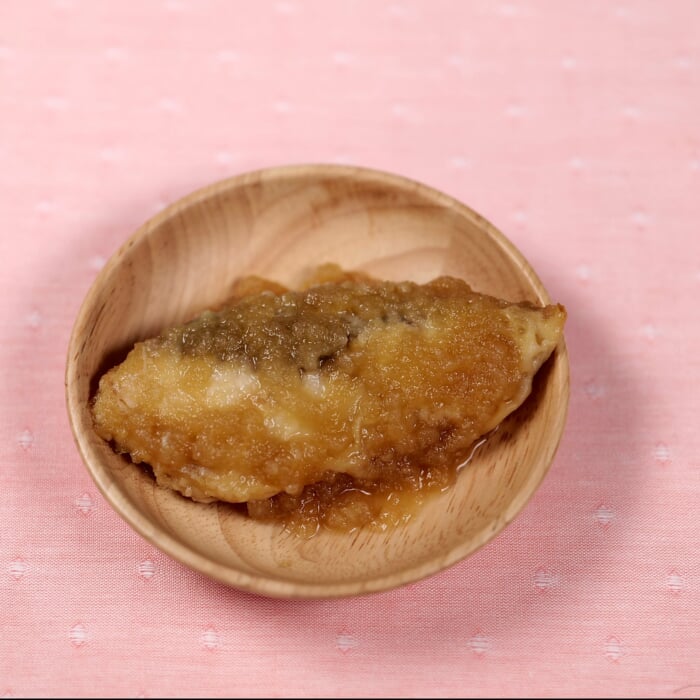
Sawara Mizore-ni (Spanish Mackerel in Grated Daikon Sauce) (Wheat-Free)
さわらのみぞれ煮(小麦なし) · Sawara no Mizore-ni
 By Aoi, licensed nutritionist · From a Japanese preschool lunch menu
Mizore-ni is a classic Japanese way of simmering fish or meat in a lightly seasoned dashi with grated daikon radish. "Mizore" means sleet, and the soft, snowy daikon floating in the broth is what gives the dish its name. Here the Spanish mackerel (sawara, written with the character for spring) is first baked with a light coating of joshinko rice flour instead of wheat flour, so it stays tender and holds together in the pot, and the gentle sweet-soy broth with mellow daikon goes down easily even for children who are usually unsure about fish. Made without egg or milk.
Wheat-free, but uses soy sauce (made with wheat). Japanese school-lunch allergy menus usually allow it, so check with your doctor. How to read the labels
Added. Open the recipe helper (bottom right) → ☰ Menu → 🛒 Shopping list to see the ingredients for your family size.
Printing uses the number of adults and children set under Ingredients, so set those first.
Ingredients
Amounts for 1 child (1 serving). An adult counts as 2 servings.
One serving here is 1.5× the portion served to a child in a Japanese preschool, sized for Western appetites. An adult counts as two servings. Tap an ingredient to check it off.
Ingredients
- 67.5 gSpanish mackerel (sawara), skinless and bonelessA mild, tender white-fleshed fish popular in Japan, here sold as boneless, skinless fillets. Substitute: Cod, haddock, or other mild white fish fillets.
- 37.5 gdaikon radish
Seasonings
- 3.8 gjoshinko (Japanese non-glutinous rice flour)Fine flour milled from regular short-grain rice, used for chewy Japanese sweets like dango. Substitute: Plain rice flour (not glutinous/sweet rice flour).
- 54 gdashi stockJapanese soup stock, usually made from kombu (dried kelp) and/or bonito flakes; the base of most Japanese soups and simmered dishes. Substitute: Instant dashi granules dissolved in water, or a mild unsalted chicken or vegetable stock.
- 1.8 gsugar
- 3.8 gsoy sauce
About the Japanese ingredients in this recipe
- Spanish mackerel (sawara), skinless and boneless (さわら,骨皮抜)
- A mild, tender white-fleshed fish popular in Japan, here sold as boneless, skinless fillets. Substitute: Cod, haddock, or other mild white fish fillets.
- joshinko (Japanese non-glutinous rice flour) (上新粉)
- Fine flour milled from regular short-grain rice, used for chewy Japanese sweets like dango. Substitute: Plain rice flour (not glutinous/sweet rice flour).
- dashi stock (だし汁)
- Japanese soup stock, usually made from kombu (dried kelp) and/or bonito flakes; the base of most Japanese soups and simmered dishes. Substitute: Instant dashi granules dissolved in water, or a mild unsalted chicken or vegetable stock.
Directions
- 1
Coat the Spanish mackerel in joshinko and arrange the pieces on a baking sheet. Bake in an oven preheated to 200°C (400°F) for about 10 minutes.
- 2
Blend the daikon into a paste in a blender (or grate it).
- 3
Put the dashi stock, the seasonings, and the daikon from step 2 in a pot and bring to a boil, then lay the fish from step 1 in the pot. Cover with a drop lid (otoshibuta) and simmer until tender.
- 4
After plating, spoon the simmering liquid over the top.
Coating the fish in joshinko rice flour before baking gives it a tender finish and makes it much less likely to fall apart while simmering.
Nutrition
| Per | 1 serving | 1 adult serving | Your total |
|---|---|---|---|
| Energy | 139.5 kcal | 279 kcal | 139.5 kcal |
| Protein | 14.4 g | 28.8 g | 14.4 g |
| Fat | 6.6 g | 13.2 g | 6.6 g |
| Carbohydrates | 6.8 g | 13.5 g | 6.8 g |
| Fiber | 0.6 g | 1.2 g | 0.6 g |
| Salt equivalent | 0.8 g | 1.5 g | 0.8 g |
| Calcium | 21 mg | 42 mg | 21 mg |
| Iron | 0.8 mg | 1.5 mg | 0.8 mg |
| Potassium | 471 mg | 942 mg | 471 mg |
| Energy | Protein | Fat | Carbs | Fiber | Salt equiv. | Calcium | Iron | Potassium | |
|---|---|---|---|---|---|---|---|---|---|
| 1 serving | 139.5 kcal | 14.4 g | 6.6 g | 6.8 g | 0.6 g | 0.8 g | 21 mg | 0.8 mg | 471 mg |
| 1 adult serving | 279 kcal | 28.8 g | 13.2 g | 13.5 g | 1.2 g | 1.5 g | 42 mg | 1.5 mg | 942 mg |
Values are per serving (1.5× the Japanese preschool portion); an adult serving is double. They were calculated by a licensed Japanese nutritionist using the Standard Tables of Food Composition in Japan. "Salt equivalent" is sodium × 2.54, the standard Japanese measure. Allergen flags cover egg, milk and wheat only and come from the nutritionist's records. Soy sauce and miso are made with wheat but are usually allowed on Japanese wheat-free school menus, so check with your doctor.
Ingredients in this recipe
You might also like
All recipes →
Buri Daikon (Simmered Yellowtail and Daikon) (Wheat-Free)
Buta Daikon (Simmered Pork and Daikon) (Wheat-Free)
Nizakana (Simmered Fish)
Miso-Simmered Spanish Mackerel
Buri Daikon (Simmered Yellowtail and Daikon)