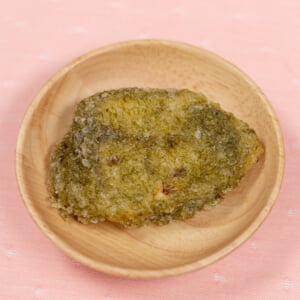
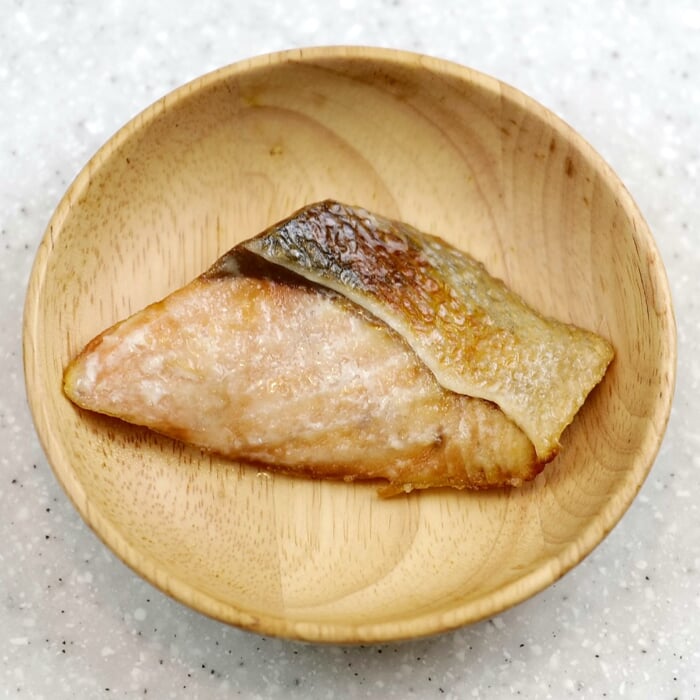
Salmon Meunière (Wheat-Free)
鮭のムニエル(小麦なし)
 By Aoi, licensed nutritionist · From a Japanese preschool lunch menu
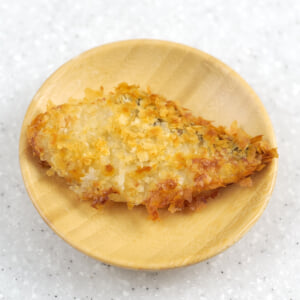
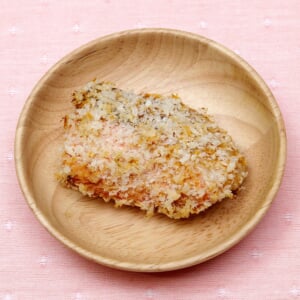
Meunière is the French way of dusting fish in flour and cooking it until the outside turns lightly golden and crisp. In this preschool-lunch version the salmon is coated in joshinko, a Japanese rice flour, so the dish is made without wheat flour. It bakes in the oven rather than in a frying pan, which keeps the fish moist and tender and makes it easy to cook a whole tray at once. Seasoned with just a little salt and pepper, it lets the mild, sweet flavor of the salmon come through.
Added. Open the recipe helper (bottom right) → ☰ Menu → 🛒 Shopping list to see the ingredients for your family size.
Printing uses the number of adults and children set under Ingredients, so set those first.
Ingredients
Amounts for 1 child (1 serving). An adult counts as 2 servings.
One serving here is 1.5× the portion served to a child in a Japanese preschool, sized for Western appetites. An adult counts as two servings. Tap an ingredient to check it off.
Ingredients
- 67.5 gsalmon (skinless, boneless)
Seasonings
- 0.3 gsalt
- to tastepepper
- 2.3 gjoshinko (Japanese non-glutinous rice flour)Fine flour milled from regular short-grain rice, used for chewy Japanese sweets like dango. Substitute: Plain rice flour (not glutinous/sweet rice flour).
- 3 gvegetable oil
About the Japanese ingredients in this recipe
- joshinko (Japanese non-glutinous rice flour) (上新粉)
- Fine flour milled from regular short-grain rice, used for chewy Japanese sweets like dango. Substitute: Plain rice flour (not glutinous/sweet rice flour).
Directions
- 1
Season the salmon with the salt and pepper.
- 2
Brush a baking sheet with the oil, coat the salmon in the joshinko, and arrange the pieces on the sheet.
- 3
Turn the pieces over so the oil coats the fish all over, then bake in an oven preheated to 200°C (400°F) for about 15 minutes.
Nutrition
| Per | 1 serving | 1 adult serving | Your total |
|---|---|---|---|
| Energy | 120 kcal | 240 kcal | 120 kcal |
| Protein | 15.3 g | 30.6 g | 15.3 g |
| Fat | 6 g | 12 g | 6 g |
| Carbohydrates | 1.8 g | 3.6 g | 1.8 g |
| Fiber | 0 g | 0 g | 0 g |
| Salt equivalent | 0.3 g | 0.6 g | 0.3 g |
| Calcium | 7.5 mg | 15 mg | 7.5 mg |
| Iron | 0.3 mg | 0.6 mg | 0.3 mg |
| Potassium | 258 mg | 516 mg | 258 mg |
| Energy | Protein | Fat | Carbs | Fiber | Salt equiv. | Calcium | Iron | Potassium | |
|---|---|---|---|---|---|---|---|---|---|
| 1 serving | 120 kcal | 15.3 g | 6 g | 1.8 g | 0 g | 0.3 g | 7.5 mg | 0.3 mg | 258 mg |
| 1 adult serving | 240 kcal | 30.6 g | 12 g | 3.6 g | 0 g | 0.6 g | 15 mg | 0.6 mg | 516 mg |
Values are per serving (1.5× the Japanese preschool portion); an adult serving is double. They were calculated by a licensed Japanese nutritionist using the Standard Tables of Food Composition in Japan. "Salt equivalent" is sodium × 2.54, the standard Japanese measure. Allergen flags cover egg, milk and wheat only and come from the nutritionist's records. Soy sauce and miso are made with wheat but are usually allowed on Japanese wheat-free school menus, so check with your doctor.