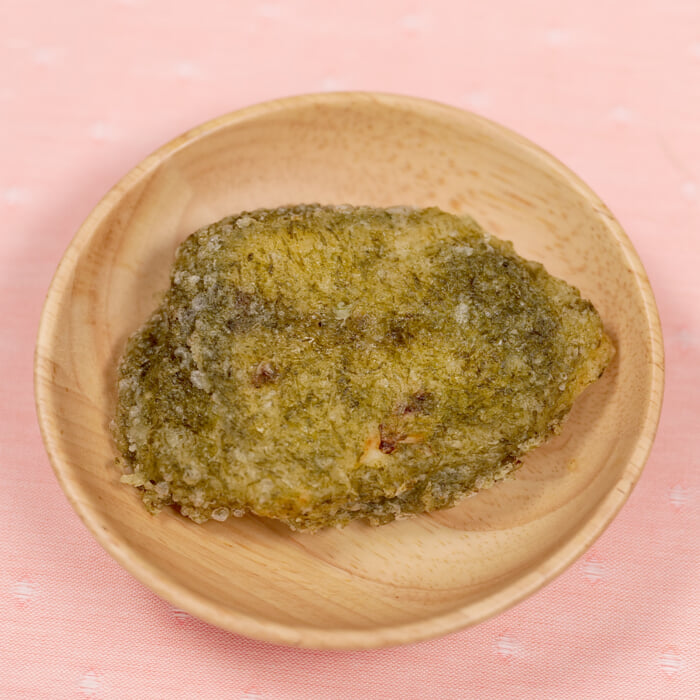
Swordfish Isobe-age (Seaweed-Battered Fried Fish)
メカジキの磯辺揚げ · Mekajiki no Isobe-age
 By Aoi, licensed nutritionist · From a Japanese preschool lunch menu
Isobe-age is a Japanese style of frying in which the batter is flecked with aonori, a fragrant green seaweed - the name comes from isobe, the seashore. Here it coats meaty swordfish, a firm fish with no small bones, which makes it easy for little ones to chew and safe for them to eat. The batter uses potato starch and egg-free mayonnaise instead of egg, so it fries up light and crisp while staying friendly to egg allergies. The gentle seasoning and salty-sweet aroma of the seaweed make this one of those fish dishes that even reluctant fish eaters happily finish.
Added. Open the recipe helper (bottom right) → ☰ Menu → 🛒 Shopping list to see the ingredients for your family size.
Printing uses the number of adults and children set under Ingredients, so set those first.
Ingredients
Amounts for 1 child (1 serving). An adult counts as 2 servings.
One serving here is 1.5× the portion served to a child in a Japanese preschool, sized for Western appetites. An adult counts as two servings. Tap an ingredient to check it off.
Ingredients
- 67.5 gswordfish
Seasonings
- 0.1 gsalt
- to tastepepper
- 2.1 gpotato starch (for dusting)
- 9.5 mlwater
- 6.8 gegg-free mayonnaise (Mayodore)A Japanese egg-free mayonnaise-style dressing. Substitute: Any egg-free or vegan mayonnaise.
- 10.2 gpotato starch (for coating)
- 0.3 gaonori (green seaweed flakes)Fine, fragrant flakes of dried green seaweed sprinkled over dishes like okonomiyaki and yakisoba. Substitute: Crumbled nori sheets, or omit.
- 6 gvegetable oil
About the Japanese ingredients in this recipe
- egg-free mayonnaise (Mayodore) (マヨドレ)
- A Japanese egg-free mayonnaise-style dressing. Substitute: Any egg-free or vegan mayonnaise.
- aonori (green seaweed flakes) (あおのり)
- Fine, fragrant flakes of dried green seaweed sprinkled over dishes like okonomiyaki and yakisoba. Substitute: Crumbled nori sheets, or omit.
Directions
- 1
Season the swordfish with salt and pepper.
- 2
Pat the fish dry with paper towels, then dust it with potato starch.
- 3
Mix the water, egg-free mayonnaise (Mayodore), potato starch, and aonori together to make the batter.
- 4
Dip the fish in the batter from step 3 and deep-fry in oil heated to 170°C (340°F).
Nutrition
| Per | 1 serving | 1 adult serving | Your total |
|---|---|---|---|
| Energy | 226.5 kcal | 453 kcal | 226.5 kcal |
| Protein | 13.1 g | 26.1 g | 13.1 g |
| Fat | 15 g | 30 g | 15 g |
| Carbohydrates | 10.5 g | 21 g | 10.5 g |
| Fiber | 0.2 g | 0.3 g | 0.2 g |
| Salt equivalent | 0.3 g | 0.6 g | 0.3 g |
| Calcium | 6 mg | 12 mg | 6 mg |
| Iron | 0.6 mg | 1.2 mg | 0.6 mg |
| Potassium | 309 mg | 618 mg | 309 mg |
| Energy | Protein | Fat | Carbs | Fiber | Salt equiv. | Calcium | Iron | Potassium | |
|---|---|---|---|---|---|---|---|---|---|
| 1 serving | 226.5 kcal | 13.1 g | 15 g | 10.5 g | 0.2 g | 0.3 g | 6 mg | 0.6 mg | 309 mg |
| 1 adult serving | 453 kcal | 26.1 g | 30 g | 21 g | 0.3 g | 0.6 g | 12 mg | 1.2 mg | 618 mg |
Values are per serving (1.5× the Japanese preschool portion); an adult serving is double. They were calculated by a licensed Japanese nutritionist using the Standard Tables of Food Composition in Japan. "Salt equivalent" is sodium × 2.54, the standard Japanese measure. Allergen flags cover egg, milk and wheat only and come from the nutritionist's records. Soy sauce and miso are made with wheat but are usually allowed on Japanese wheat-free school menus, so check with your doctor.