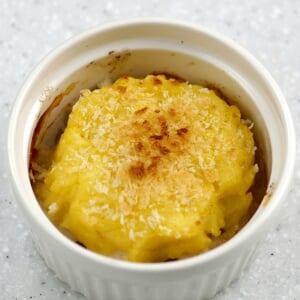
Swordfish Gratin (Wheat-Free)
メカジキのグラタン(小麦なし)
 By Aoi, licensed nutritionist · From a Japanese preschool lunch menu
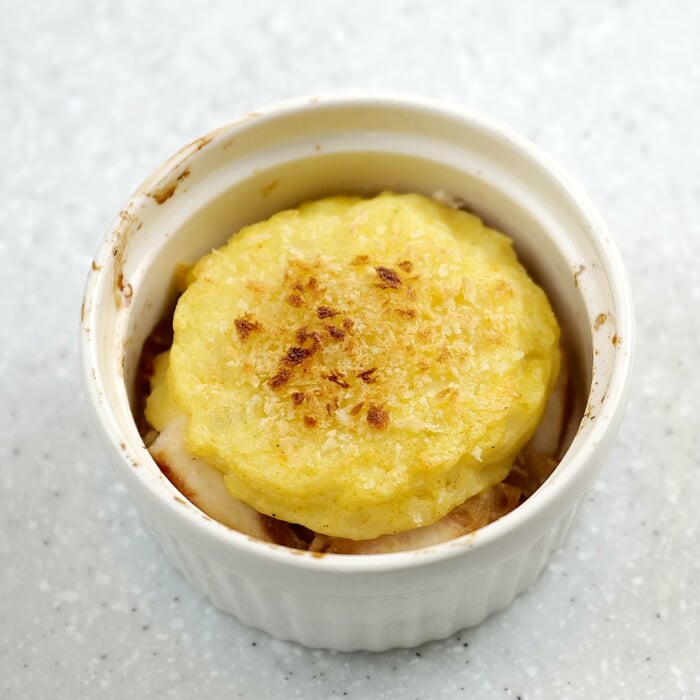
This gratin skips the flour-based white sauce altogether: sautéed onion and swordfish go into the pan, and a layer of mashed potato mixed with mayonnaise, salt and a touch of curry powder is baked on top until golden. Swordfish is a favorite in preschool kitchens because it has no small bones and a mild, meaty texture that even young children can chew easily. The gentle curry flavor keeps picky eaters interested without being spicy, and using an egg-free mayonnaise such as Mayodore keeps the dish friendly for children with egg allergies as well.
Added. Open the recipe helper (bottom right) → ☰ Menu → 🛒 Shopping list to see the ingredients for your family size.
Printing uses the number of adults and children set under Ingredients, so set those first.
Ingredients
Amounts for 1 child (1 serving). An adult counts as 2 servings.
One serving here is 1.5× the portion served to a child in a Japanese preschool, sized for Western appetites. An adult counts as two servings. Tap an ingredient to check it off.
Ingredients
- 45 gswordfish
- 30 gonion
- 52.5 gpotato
Seasonings
- 0.1 gsalt
- 1.5 gvegetable oil
- 12 gegg-free mayonnaise (Mayodore)A Japanese egg-free mayonnaise-style dressing. Substitute: Any egg-free or vegan mayonnaise.
- 0.2 gsalt
- 0.1 gcurry powder
About the Japanese ingredients in this recipe
- egg-free mayonnaise (Mayodore) (マヨドレ)
- A Japanese egg-free mayonnaise-style dressing. Substitute: Any egg-free or vegan mayonnaise.
Directions
- 1
Cut the swordfish into 2 cm cubes and sprinkle with salt to season. Thinly slice the onion, then cut the slices in half so they are half the length.
- 2
Heat the oil in a pot and sauté the onion well. Once it has softened, add the fish and continue to sauté.
- 3
Boil the potatoes and mash them, then mix in the mayonnaise (Mayodore), salt and curry powder.
- 4
Spread the fish and onion mixture evenly over a baking sheet lined with parchment paper, then spread the potato mixture on top. Bake in an oven preheated to 200°C (390°F) for about 15 minutes.
Nutrition
| Per | 1 serving | 1 adult serving | Your total |
|---|---|---|---|
| Energy | 184.5 kcal | 369 kcal | 184.5 kcal |
| Protein | 9.9 g | 19.8 g | 9.9 g |
| Fat | 12 g | 24 g | 12 g |
| Carbohydrates | 12.6 g | 25.2 g | 12.6 g |
| Fiber | 5.3 g | 10.5 g | 5.3 g |
| Salt equivalent | 0.8 g | 1.5 g | 0.8 g |
| Calcium | 7.5 mg | 15 mg | 7.5 mg |
| Iron | 0.6 mg | 1.2 mg | 0.6 mg |
| Potassium | 462 mg | 924 mg | 462 mg |
| Energy | Protein | Fat | Carbs | Fiber | Salt equiv. | Calcium | Iron | Potassium | |
|---|---|---|---|---|---|---|---|---|---|
| 1 serving | 184.5 kcal | 9.9 g | 12 g | 12.6 g | 5.3 g | 0.8 g | 7.5 mg | 0.6 mg | 462 mg |
| 1 adult serving | 369 kcal | 19.8 g | 24 g | 25.2 g | 10.5 g | 1.5 g | 15 mg | 1.2 mg | 924 mg |
Values are per serving (1.5× the Japanese preschool portion); an adult serving is double. They were calculated by a licensed Japanese nutritionist using the Standard Tables of Food Composition in Japan. "Salt equivalent" is sodium × 2.54, the standard Japanese measure. Allergen flags cover egg, milk and wheat only and come from the nutritionist's records. Soy sauce and miso are made with wheat but are usually allowed on Japanese wheat-free school menus, so check with your doctor.