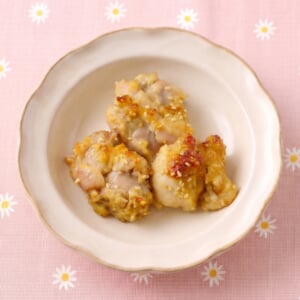
Salmon Chanchan-yaki (Elementary School Portion)
【小学校】鮭のちゃんちゃん焼き · Sake no Chanchan-yaki
 By Aoi, licensed nutritionist · From a Japanese elementary school lunch menu
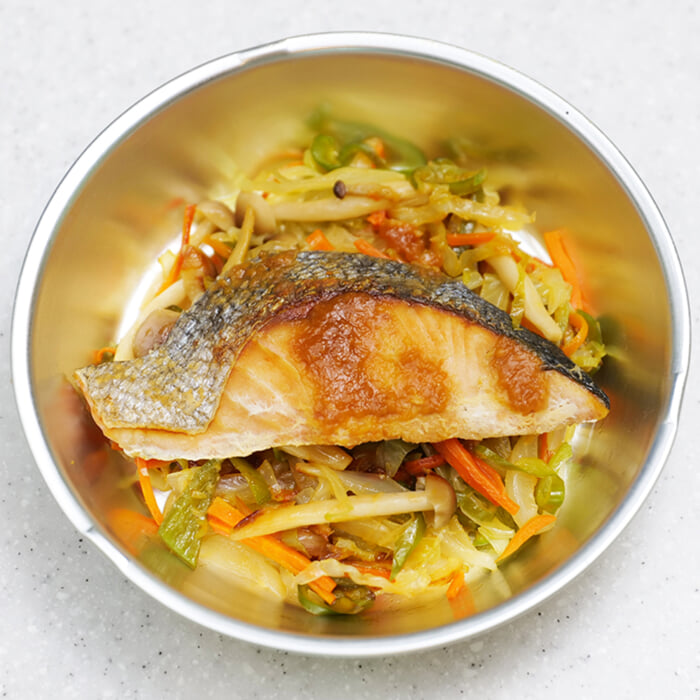
Chanchan-yaki is a home-style dish from Hokkaido, Japan's northern island, where salmon and vegetables are cooked together on a griddle under a blanket of sweet miso and butter. In this school-lunch version the salmon goes into the pan straight from the freezer, and cabbage, onion, carrot, shimeji mushrooms and green bell pepper steam alongside it until everything is tender. The gentle sweetness of the miso sauce and the richness of the butter make even the vegetables an easy sell, and the whole meal comes together in a single frying pan. Serve it over rice and spoon the sauce on top.
Added. Open the recipe helper (bottom right) → ☰ Menu → 🛒 Shopping list to see the ingredients for your family size.
Printing uses the number of adults and children set under Ingredients, so set those first.
Ingredients
Amounts for 1 child (1 serving). An adult counts as 2 servings.
One serving here is 1.5× the portion served to a child in a Japanese elementary school, sized for Western appetites. An adult counts as two servings. Tap an ingredient to check it off.
Ingredients
- 67.2 gfrozen salmon
- 14.3 gonion
- 5.7 gcarrot
- 11 gshimeji mushroomsSmall brown-capped mushrooms sold in clusters, with a mild, slightly nutty flavor and a pleasant chew. Substitute: Oyster mushrooms or sliced button mushrooms.
- 27.8 gcabbage
- 11 ggreen bell pepper
Seasonings
- 3.6 gmisoFermented soybean paste. Salty and savory, it is Japan's everyday seasoning for miso soup and many simmered dishes. Substitute: Any light (white or awase) miso. Misos differ in saltiness, so start with a little less and taste. Some misos are made with barley or wheat, so check the label if you avoid them.
- 1 gsugar
- 1.4 gmirinMirin is a sweet Japanese rice seasoning that adds gentle sweetness and a glossy finish. Hon-mirin (true mirin) contains about 14% alcohol; "mirin-style seasoning" has little or no alcohol. Some alcohol can remain after short cooking. If you prefer no alcohol for children, use the substitute. Substitute: For each tablespoon of mirin, use 1 tablespoon water plus 1 to 2 teaspoons sugar.
- 1.7 gsoy sauce
- 2.7 gsalted cultured butter
- 27.8 gwater
About the Japanese ingredients in this recipe
- shimeji mushrooms (ぶなしめじ)
- Small brown-capped mushrooms sold in clusters, with a mild, slightly nutty flavor and a pleasant chew. Substitute: Oyster mushrooms or sliced button mushrooms.
- miso (みそ)
- Fermented soybean paste. Salty and savory, it is Japan's everyday seasoning for miso soup and many simmered dishes. Substitute: Any light (white or awase) miso. Misos differ in saltiness, so start with a little less and taste. Some misos are made with barley or wheat, so check the label if you avoid them.
- mirin (みりん)
- Mirin is a sweet Japanese rice seasoning that adds gentle sweetness and a glossy finish. Hon-mirin (true mirin) contains about 14% alcohol; "mirin-style seasoning" has little or no alcohol. Some alcohol can remain after short cooking. If you prefer no alcohol for children, use the substitute. Substitute: For each tablespoon of mirin, use 1 tablespoon water plus 1 to 2 teaspoons sugar.
Directions
- 1
Thinly slice the onion. Cut the carrot, cabbage and green bell pepper into thin strips, and separate the shimeji mushrooms into small clusters.
- 2
Mix the miso, sugar, mirin and soy sauce together and set aside.
- 3
Line a frying pan with nonstick cooking foil (foil made for frying pans), lay the salmon on it still frozen, and cover with a lid. Set the pan over medium heat. After about 5 minutes, remove the lid and flip the salmon, then continue cooking over medium heat for another 4 to 5 minutes until both sides are browned. Lift the salmon out of the pan, foil and all.
- 4
Add the butter to the same pan and heat it. Once the butter has melted, add all the vegetables from step 1 and stir-fry over medium heat for about 5 minutes. When they are lightly browned, turn off the heat.
- 5
Spread the vegetables out evenly, lay the salmon on top and drizzle the combined seasonings over everything. Pour the water in around the edge of the pan, cover with a lid, and steam-cook over low heat for about 10 minutes.
* A 26 cm (10-inch) frying pan is used in the video.
* If you are using fresh (not frozen) salmon, sprinkle it with a pinch of salt and let it sit briefly before cooking.
* Once the miso is added, the pan scorches easily. If the liquid at the bottom of the pan starts to dry out while steaming, add a little water as needed so nothing sticks or burns.
Nutrition
| Per | 1 serving | 1 adult serving | Your total |
|---|---|---|---|
| Energy | 136.5 kcal | 273 kcal | 136.5 kcal |
| Protein | 16.7 g | 33.3 g | 16.7 g |
| Fat | 5.6 g | 11.1 g | 5.6 g |
| Carbohydrates | 5.4 g | 10.8 g | 5.4 g |
| Salt equivalent | 0.8 g | 1.5 g | 0.8 g |
| Calcium | 30 mg | 60 mg | 30 mg |
| Iron | 0.8 mg | 1.5 mg | 0.8 mg |
| Energy | Protein | Fat | Carbs | Salt equiv. | Calcium | Iron | |
|---|---|---|---|---|---|---|---|
| 1 serving | 136.5 kcal | 16.7 g | 5.6 g | 5.4 g | 0.8 g | 30 mg | 0.8 mg |
| 1 adult serving | 273 kcal | 33.3 g | 11.1 g | 10.8 g | 1.5 g | 60 mg | 1.5 mg |
Values are per serving (1.5× the Japanese elementary-school portion); an adult serving is double. They were calculated by a licensed Japanese nutritionist using the Standard Tables of Food Composition in Japan. "Salt equivalent" is sodium × 2.54, the standard Japanese measure. Allergen flags cover egg, milk and wheat only and come from the nutritionist's records. Soy sauce and miso are made with wheat but are usually allowed on Japanese wheat-free school menus, so check with your doctor.
This is the elementary-school portion of Salmon Chanchan-yaki (Hokkaido Miso Butter Salmon) (larger quantities, same method).